Celebrating Solar, Climate Action, and Community
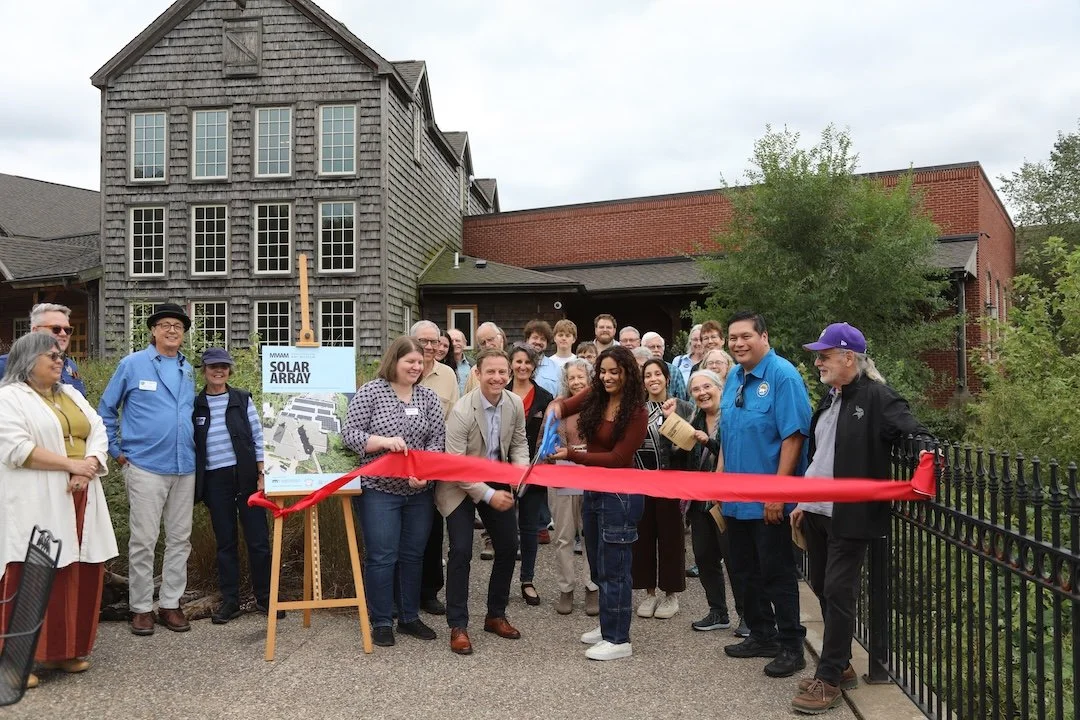
On the Third Thursday of September, the Minnesota Marine Art Museum hosted an evening of events that celebrated community and climate action. The night kicked off with a ribbon cutting ceremony celebrating the completion of the museum’s 163.8 kW rooftop solar array. This was a big moment for MMAM and our community, and we were so grateful to celebrate this milestone with our partners from MnCIFA, Solar Bear and CERTs and our community. The solar array has not only been a goal for the museum for many years now, but as the Associate Curator of Clean Water & Climate, it was one of my first projects that I began working on at MMAM. This past year we worked really hard to turn those hopes and goals into meaningful impact.
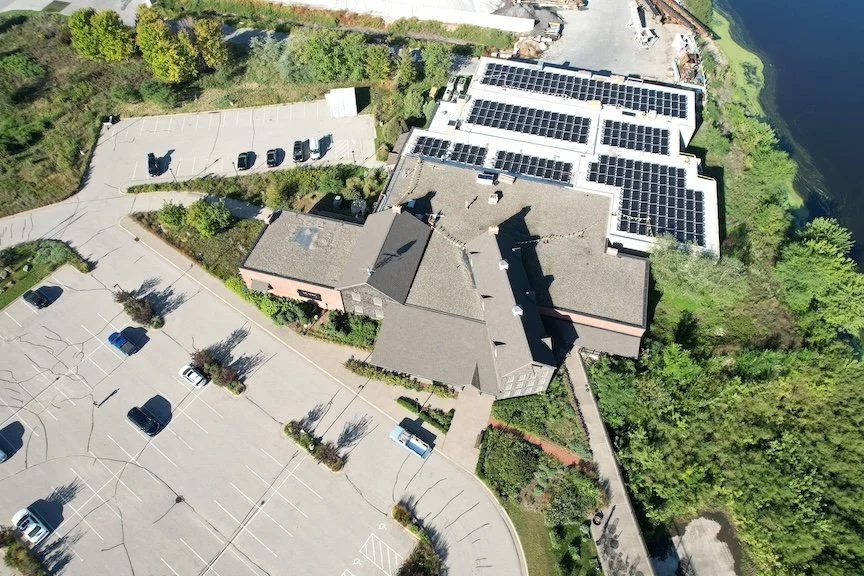
My job at MMAM is rooted in staying informed and participating in meaningful and sustainable climate action. I look for ways for the museum to build climate resilience through our operations, development, and engagement programs. And a major factor in MMAM’s carbon footprint is actually the building itself. Buildings contribute to around 40% of global carbon emissions globally. MMAM, like countless other museums, has to meet specific climate control standards in order to safely store, conserve, and responsibly steward the art and artifacts we house. Due to these specific needs, museums in general are more energy intensive than other buildings. Therefore, we felt that solar energy was a meaningful step to reduce MMAM’s carbon impact and help to build resilience in our changing climate.
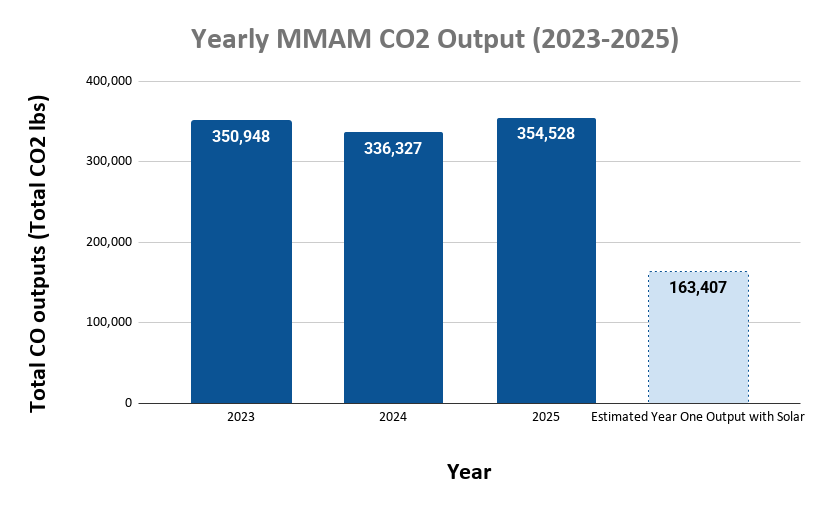
Over the course of its 25 year lifespan, MMAM’s new solar panels will power 50% of the museum’s average energy needs, produce an estimated 4 million kWh, and save the museum around $825,000 in energy costs. This will make a huge difference in not only the energy MMAM consumes, but also saving the nonprofit organization money.
After the ribbon cutting, MMAM was able to highlight some of the local organizations that are involved in climate work, allowing our visitors the opportunity to learn more about the great work being done here in Winona, and how they could get involved.
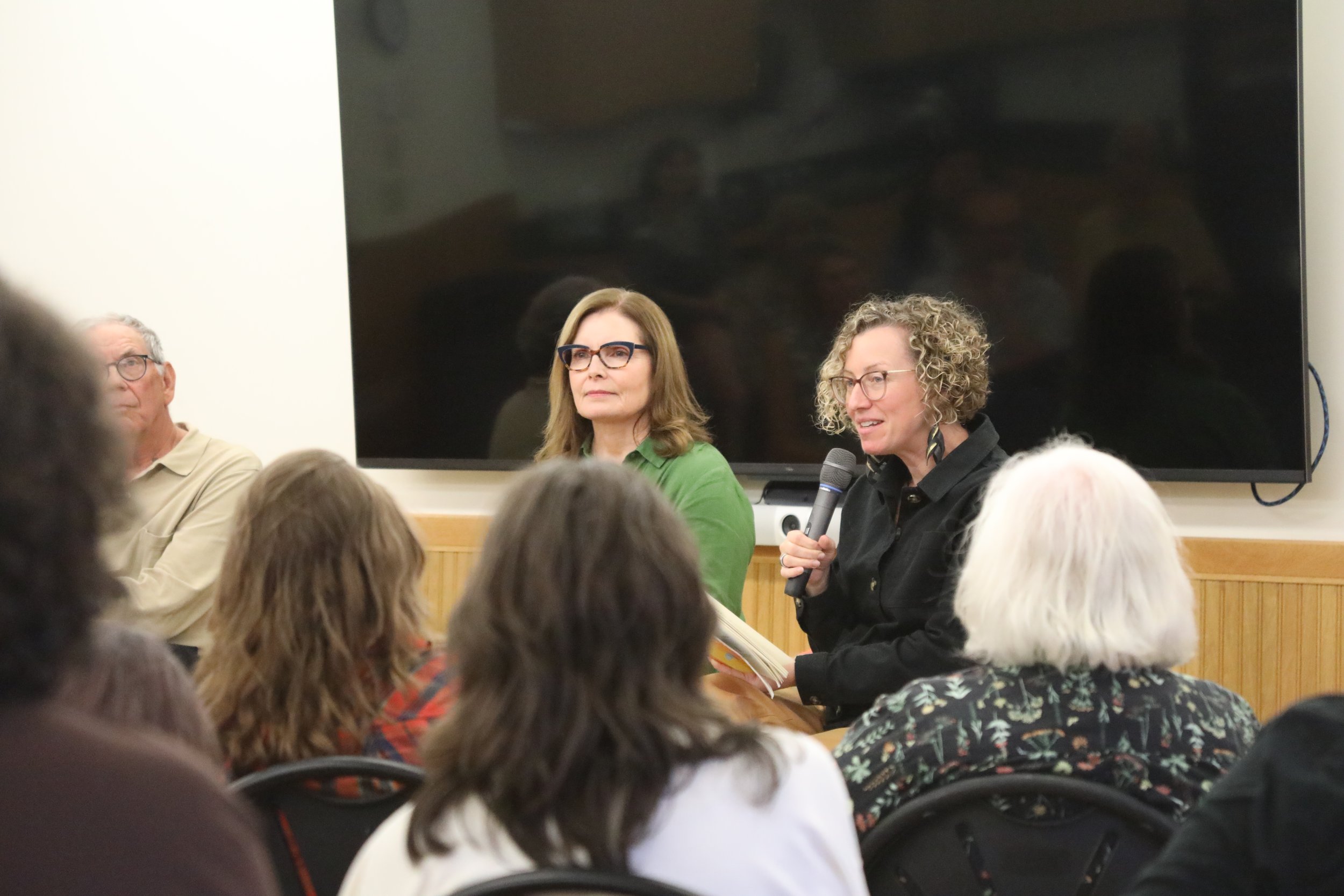
Following the community books, MMAM held an author talk featuring award winning authors Tamara Dean and Anna Farro Henderson. Facilitated by the Citizens’ Climate Lobby’s Bob Tereba, Tamara and Anna shared their insight and experience of using art and stories as a way to bring people together in the face of climate issues and events. It turned into a lively and insightful conversation between the audience and the authors about how although the overarching issue of climate change can seem overbearing, there is still hope. The more we come together, share, and celebrate the more that becomes clear that there are big wins in moving towards combating climate issues. And that, I feel, is the perfect way to summarize that evening at MMAM. Yes, we may still have a long way to go, but celebrating what we can along the way gives us more reason to push forward.
Thank you to our solar partners, Minnesota Climate Innovation Finance Authority (MnCIFA), BlueSky Solar, Solar Bear, Clean Energy Resource Team (CERTs), and the Helen Frankenthaler Foundation. Thank you to our community partners for the evening, including the Izaak Walton League, the City of Winona’s Environmental Quality Commission, the Citizens’ Climate Lobby, and the Cotter Environmental Club. And thank you to the Morgan Family Foundation, for helping to support the position of Associate Curator of Clean Water & Climate!
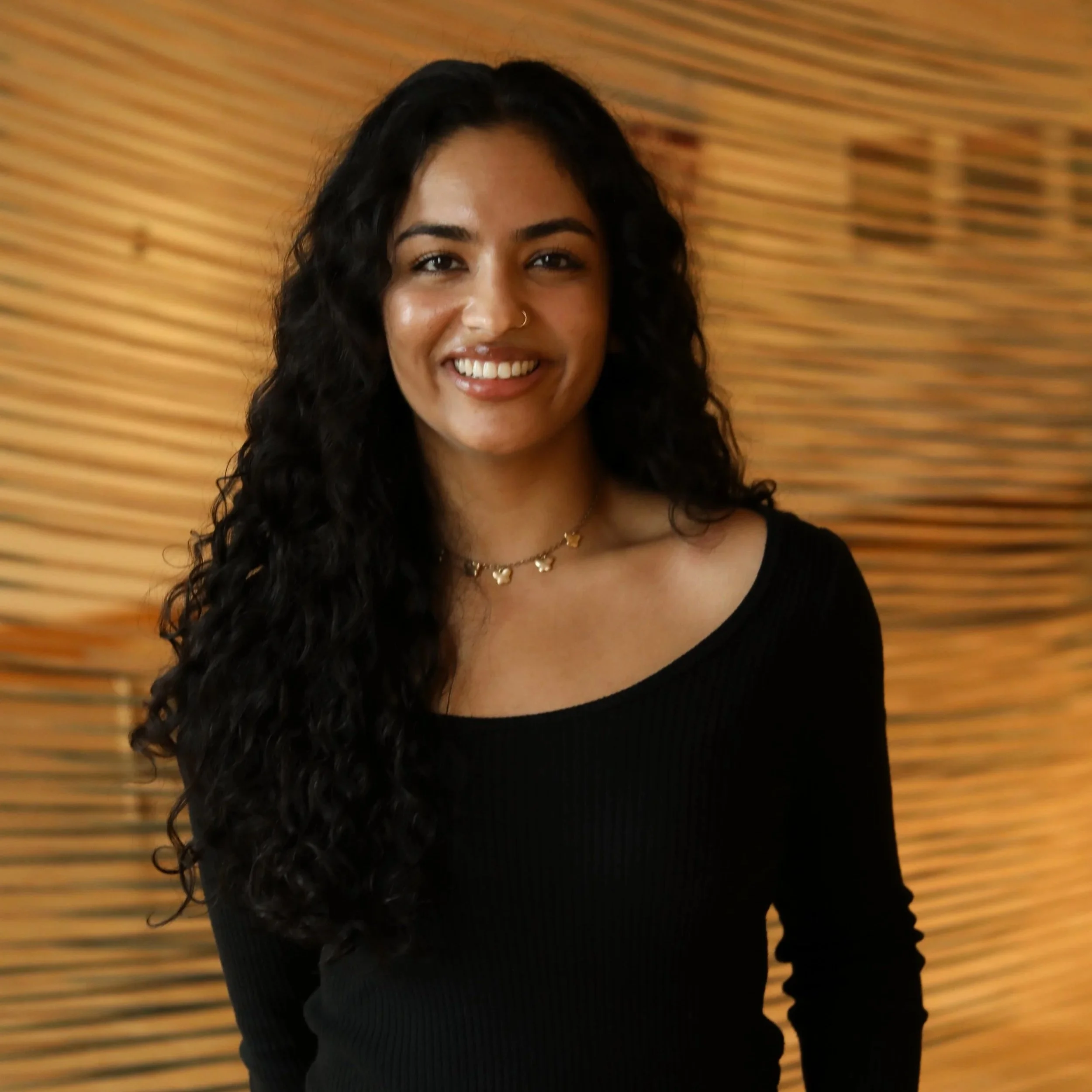
Kamala Nair is the Associate Curator of Clean Water and Climate at the Minnesota Marine Art Museum (MMAM), which is a 2-year grant funded position by the Morgan Family Foundation. She has a B.S in Environmental Science from Indiana University - Purdue University Indianapolis (2021) and an M.S in Environmental Science and Policy from Johns Hopkins University (2023). Her educational and internship experiences were centered in natural resource management, policy analysis, and environmental equity. In her role at the museum she is tasked with leading MMAM’s efforts to create a 5-year climate action plan and manage the transition into clean energy and sustainable practices. She strives to help build community resilience in the face of climate change and explore the ways in which museums and cultural institutions can be a resource for the community to help elevate the climate conversation.