
Water | Craft: Nicole McLaughlin
As a curator, one of the most rewarding moments is watching an idea that begins as a set of questions take physical form in the galleries. Water | Craft grew out of a desire to think more deeply about how material knowledge (especially knowledge rooted in craft traditions) shapes our understanding of place, environment, and responsibility. Bringing this exhibition to life at the Minnesota Marine Art Museum has been shaped in profound ways by artists whose practices hold history, labor, and lived experience in careful balance. Among them, Nicole McLaughlin’s work offers a particularly resonant entry point into the exhibition’s central concerns around inherited knowledge and the endurance of making across generations.
At its core, Water | Craft considers how knowledge is carried—through bodies, materials, and cultural memory—and how craft functions as a living archive of experience. While water remains a vital context within the exhibition, the artists engage it through processes that are deeply grounded in making: weaving, ceramics, basketry, glass, and textile traditions passed down, adapted, and reshaped over time. These works are not nostalgic gestures toward the past, but evolving practices that hold memory, labor, and care, while questioning long-standing hierarchies between art and craft and affirming the relevance of handmade knowledge today.
Nicole McLaughlin’s installations sit at the heart of these conversations. Her sculptural works combine traditional ceramic forms connected by flowing fibers, which she describes as a representation of her lineage. The vessels function as abstract evocations of relationships within her maternal line, illustrating the transmission of life, knowledge, and identity across generations. Each ceramic form maintains a sense of stillness and individuality, while masses of thread establish movement between them—mirroring the tension between personal identity and the ever-shifting nature of inherited tradition.
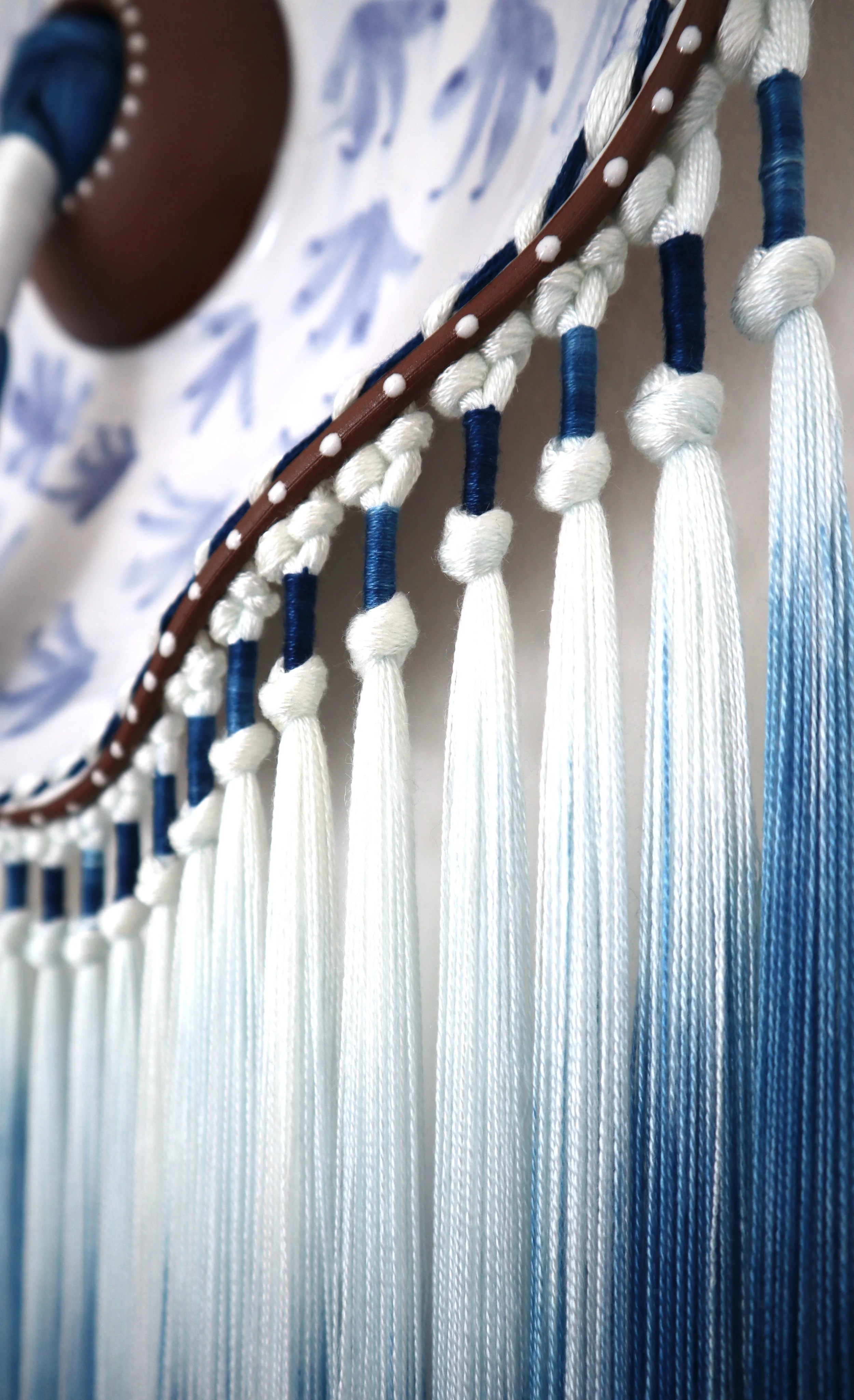
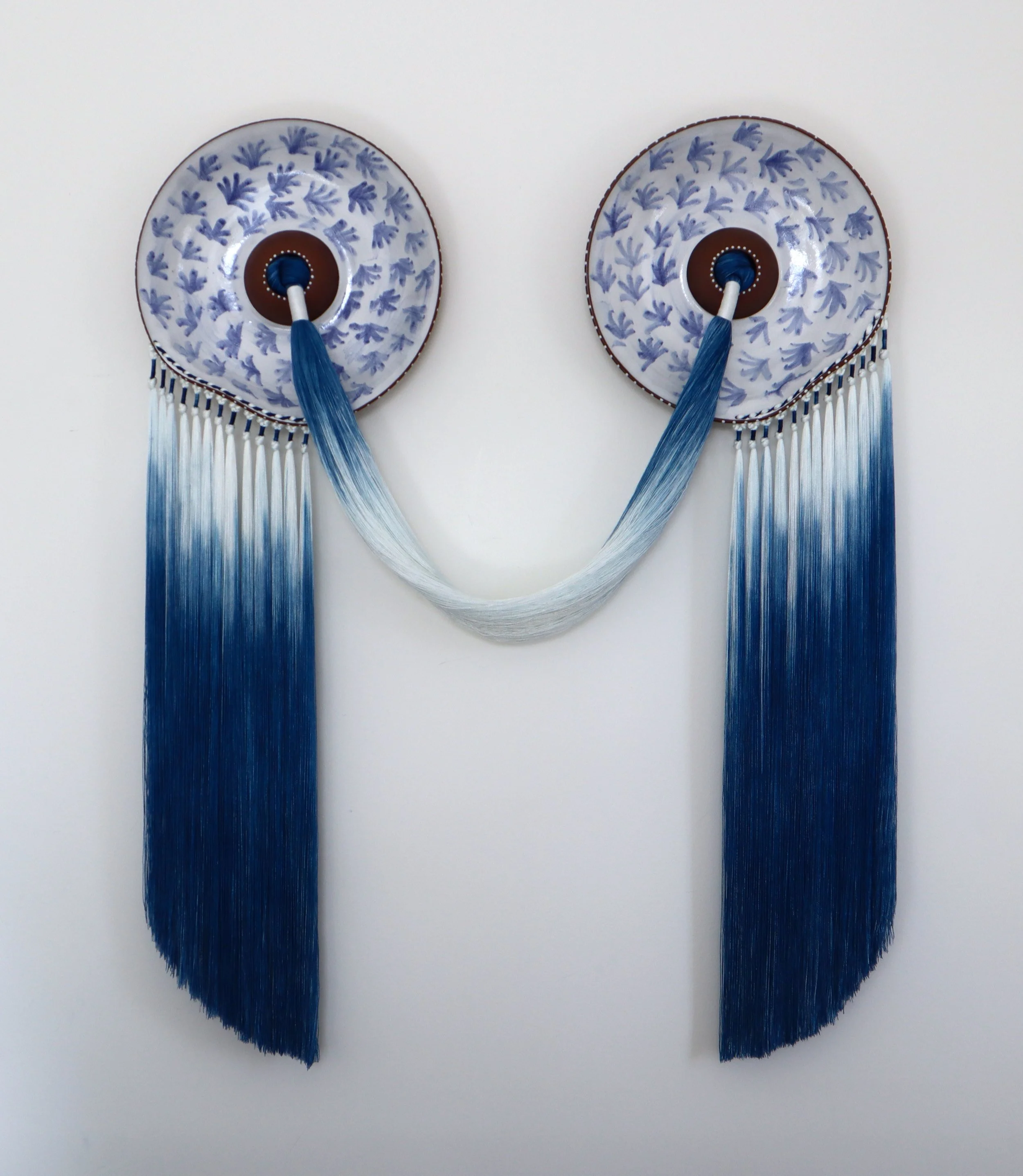
The fibers that flow between forms operate as both physical and symbolic umbilical cords, representing maternal care and the ability to sustain life. As they move in and out of each vessel, it becomes clear that no single form exists independently; each relies on what came before it. In this way, McLaughlin’s work reflects the interconnectedness of family, culture, and passed knowledge.
McLaughlin’s surfaces and color palettes draw deeply from Mexican ceramic traditions. After traveling to Puebla, Mexico in 2019 to study Talavera pottery, she began working with the maiolica glazing technique, which was introduced to Mexico during the Spanish conquest in the sixteenth century. This process involves applying a white opaque glaze to terra cotta clay and decorating it with metal oxides—often cobalt—to create intricate blue-and-white patterns. In McLaughlin’s work, these historical references are not replicated exactly; instead, she intentionally over-fires the works, allowing the terra cotta to darken and the glaze to melt, run, and distort. The forms themselves are often distorted, turning a functional vessel into something else. This relinquishing of control to the material becomes a metaphor for how traditions shift and transform as they move through time and generations.
Color carries layered meaning in McLaughlin’s practice, particularly through her use of indigo (referencing Maya blue) and cochineal red—pigments deeply tied to water, ritual, and place. Indigo-dyed fibers recall both domestic labor and ancestral rituals. The historical weight of these pigments deepens McLaughlin’s exploration of material and meaning. Cochineal, derived from insects cultivated on nopal cactus, was once one of Mexico’s most valuable exports and carries associations with blood, protection, and colonial extraction. Maya Blue—an extraordinary hybrid pigment made from indigo and clay—was sacred to the ancient Maya and closely linked to water, sacrifice, and the rain god Chaak. McLaughlin’s engagement with these colorful histories situates her work within a long lineage of materials shaped by water, labor, and belief.
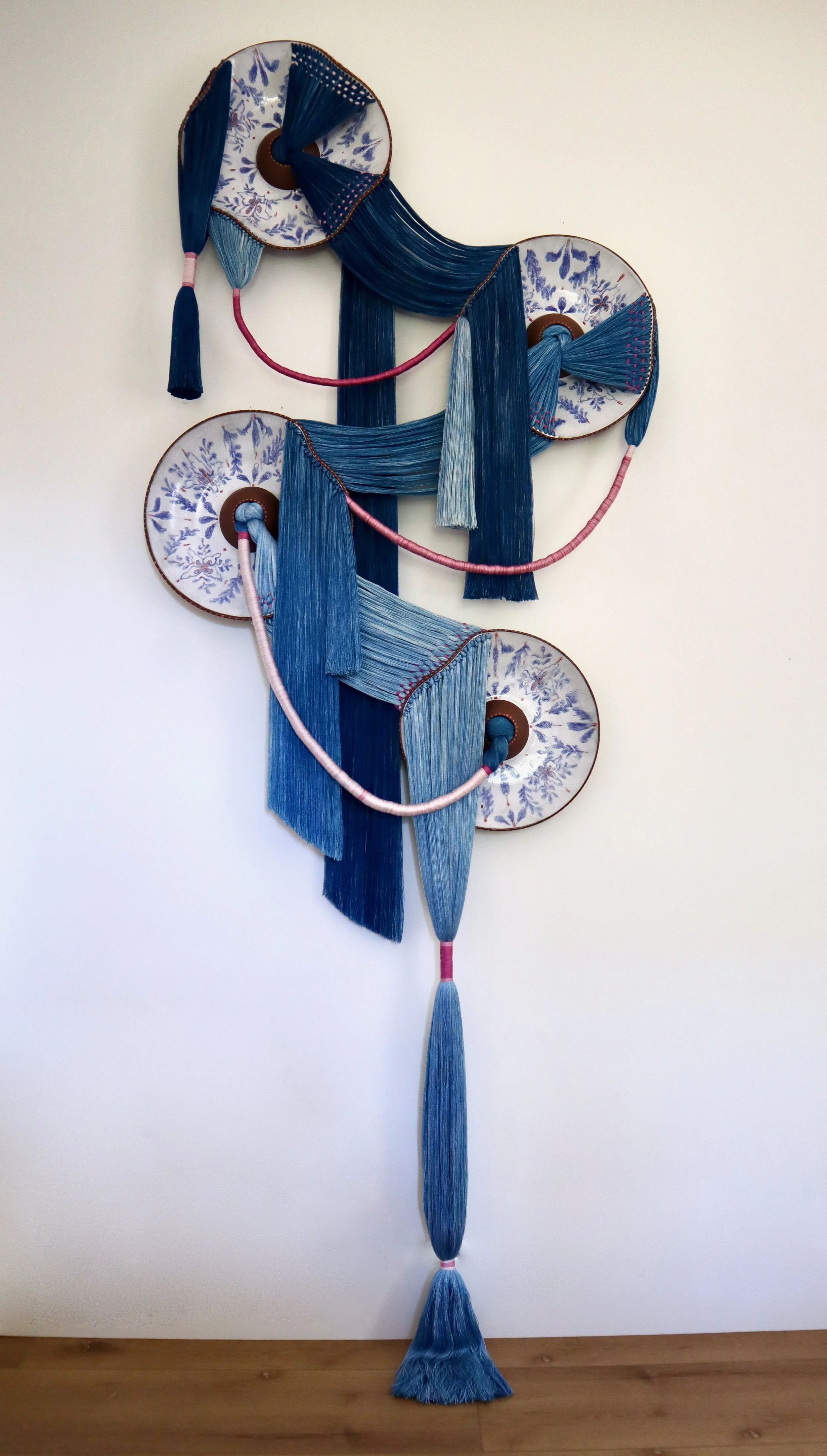
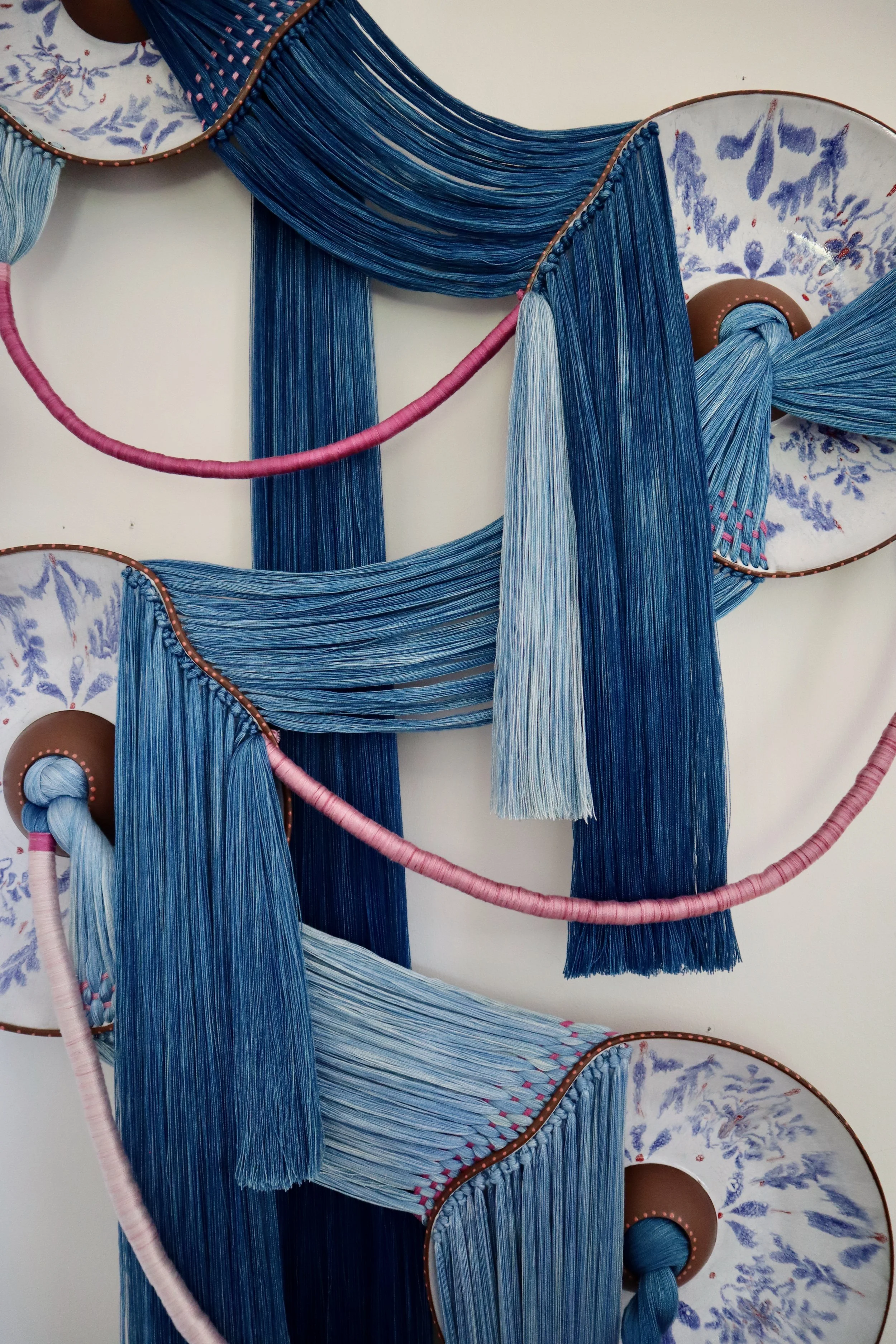
We are especially excited to welcome Nicole McLaughlin to MMAM during New Look Weekend, where visitors will experience her practice beyond the finished works on view. During the Friday evening opening celebration, hear McLaughlin participate in an artist/curator panel discussion, sharing insights into her materials, her relationship to cultural tradition, and the ways motherhood has reshaped her understanding of responsibility and care. On Saturday morning from 10:30a - 12:30p, the museum atrium will become a working studio as McLaughlin will lead a public demonstration, throwing ceramic forms on the wheel, glazing and decorating their surfaces, and demonstrating how these fiber elements ultimately come together in her installations.
As Water | Craft remains on view through December 27, 2026, my hope is that visitors leave with a deeper appreciation for the knowledge embedded in handmade practices and the ways they help us understand water as both a material and a connective force. In McLaughlin’s work especially, vessels, fibers, and flowing color remind us that without those who came before us, we would not exist—and that the responsibility to carry knowledge forward is as fluid, vital, and sustaining as water itself.
— Maggie Sather, MMAM Associate Curator