Water | Craft
Nicole McLaughlin - Rowland Ricketts - Sarah Sense
Tali Weinberg - Therman Statom - Tanya Aguiñiga - Kelly Church
On view January 24, 2026 - December 27, 2026

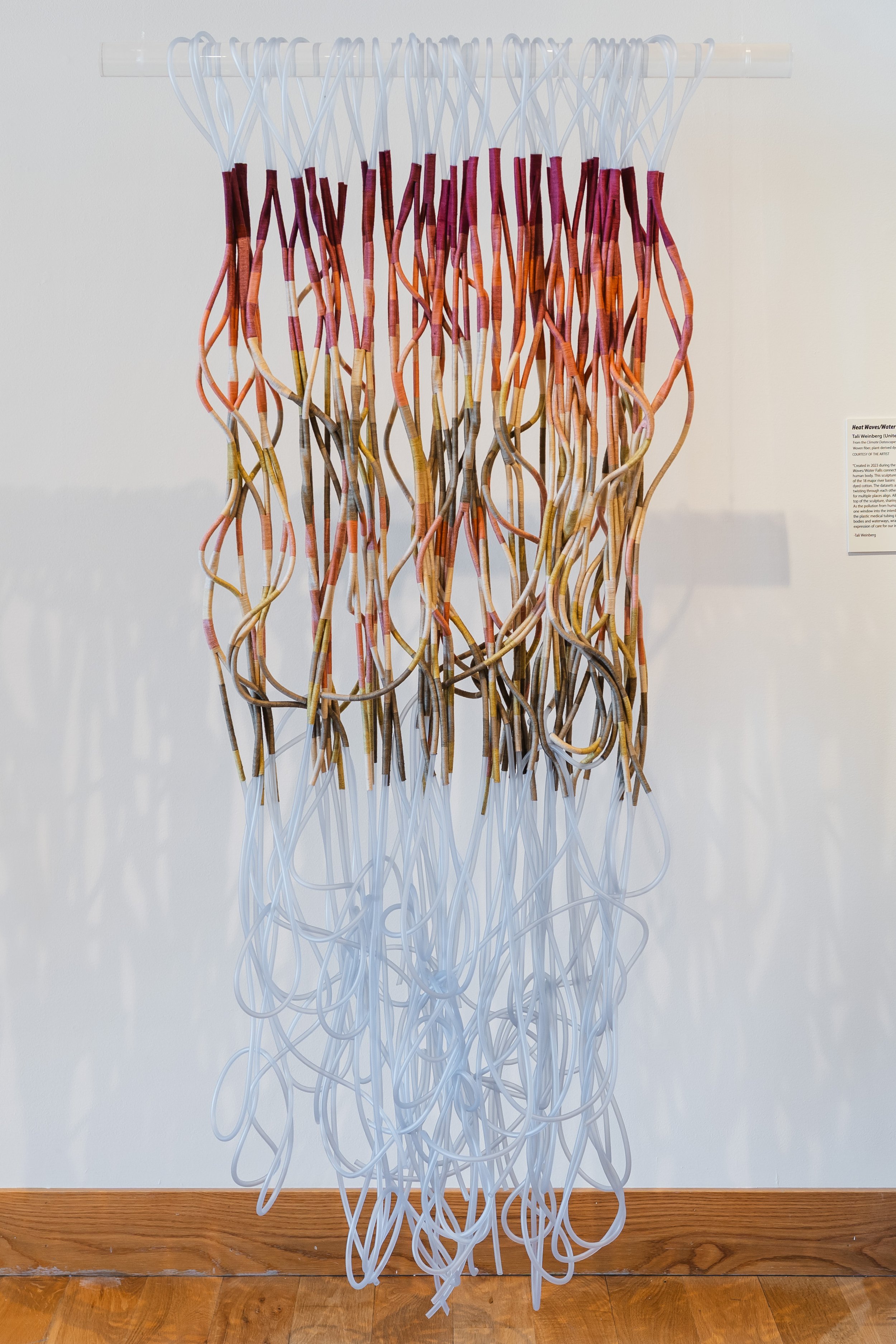
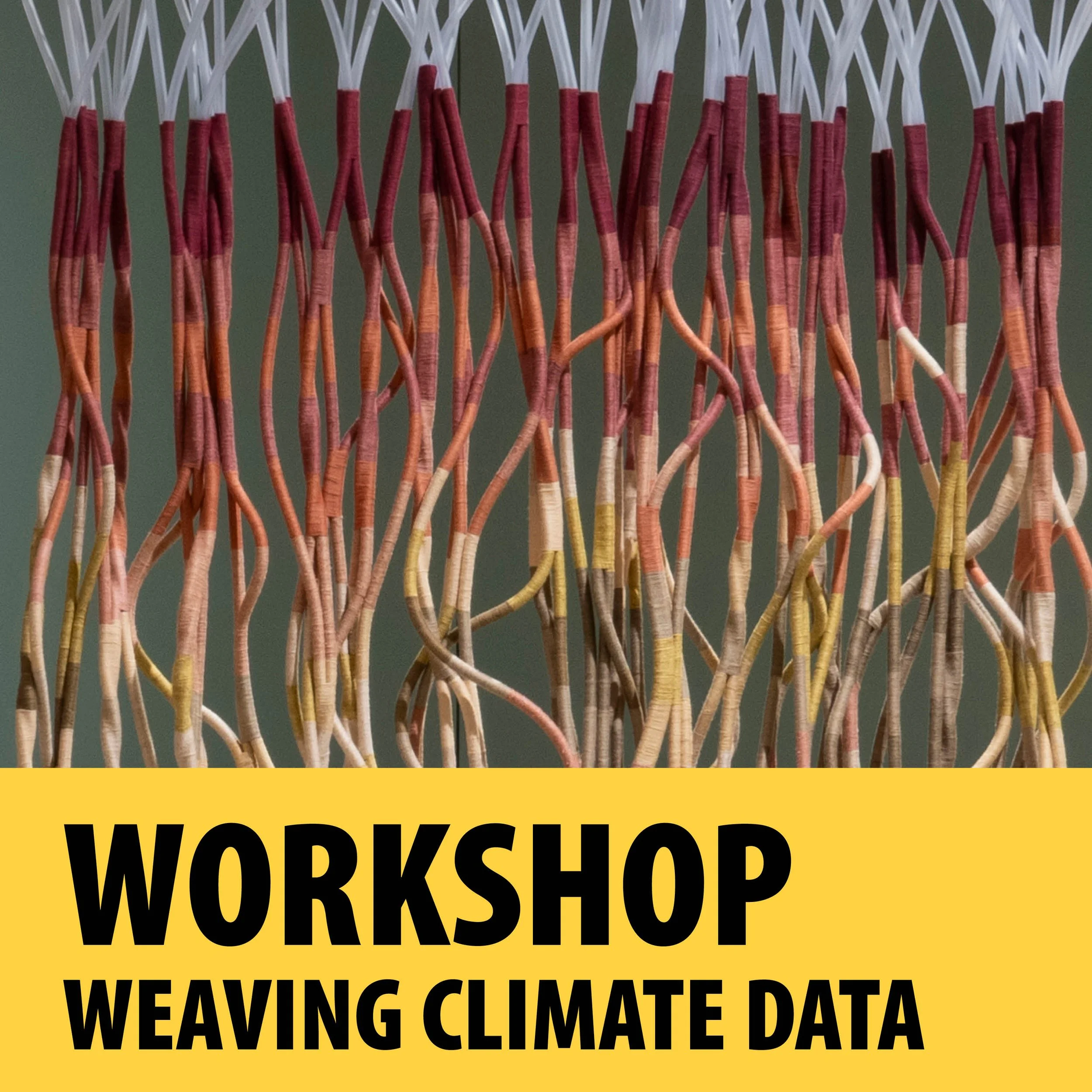
Tali Weinberg, Heat Waves/Water Falls, 2023. Petrochemical-derived medical tubing, plant fibers, plant and insect dyes. Photo by Colin Conces courtesy of Bemis Center for Contemporary Art.
Water | Craft explores the intersection of traditional craft practices and contemporary concerns about water and the environment. This exhibition brings together artists whose practices incorporate historical craft techniques of weaving, pottery, basketry, glass, and textile arts – and who transform these techniques to address issues including water access, climate change, and cultural preservation.
Just as water flows through our bodies, landscapes, and cultural memories, craft knowledge passes between generations, carrying technical skills alongside cultural values. The featured artists employ traditional methods not as nostalgic gestures but as living practices that offer sophisticated perspectives on ecological and social challenges. By positioning these works in a contemporary art context, the exhibition questions hierarchies between art forms while demonstrating how generational wisdom can help us navigate environmental crises.
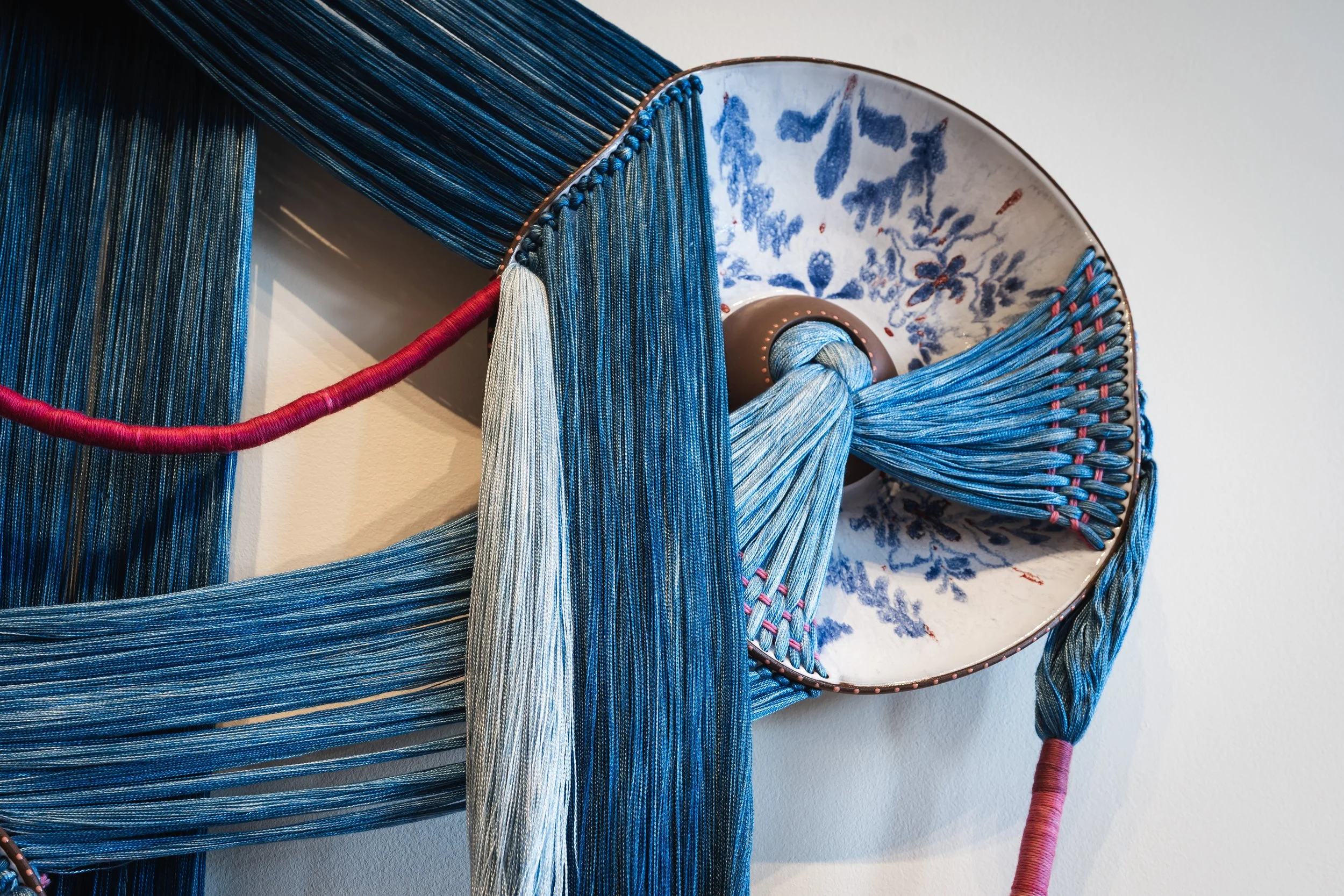
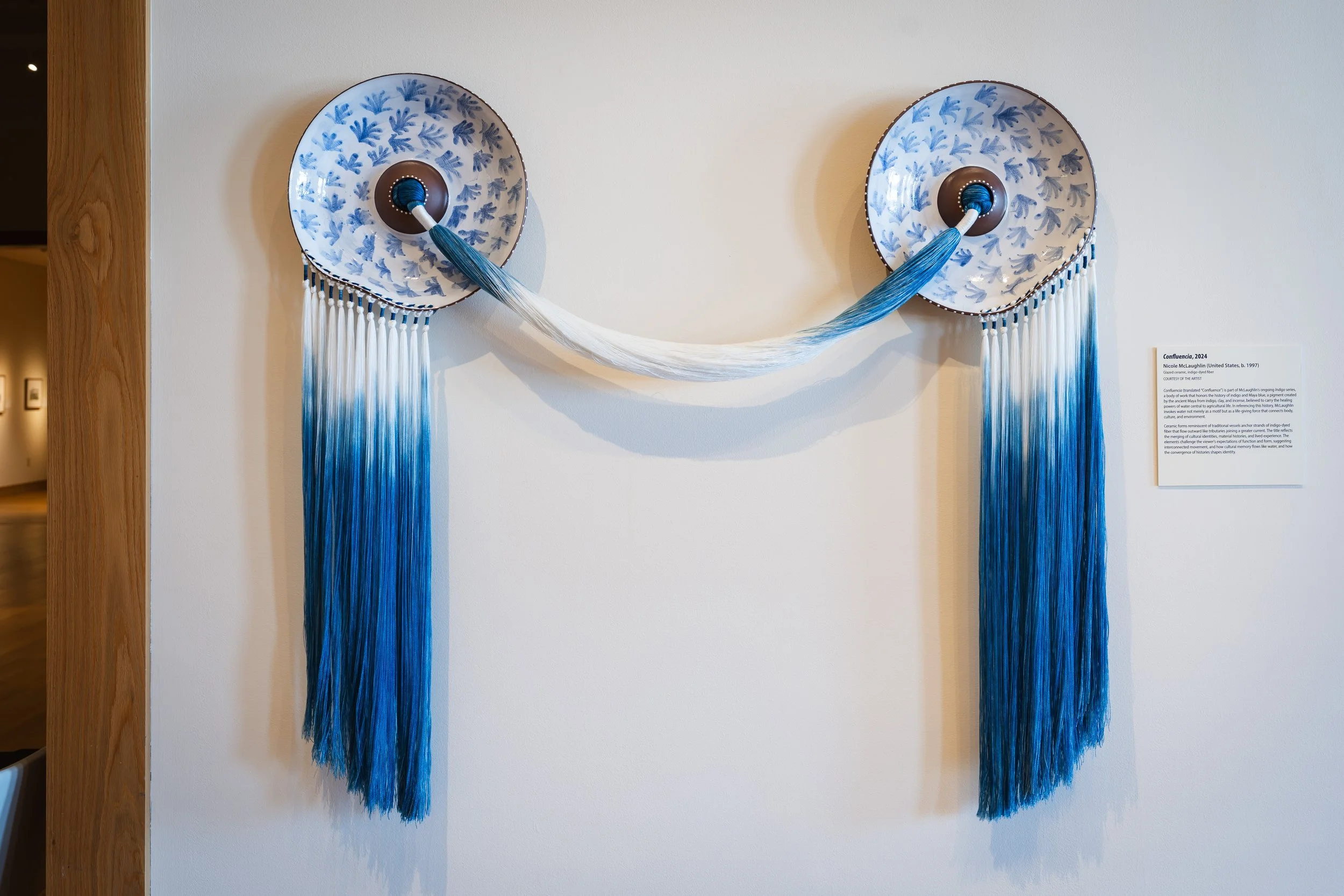
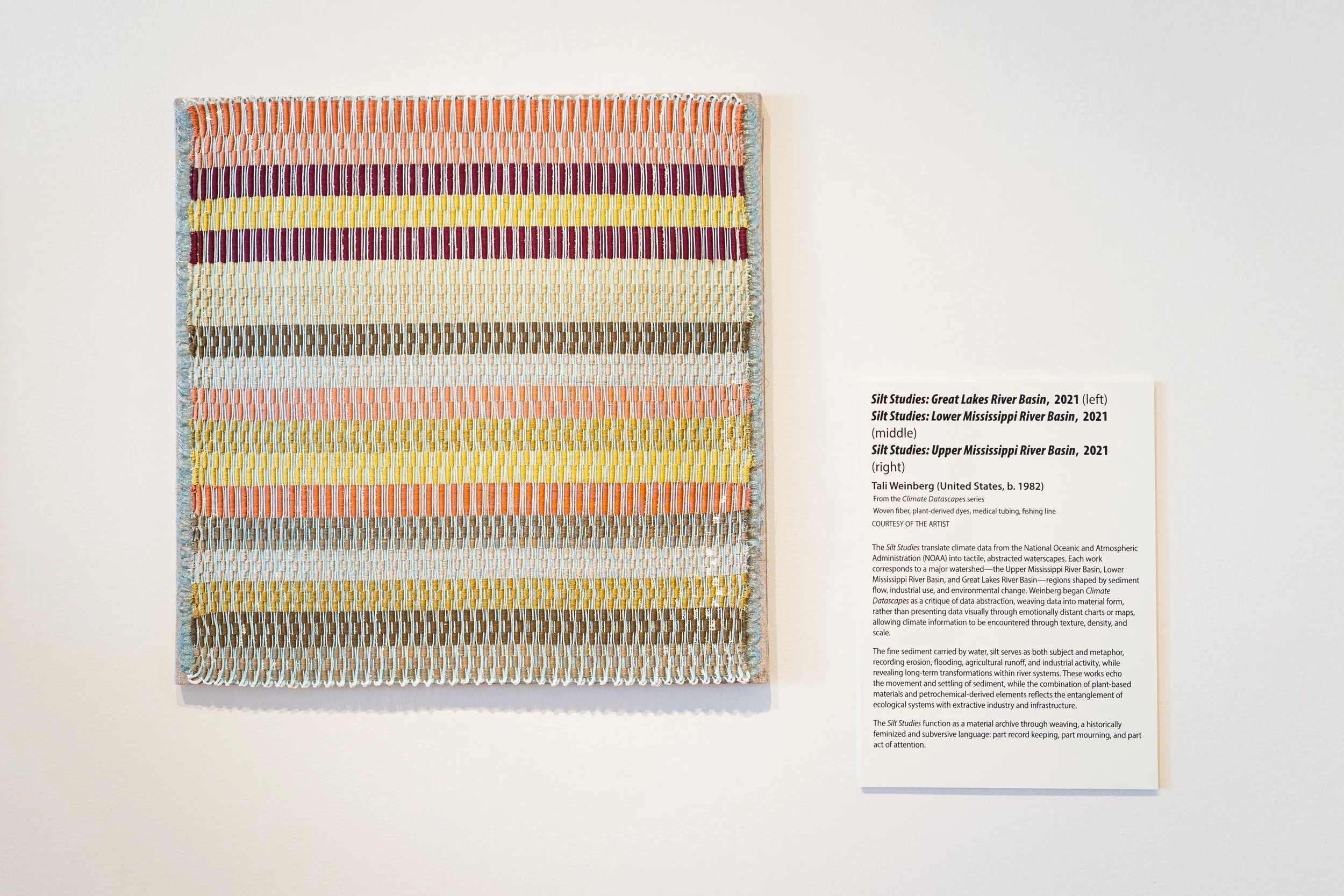
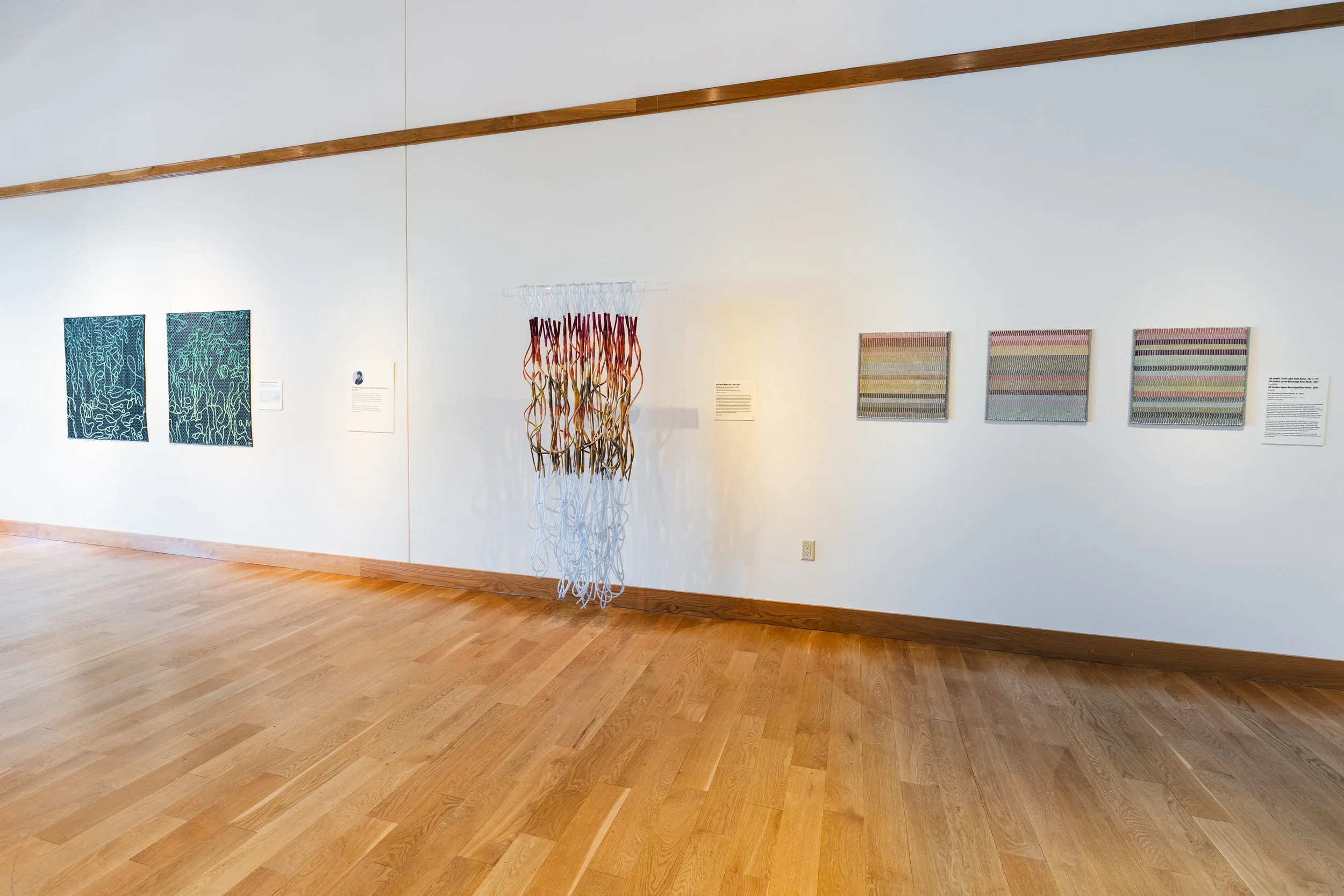
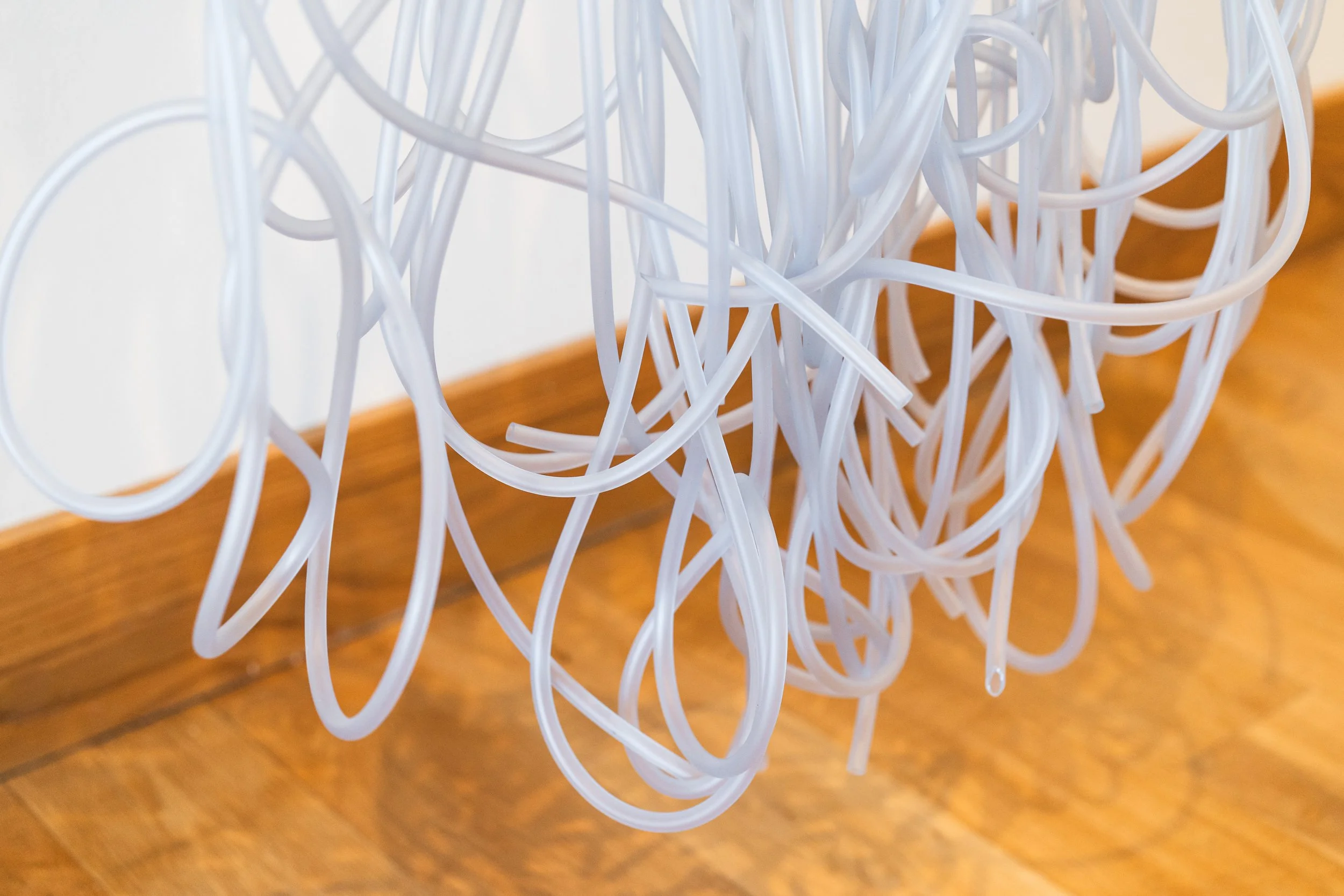
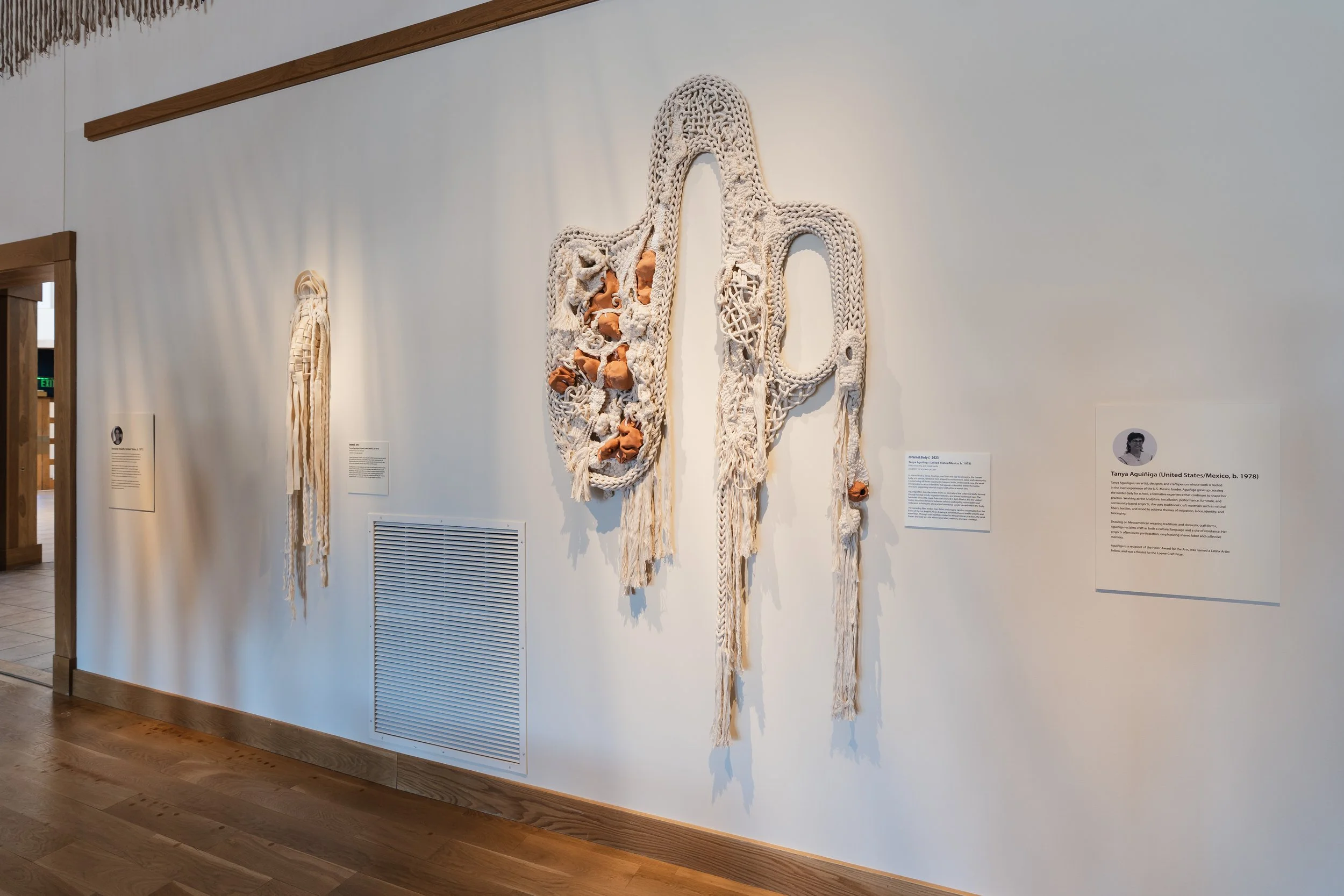
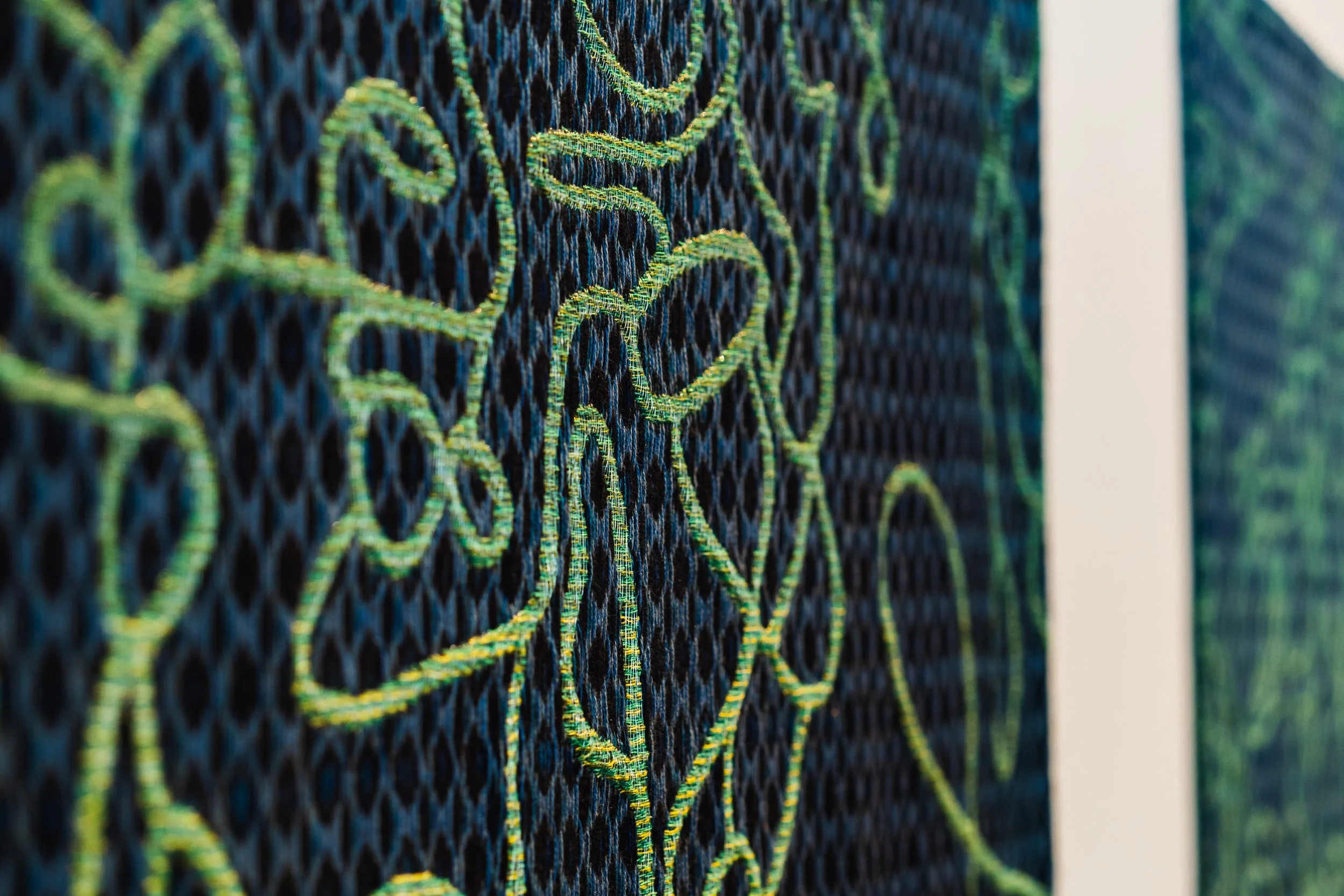
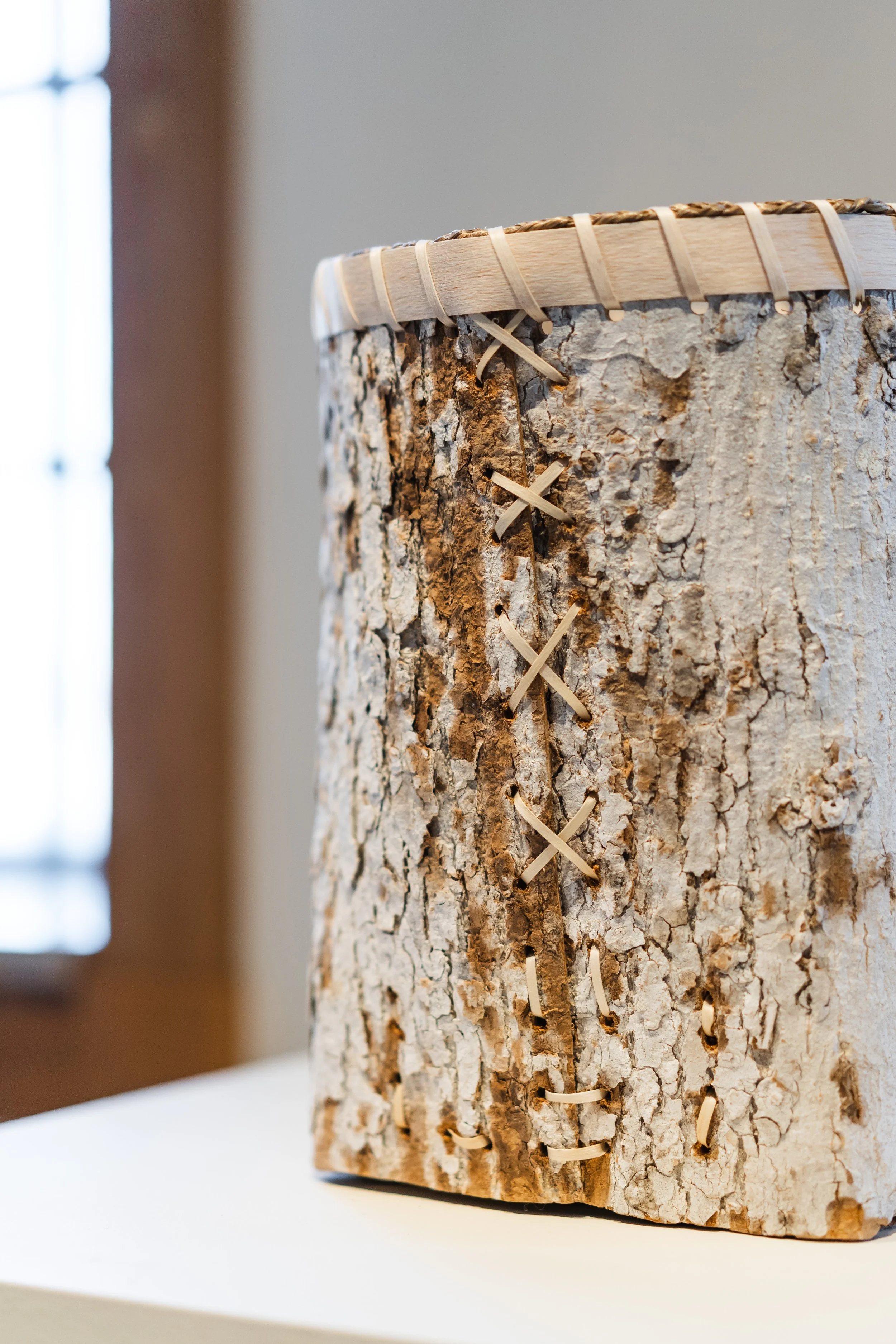
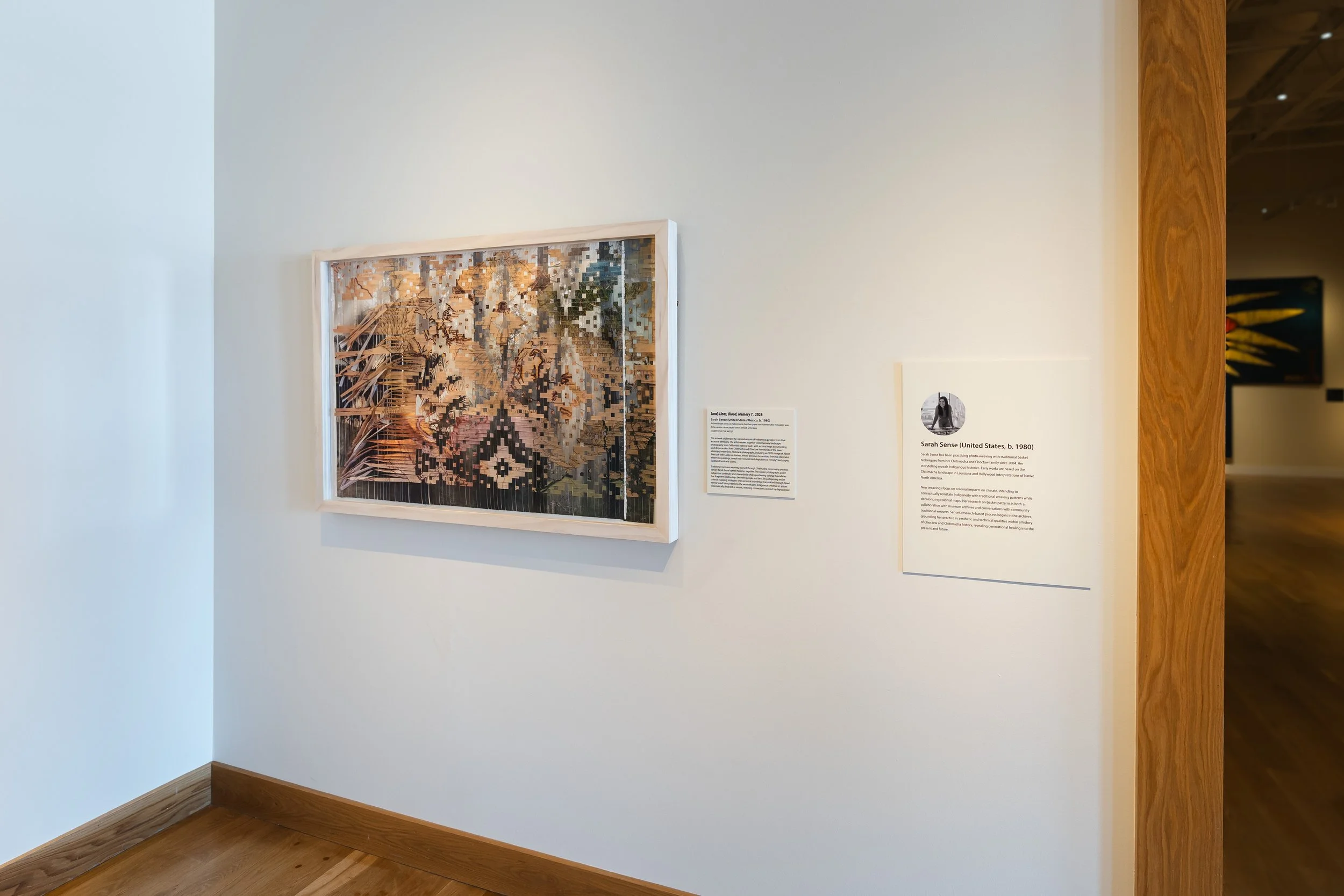
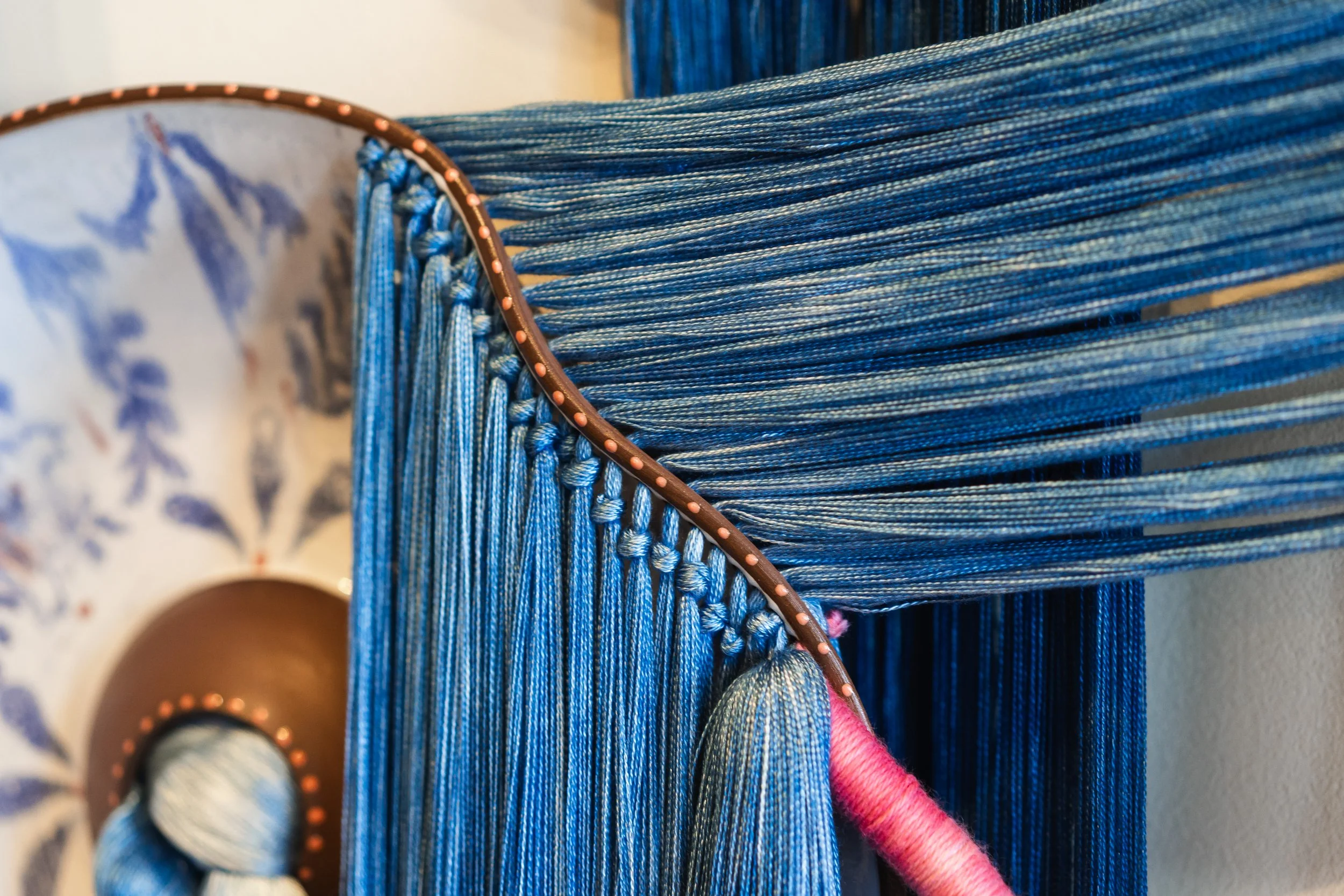
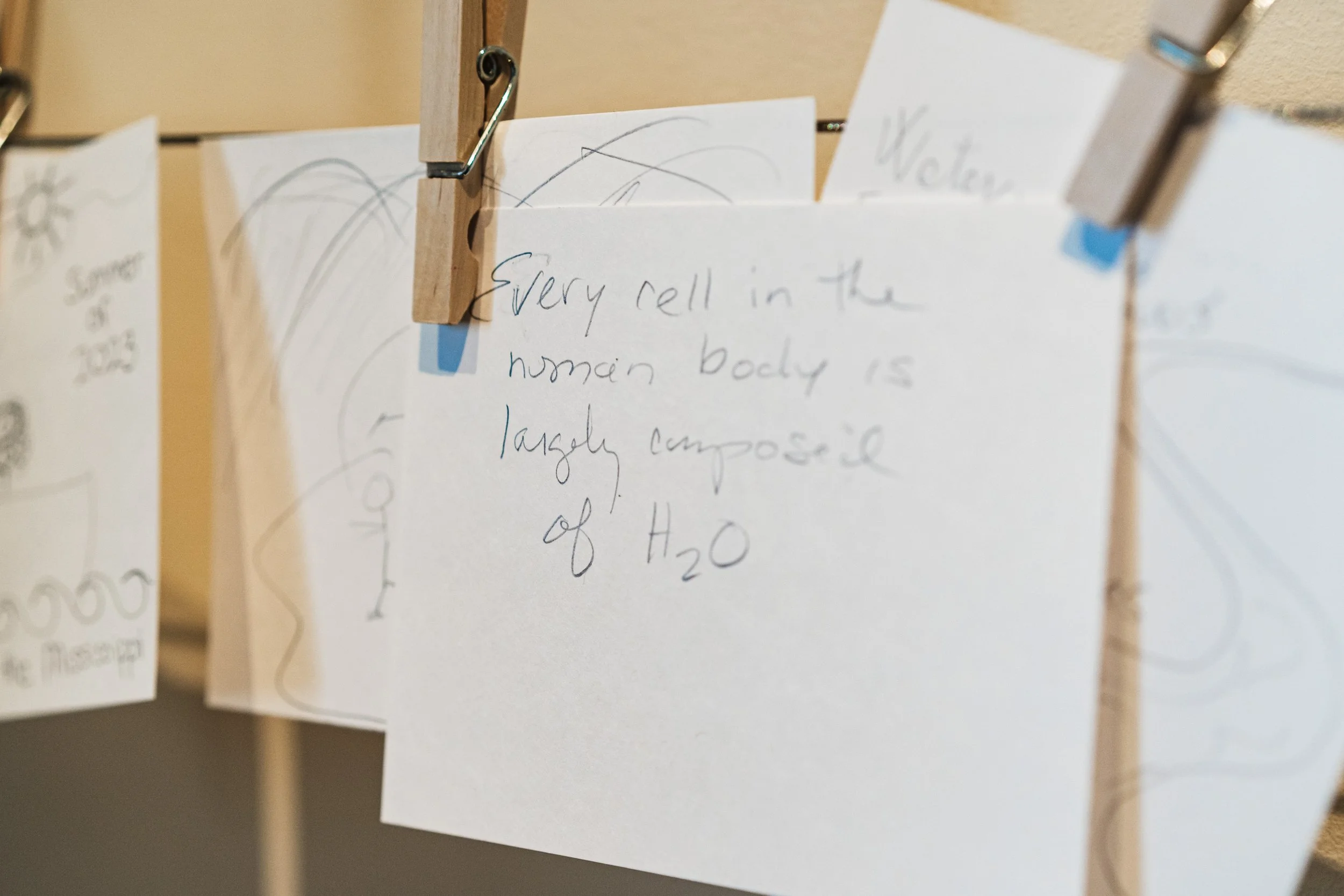
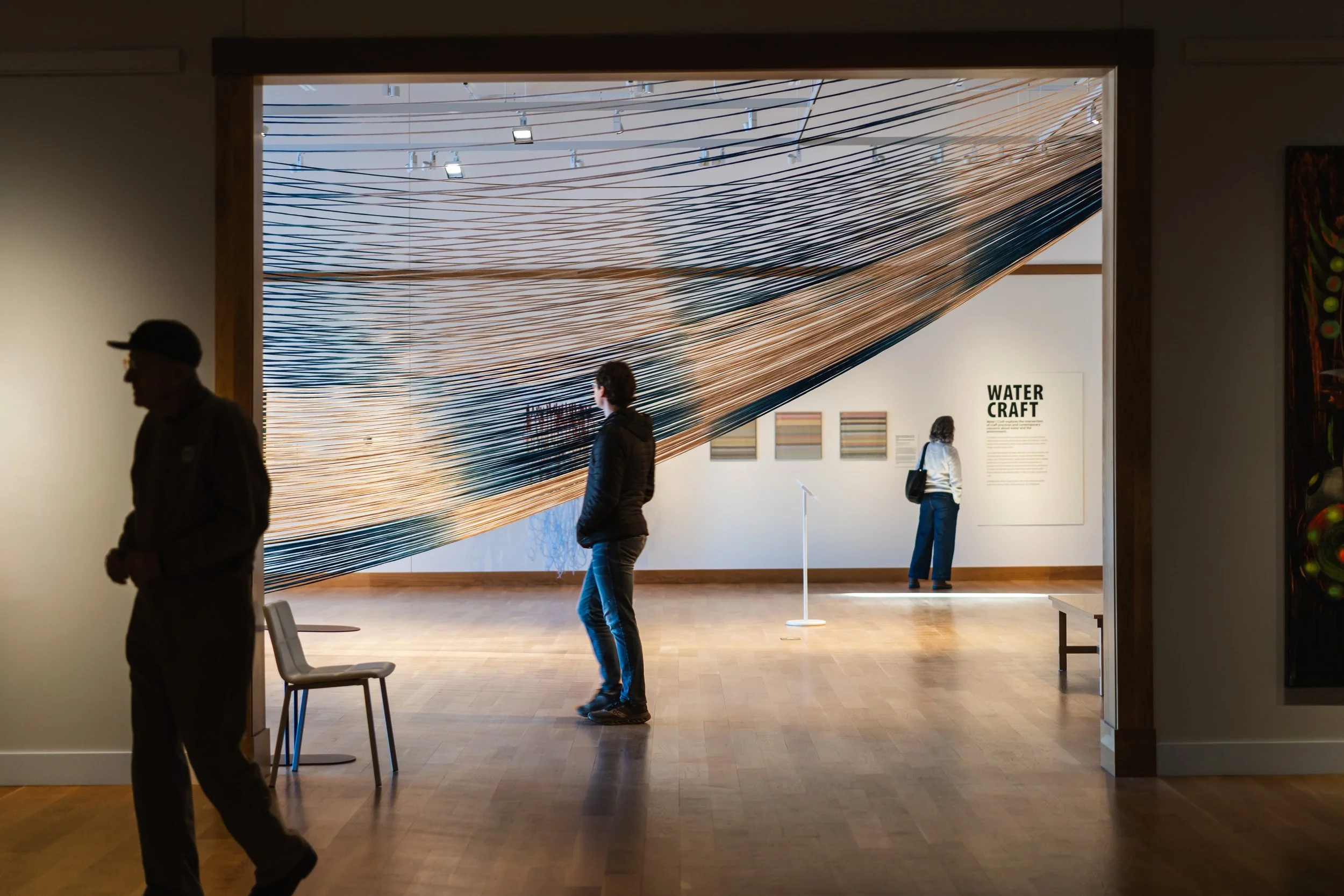
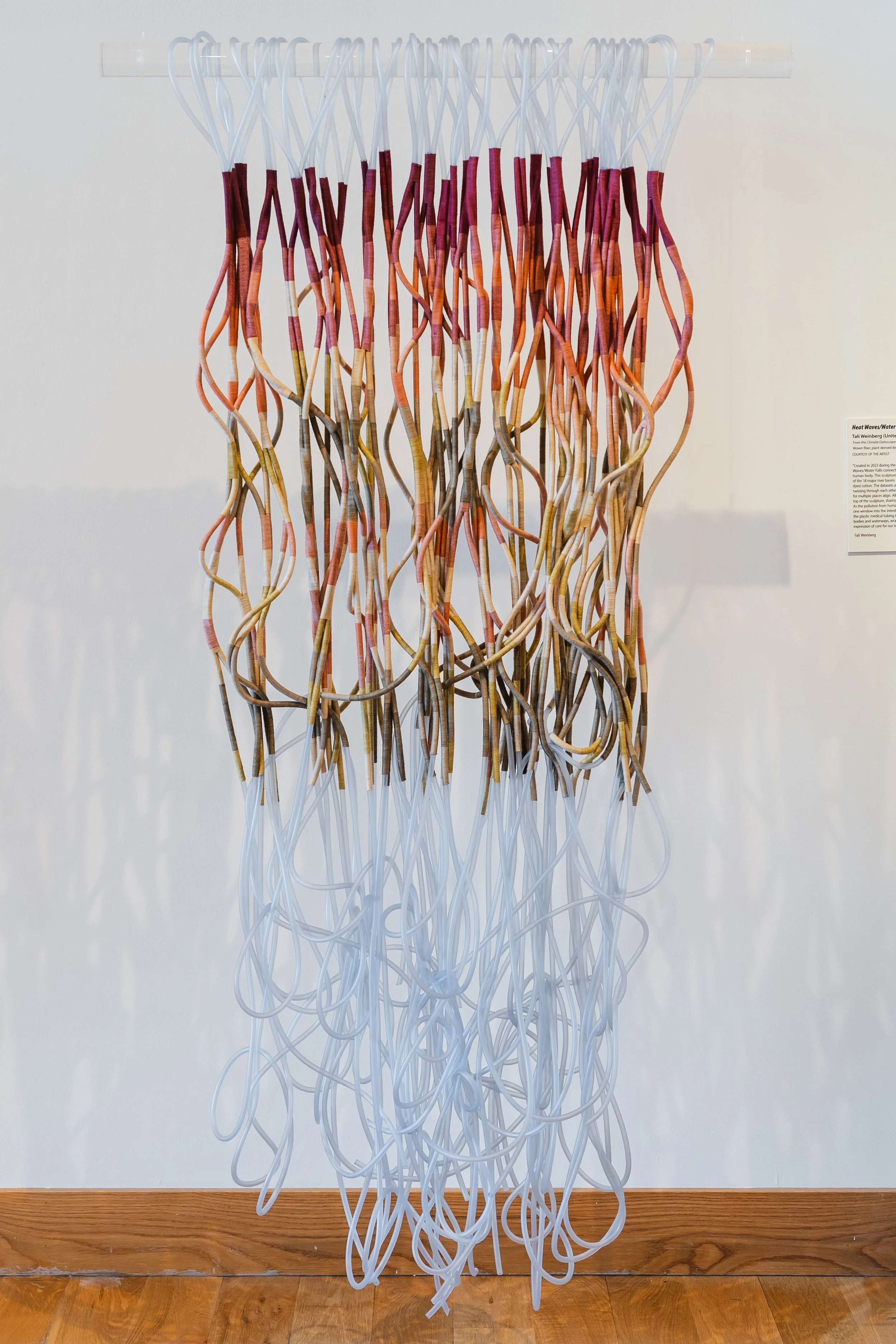
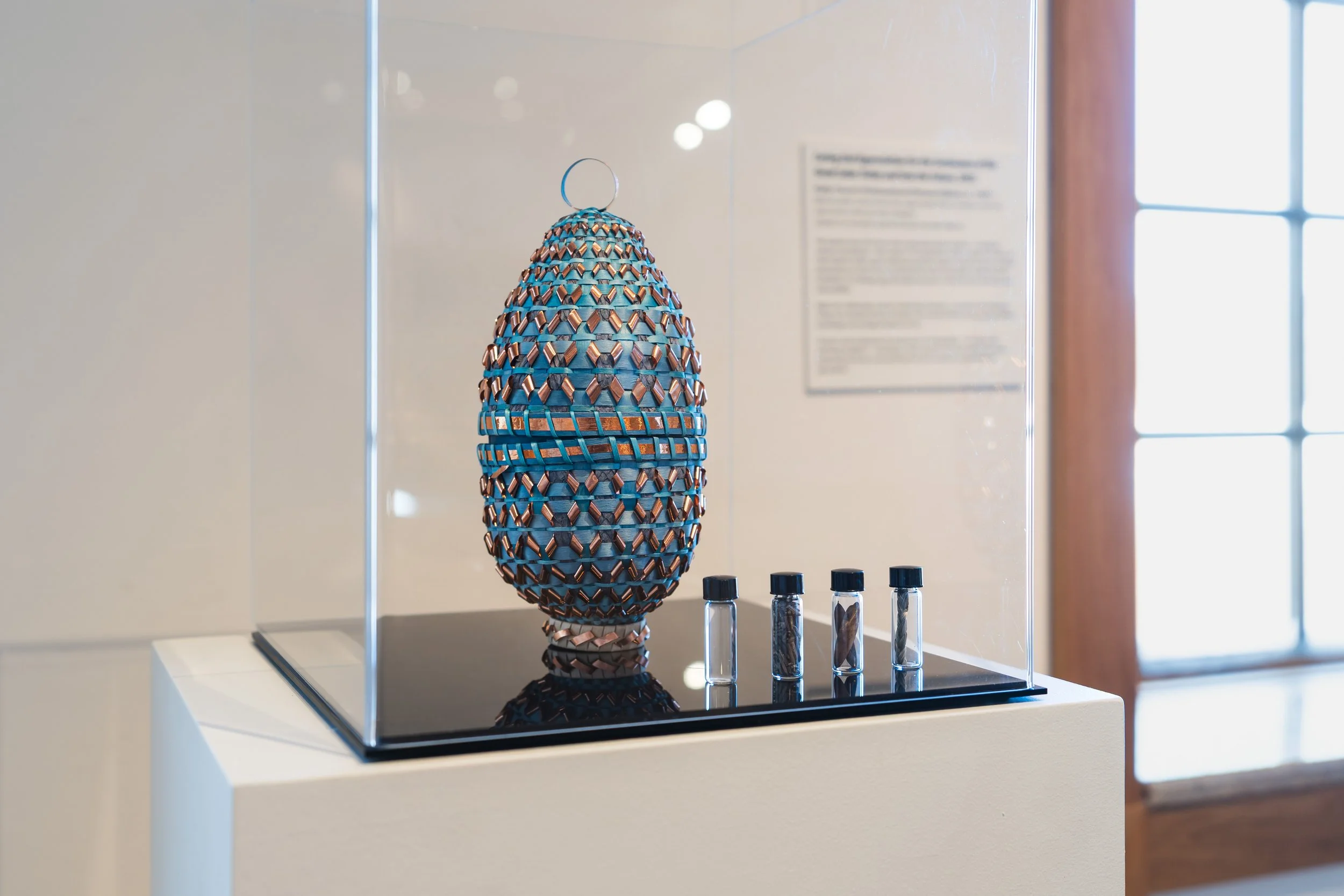
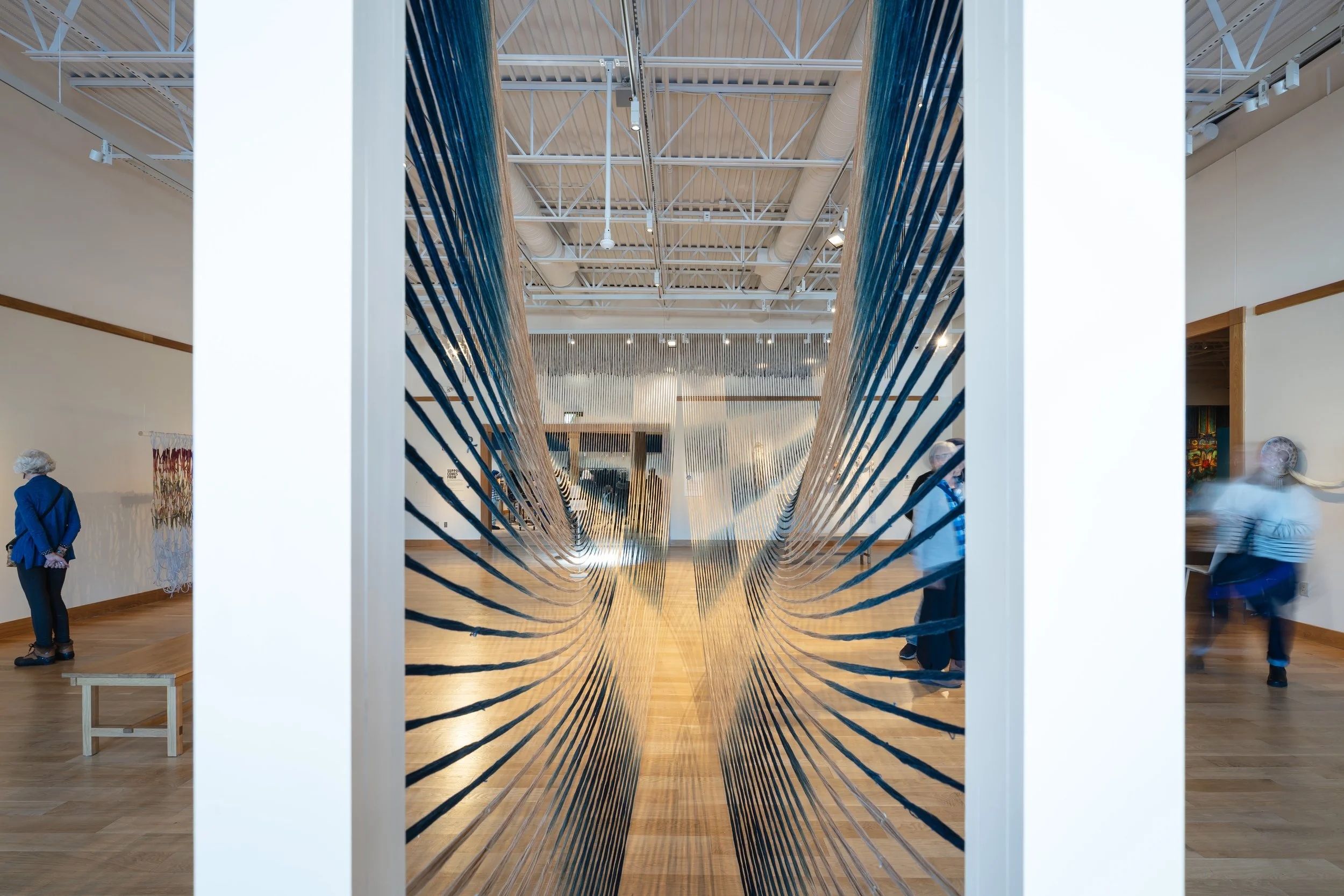
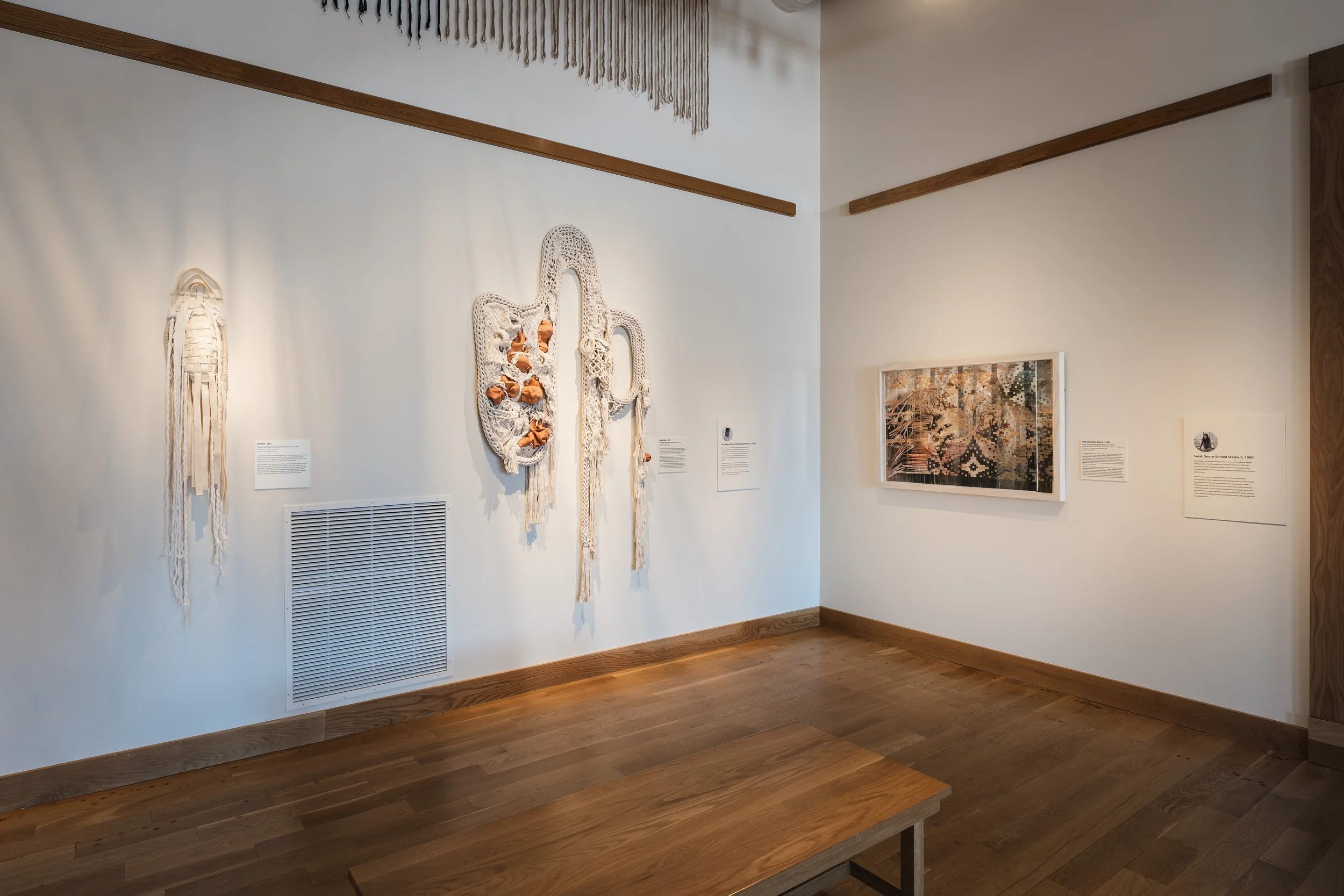
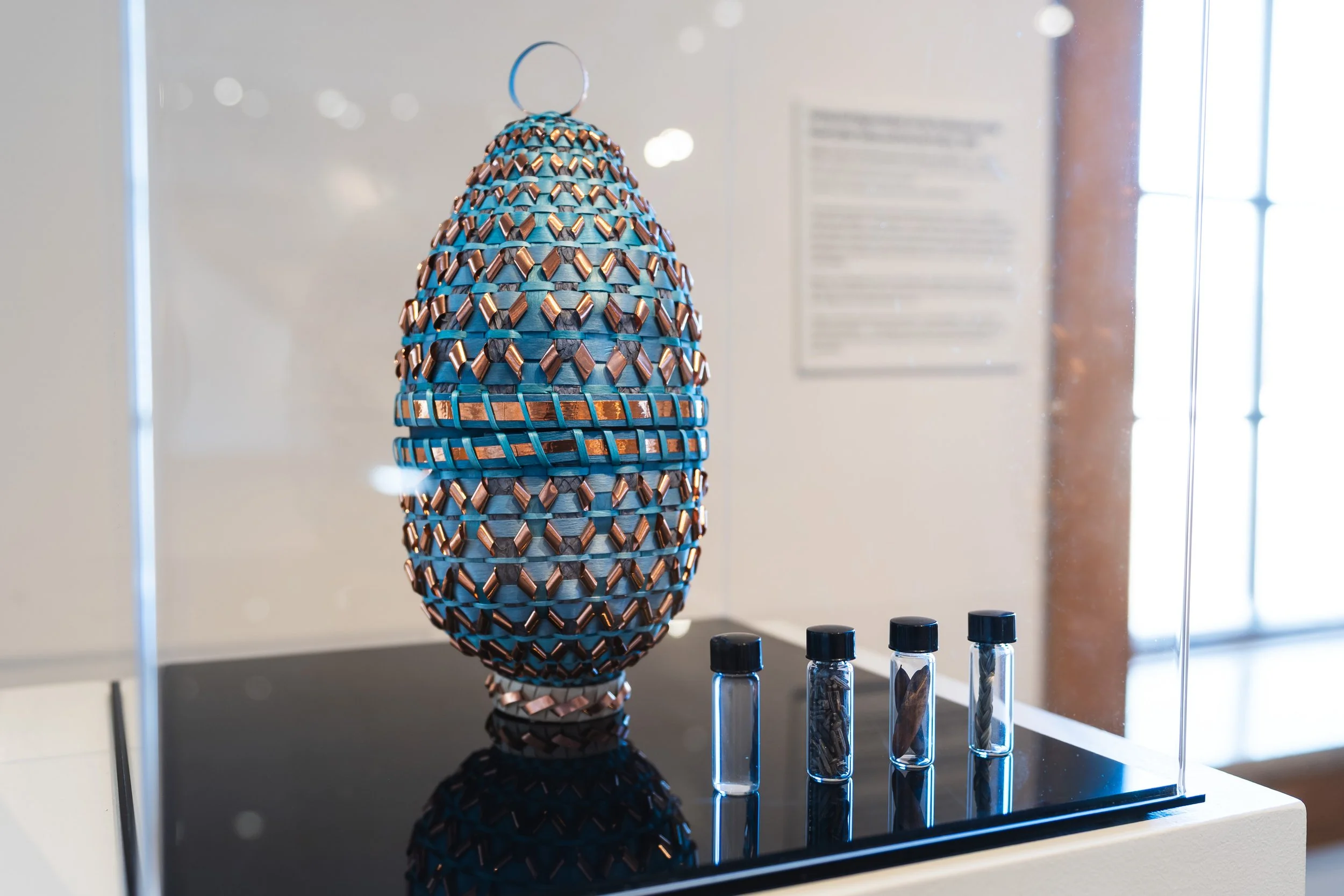
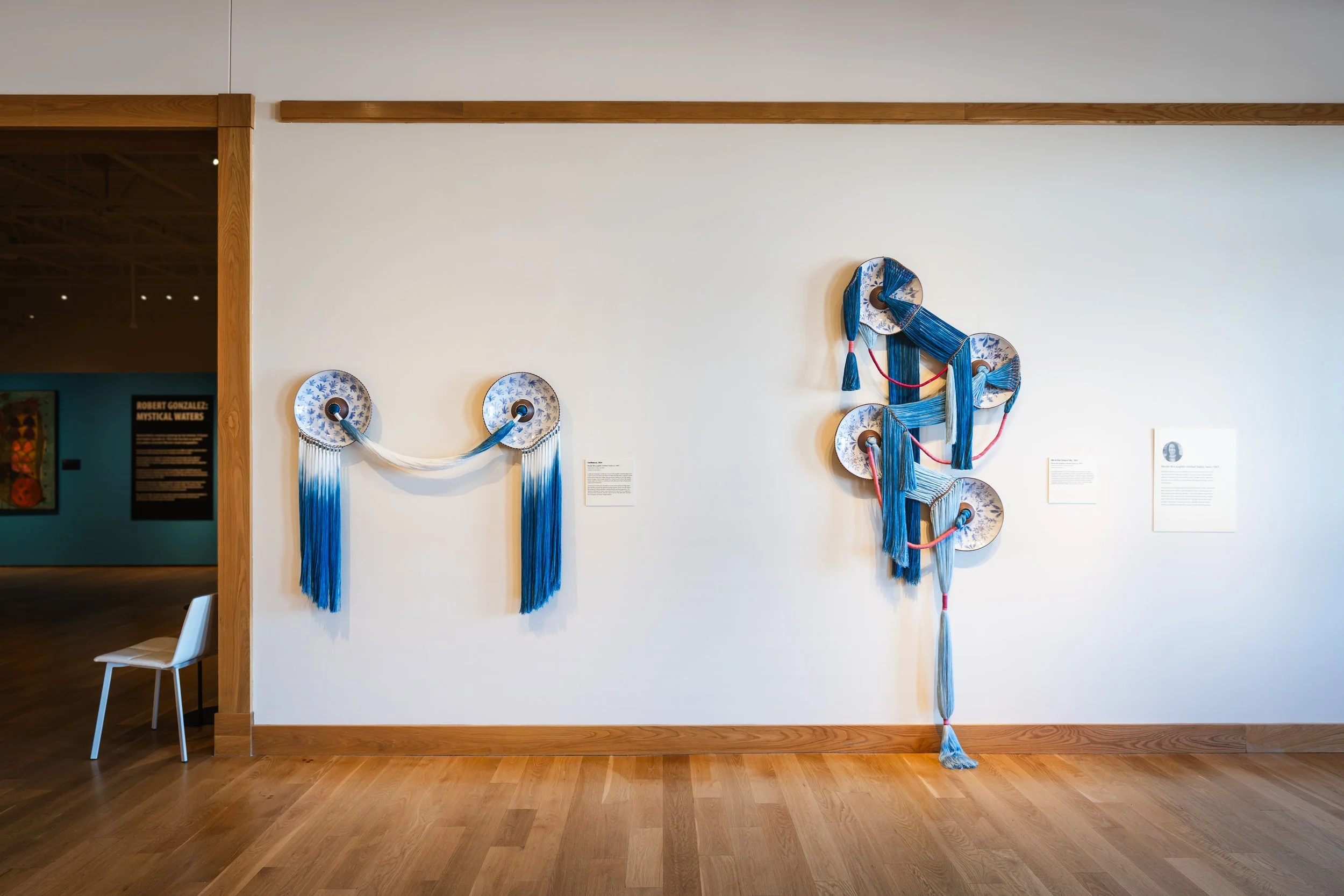
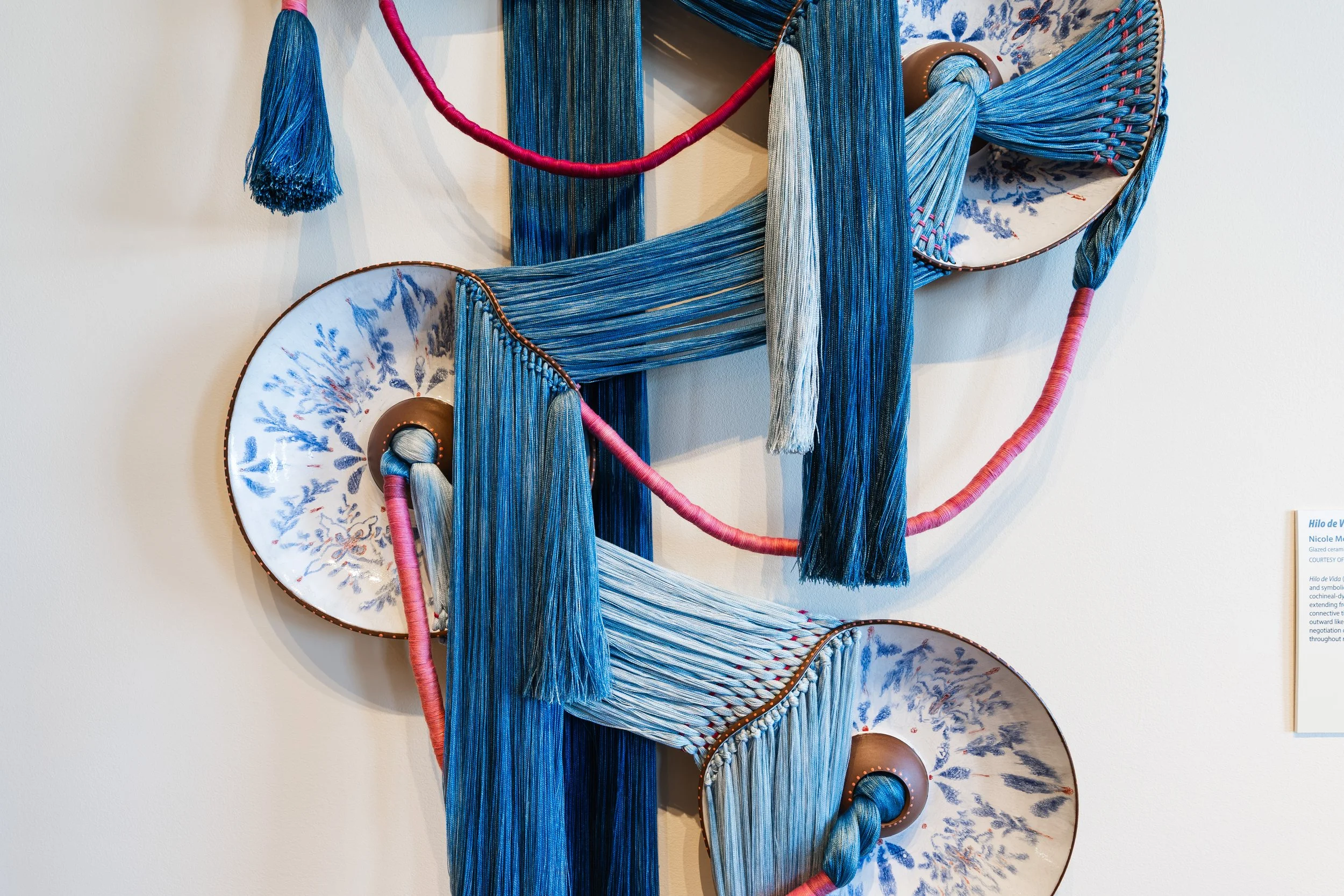
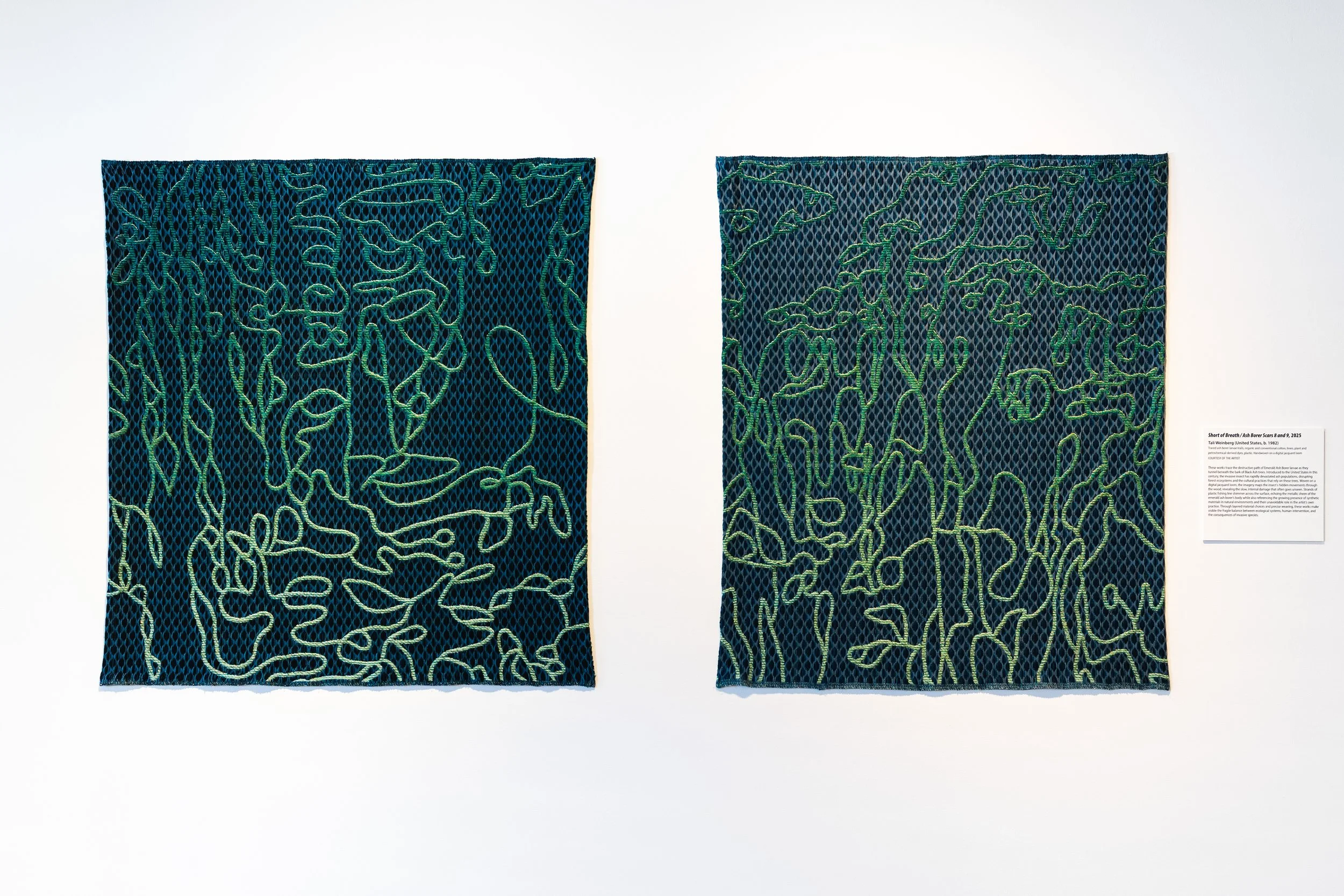
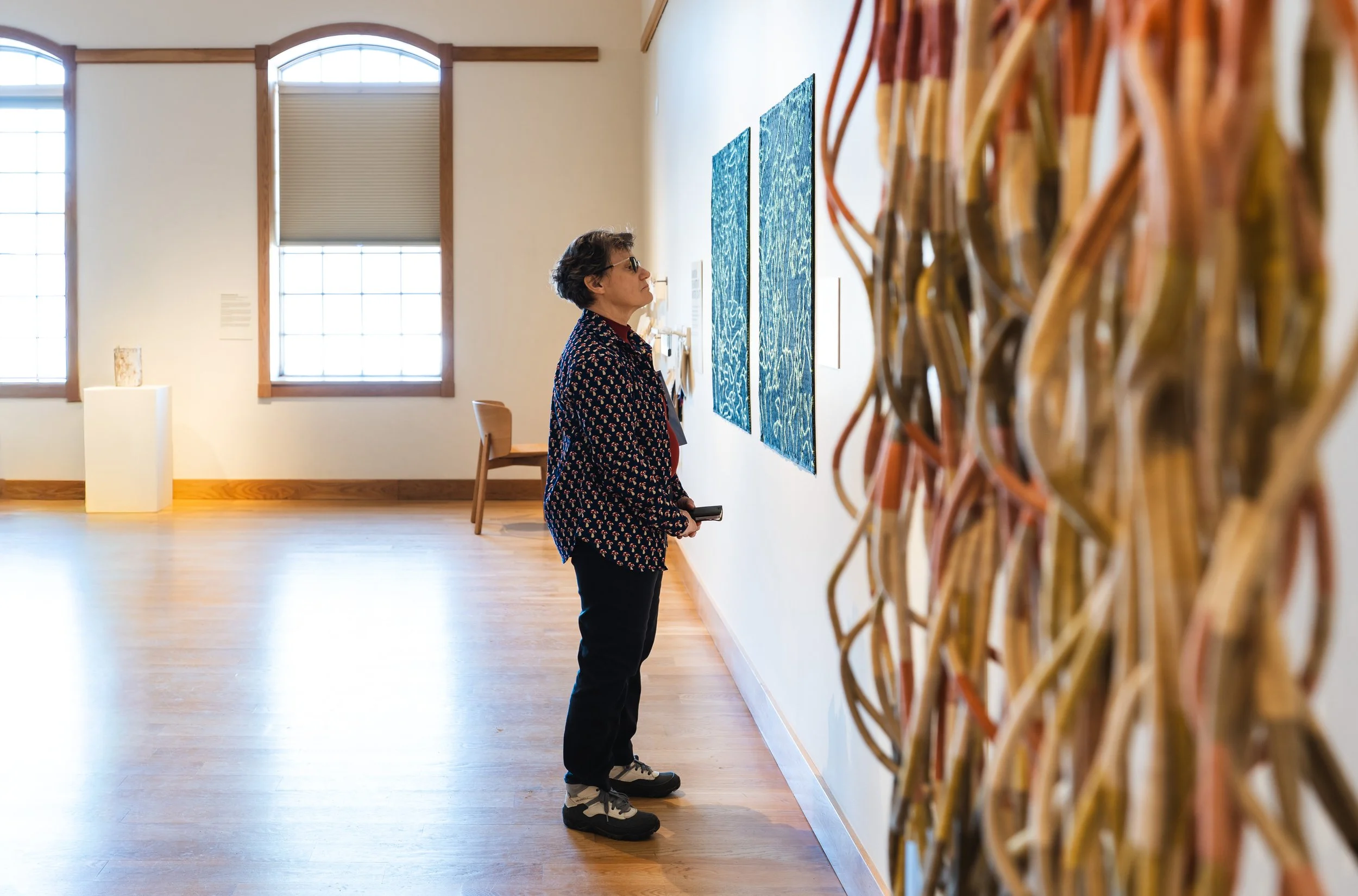
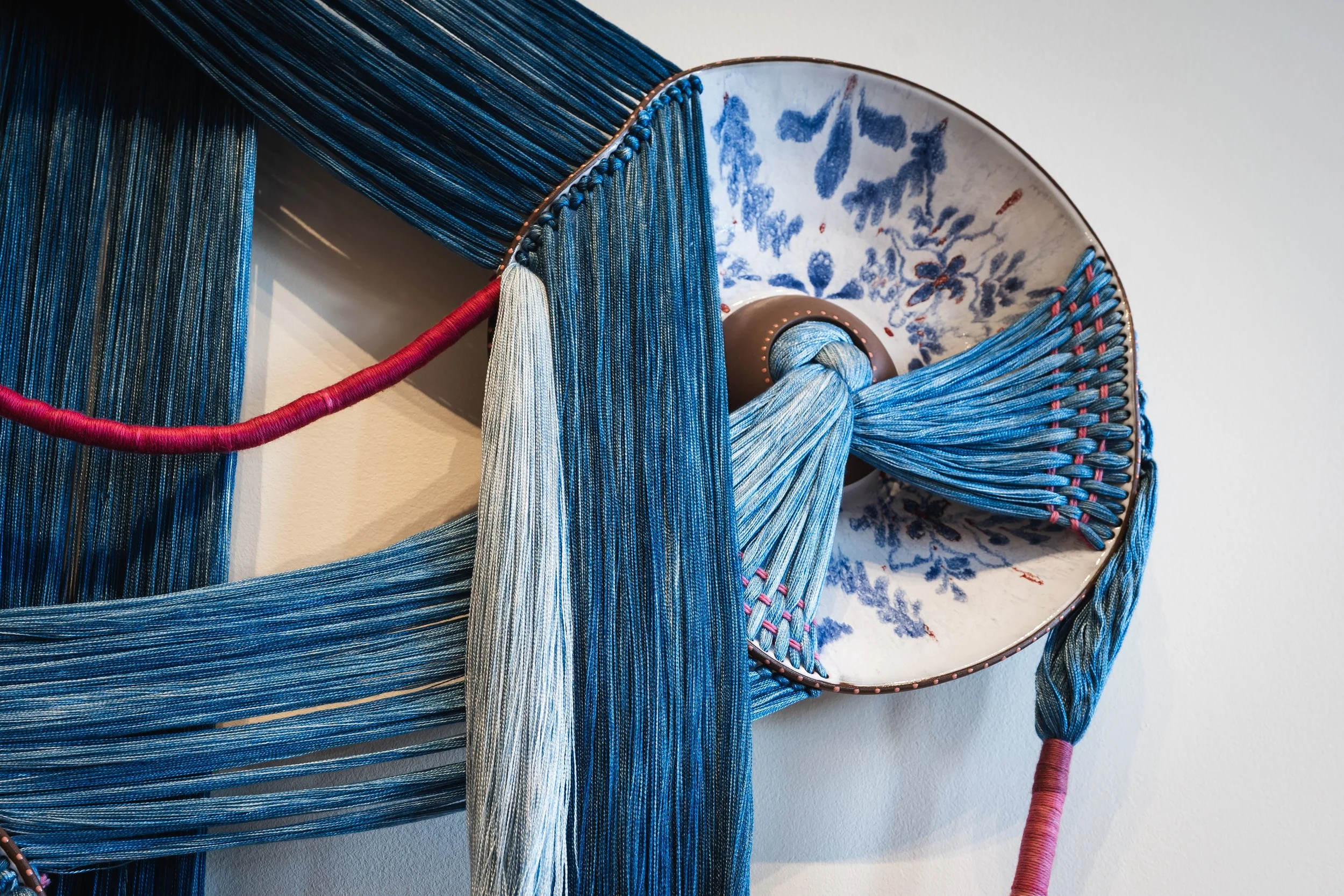
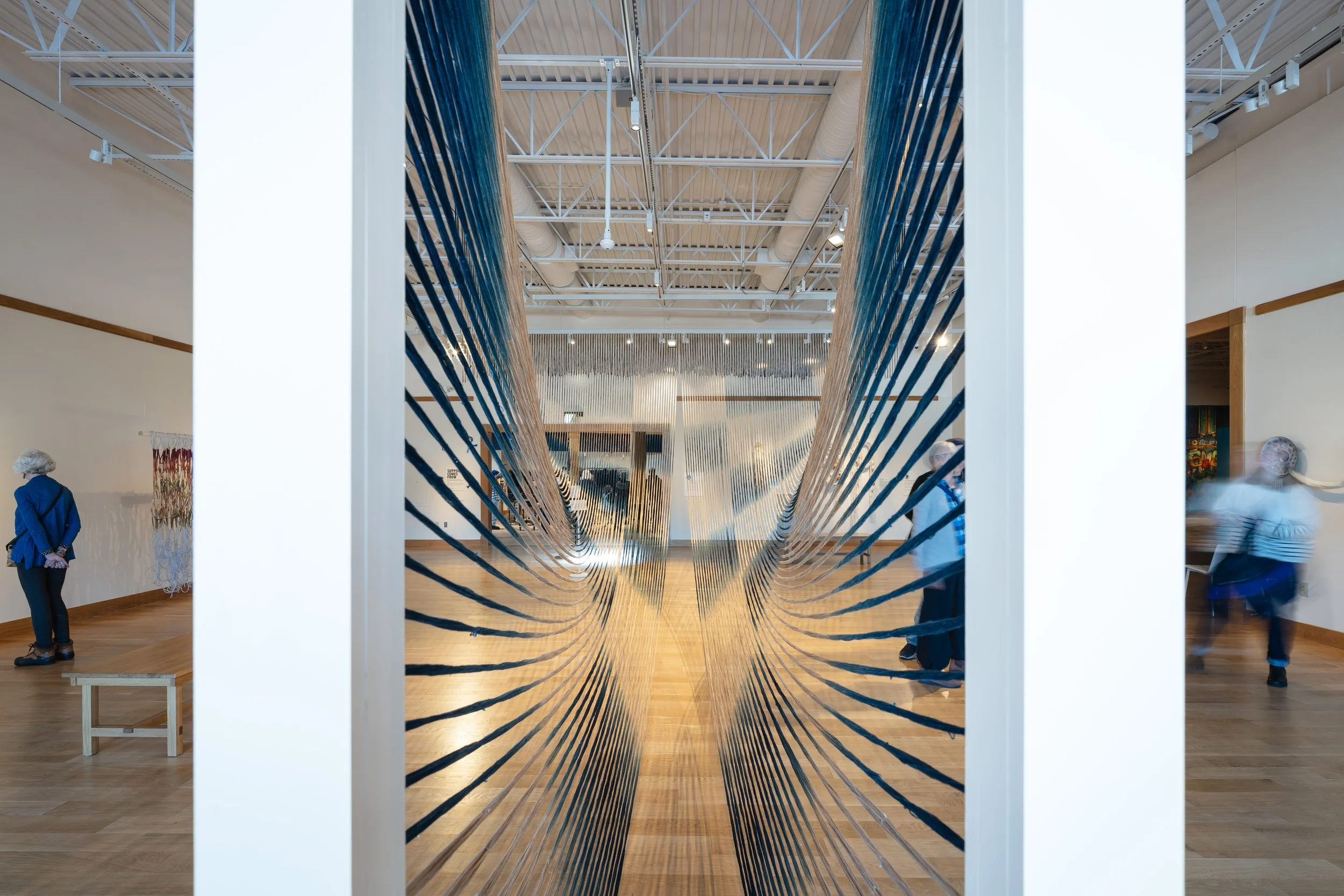
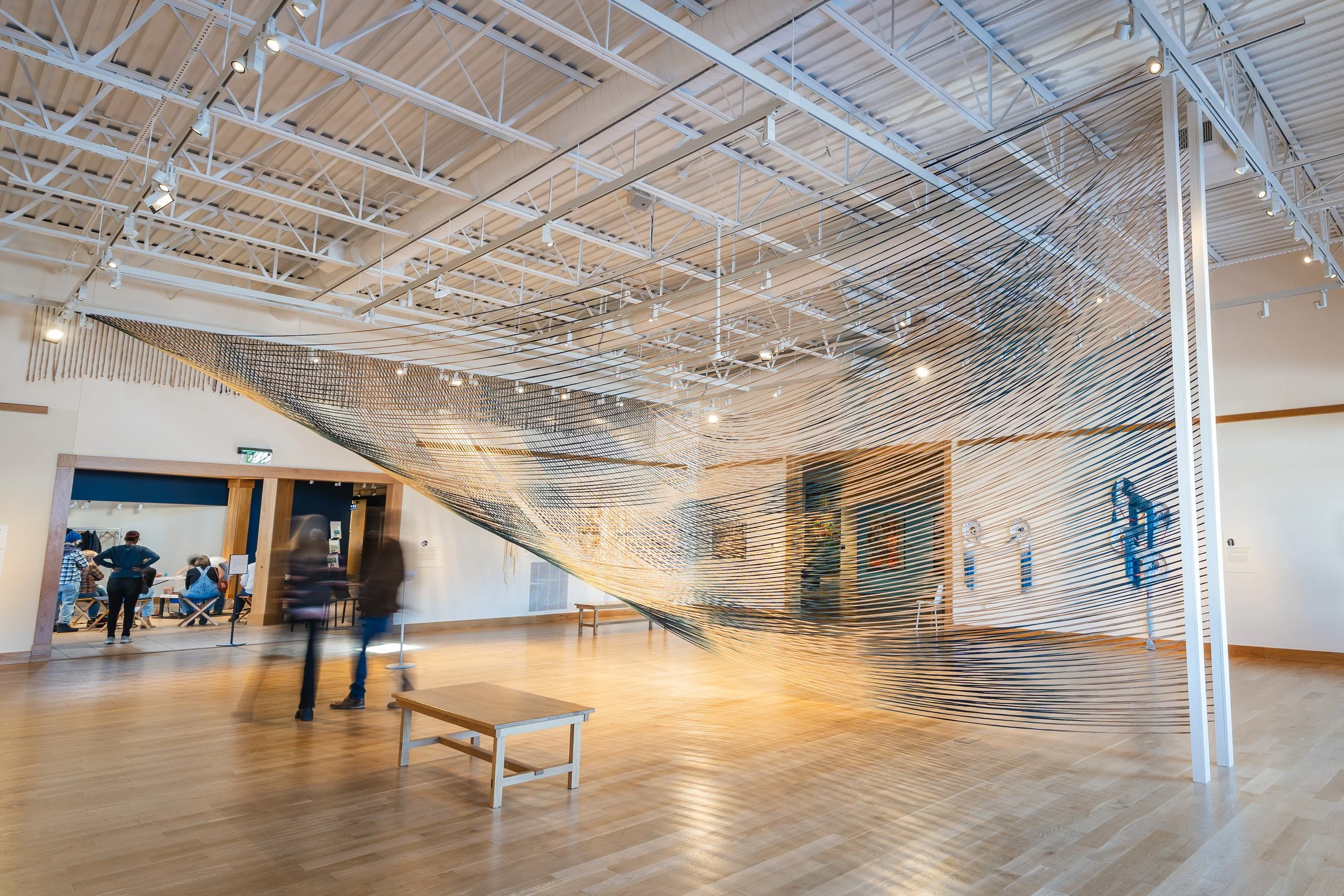
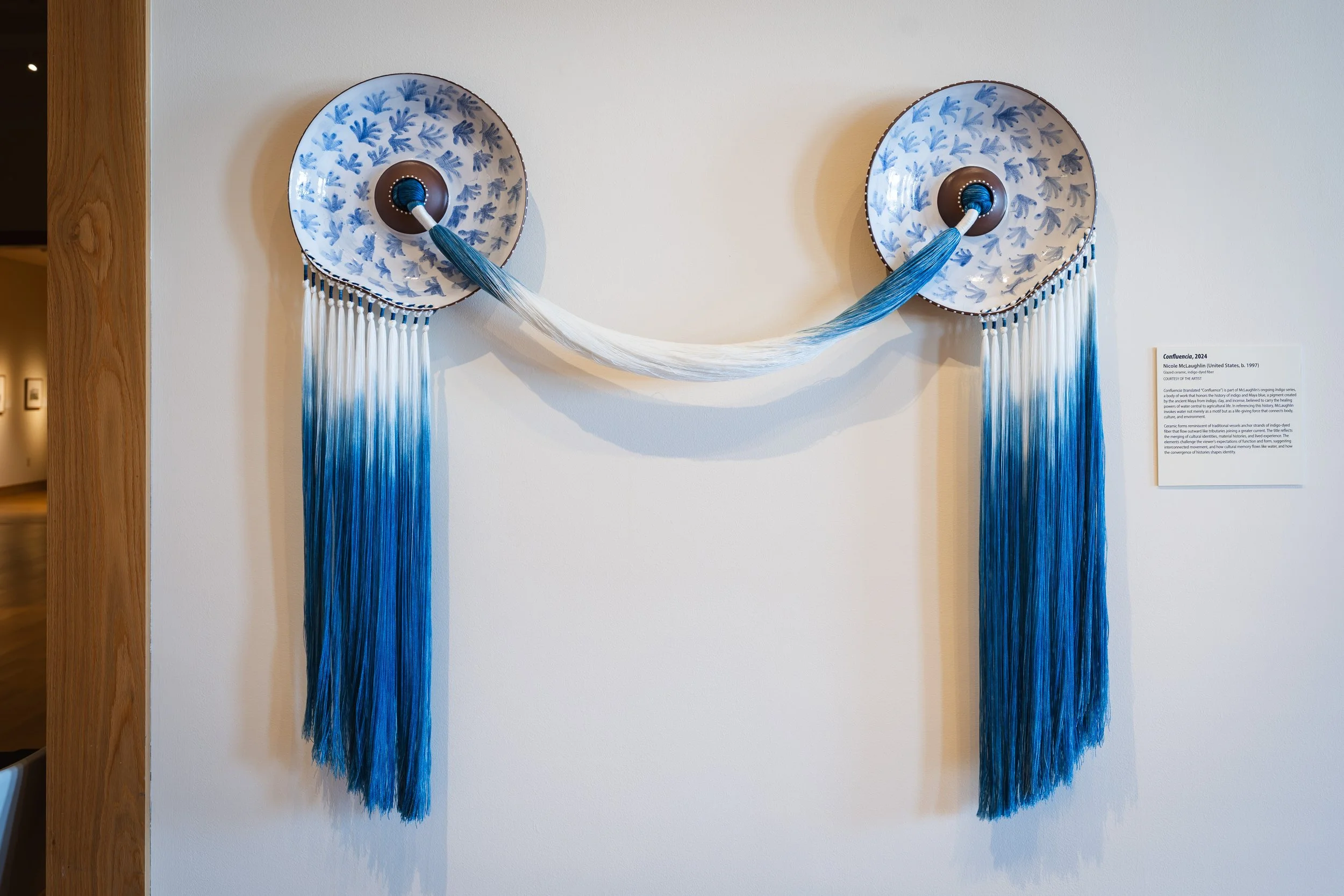
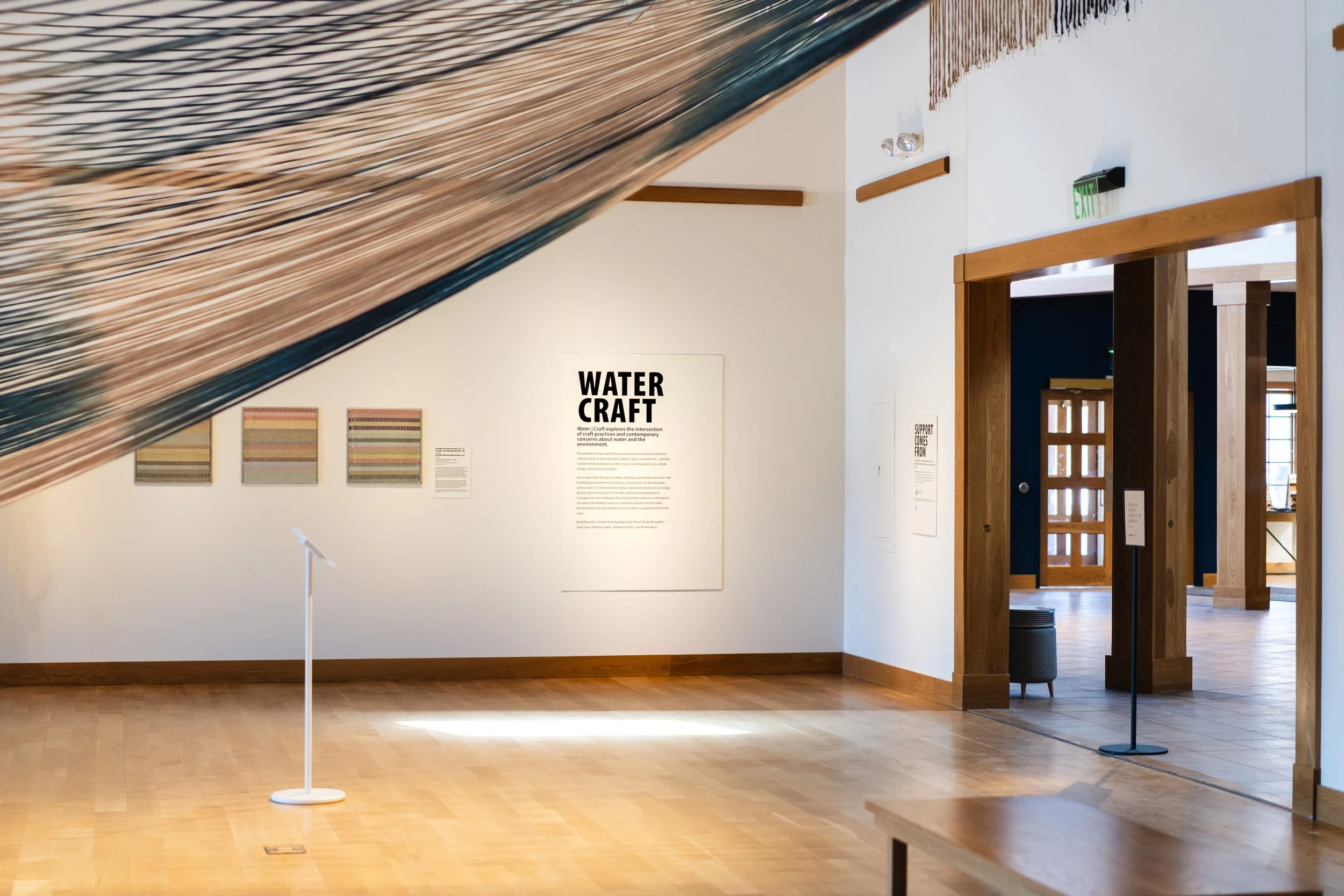
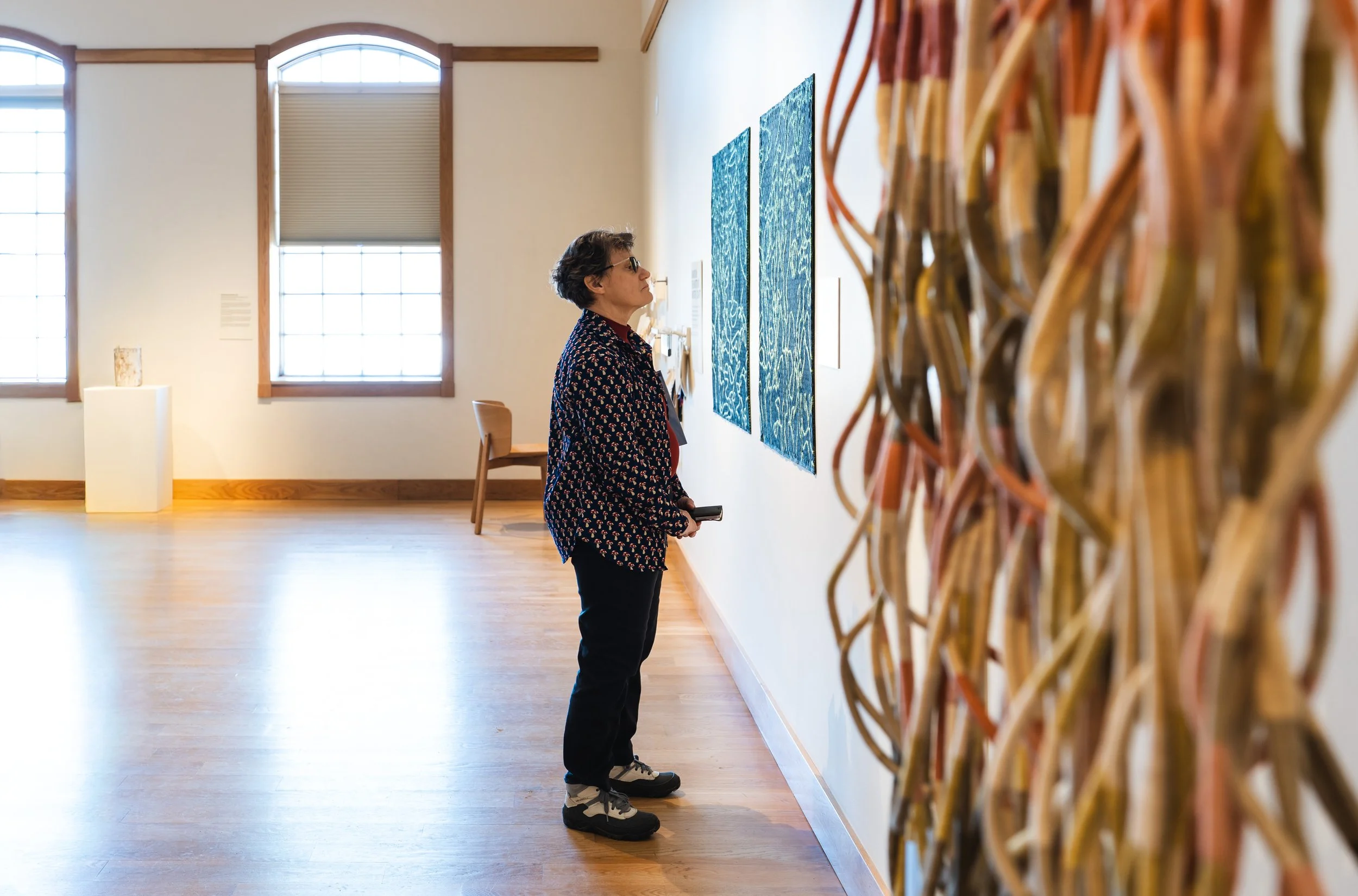
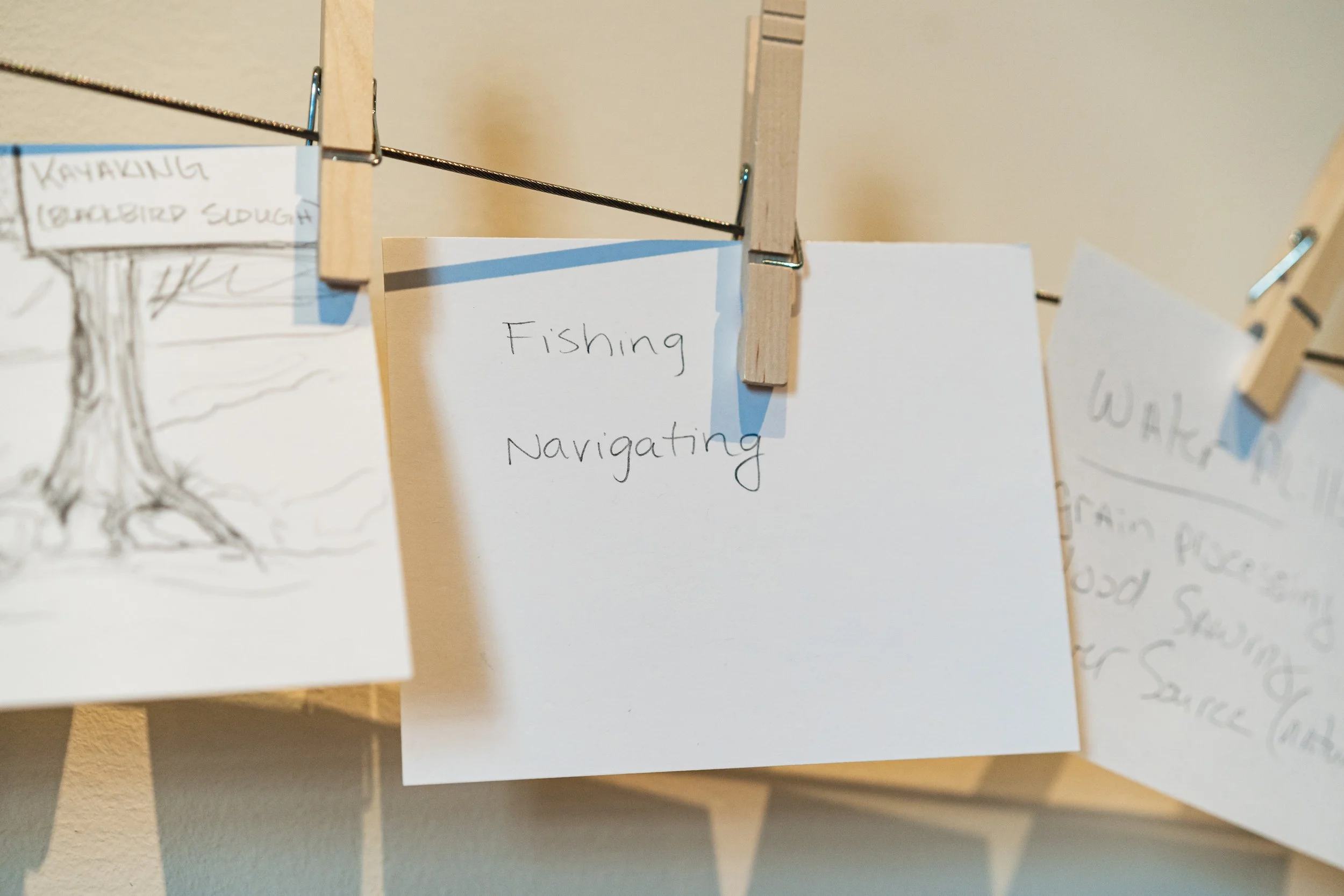
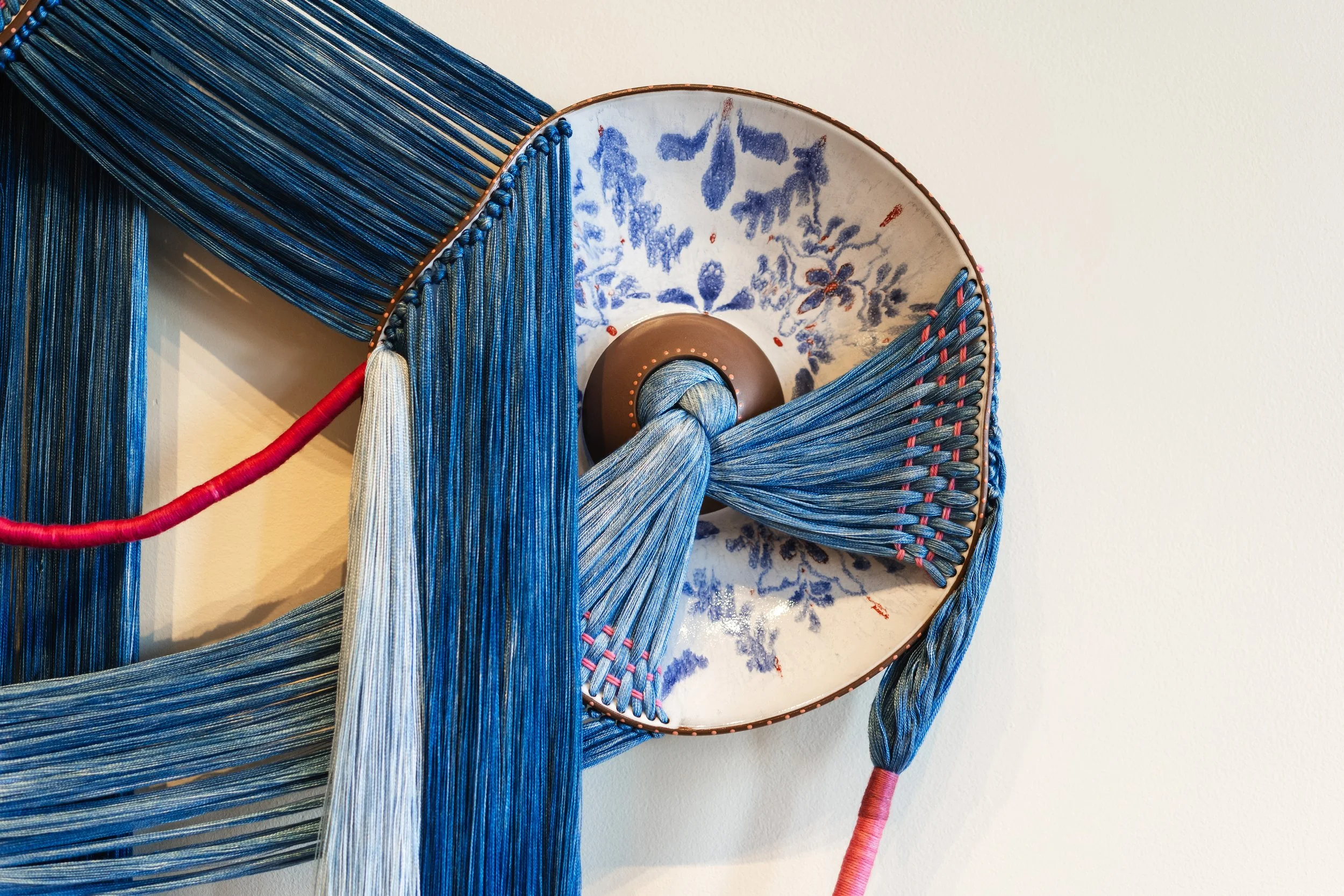
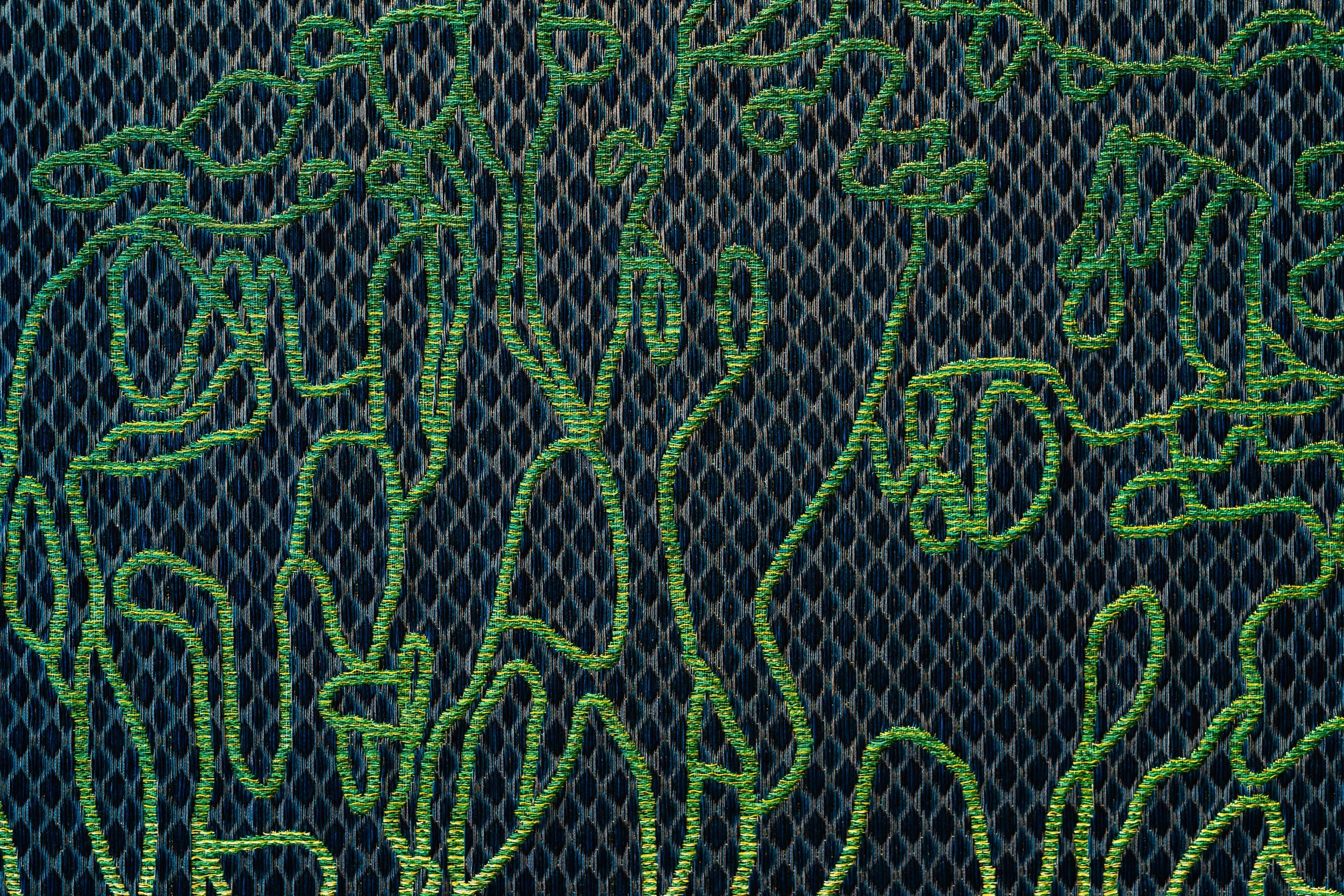
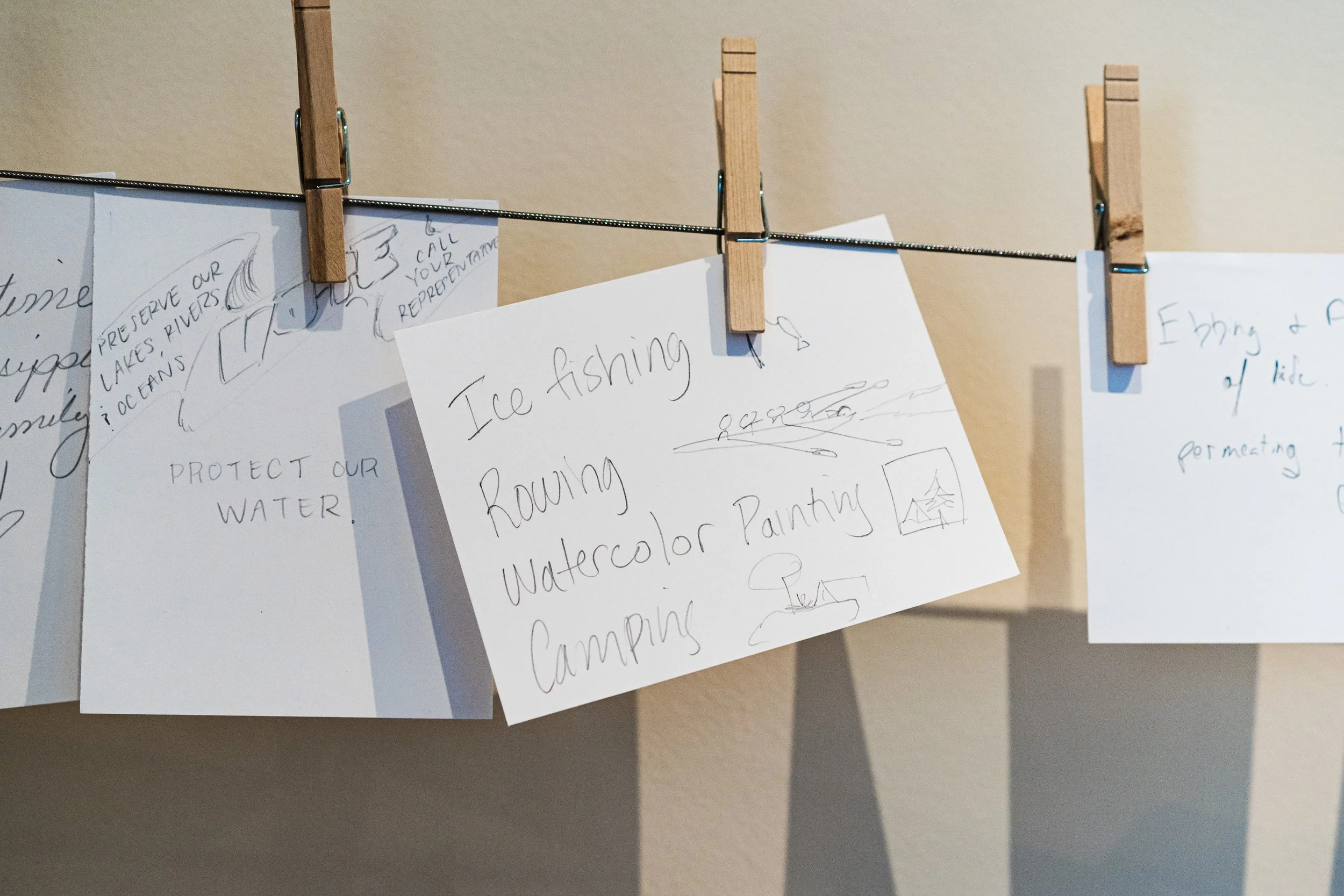
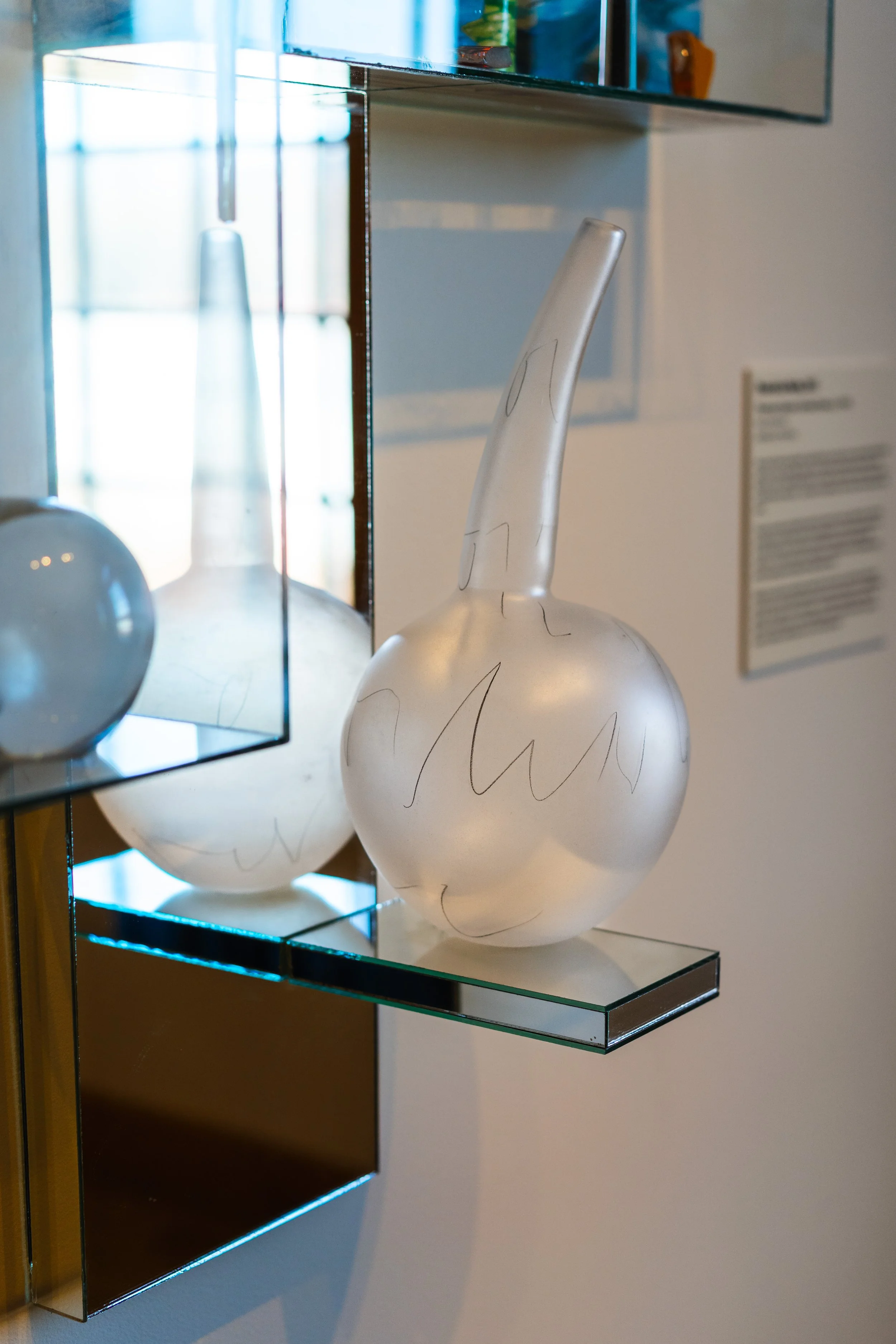
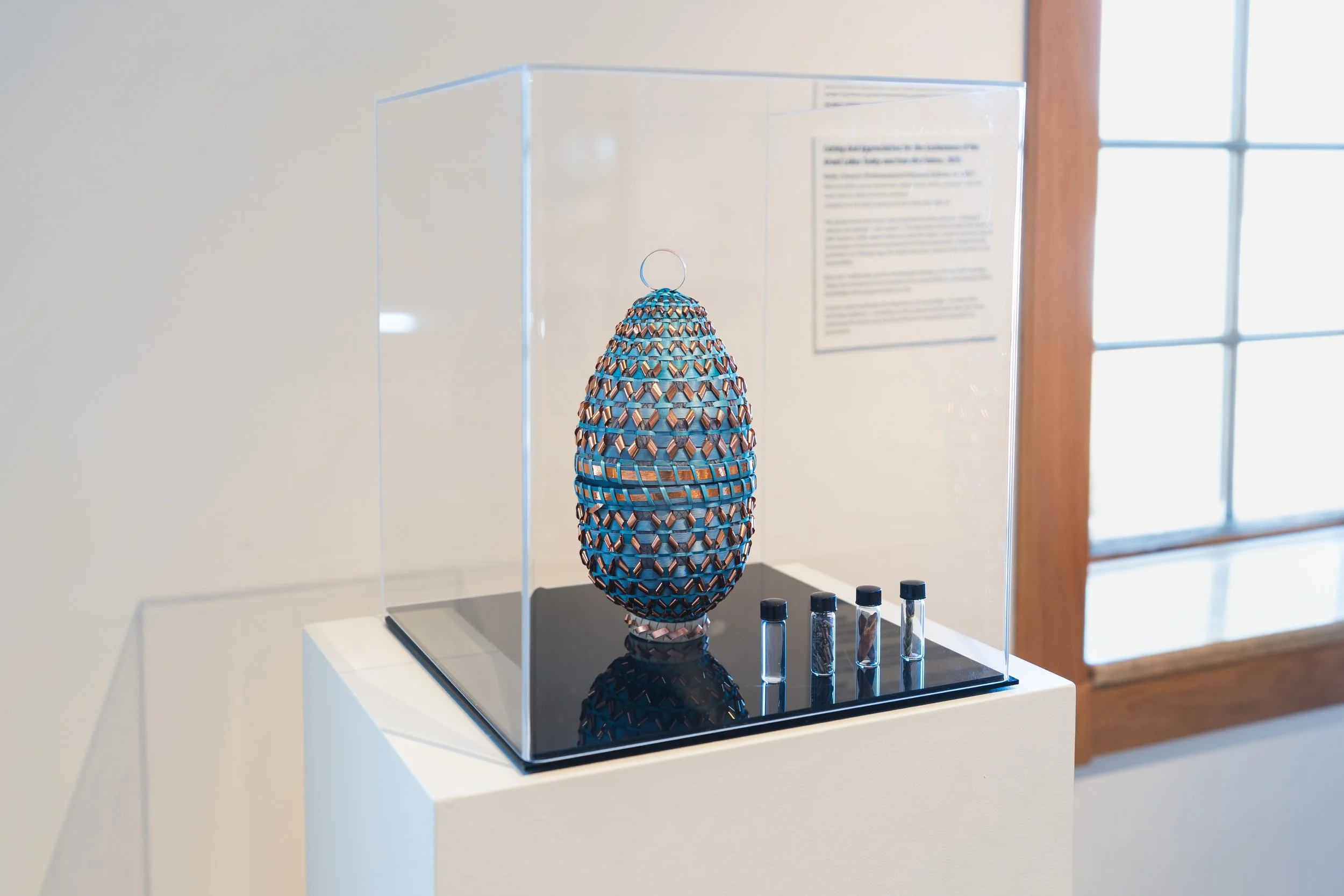
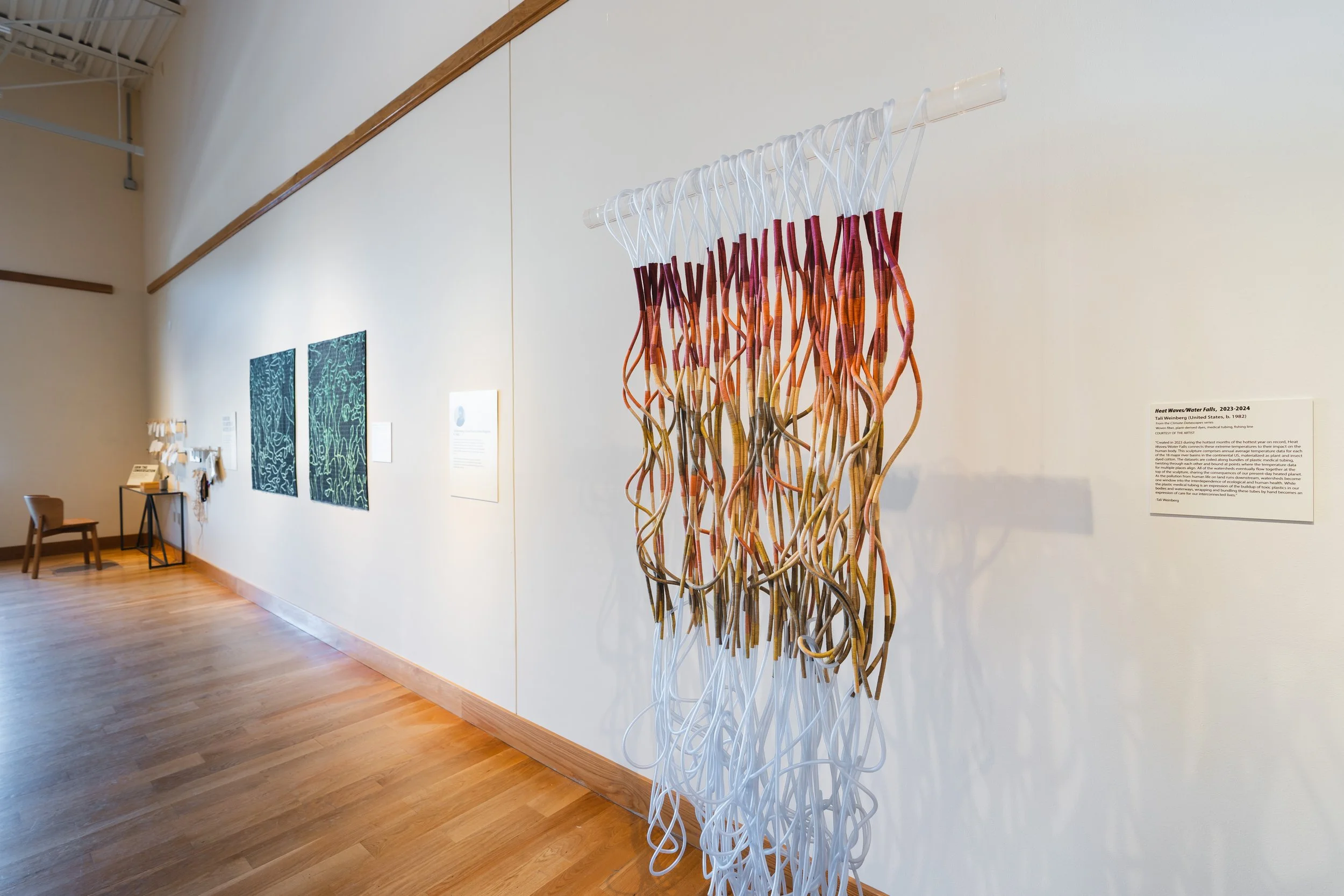
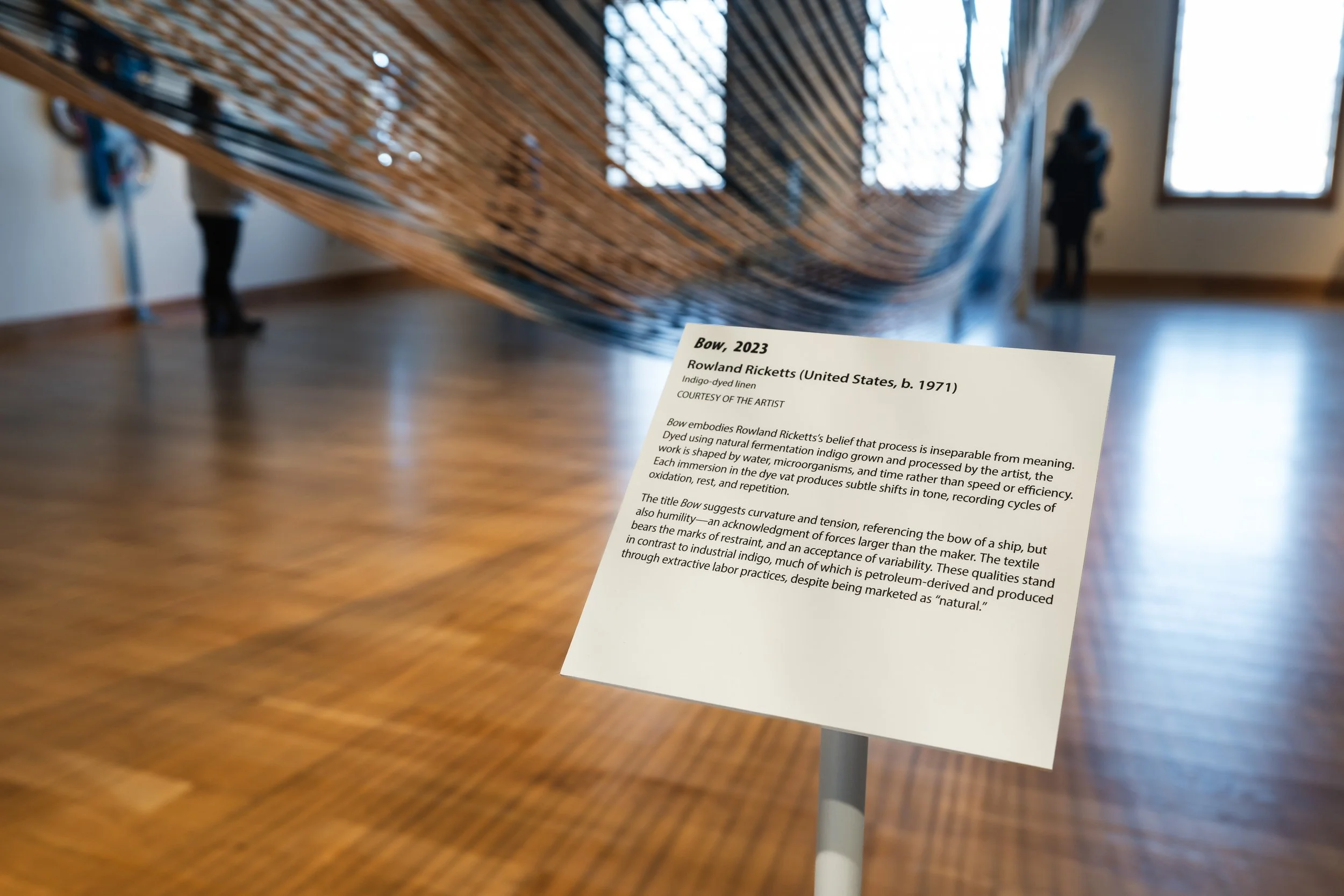
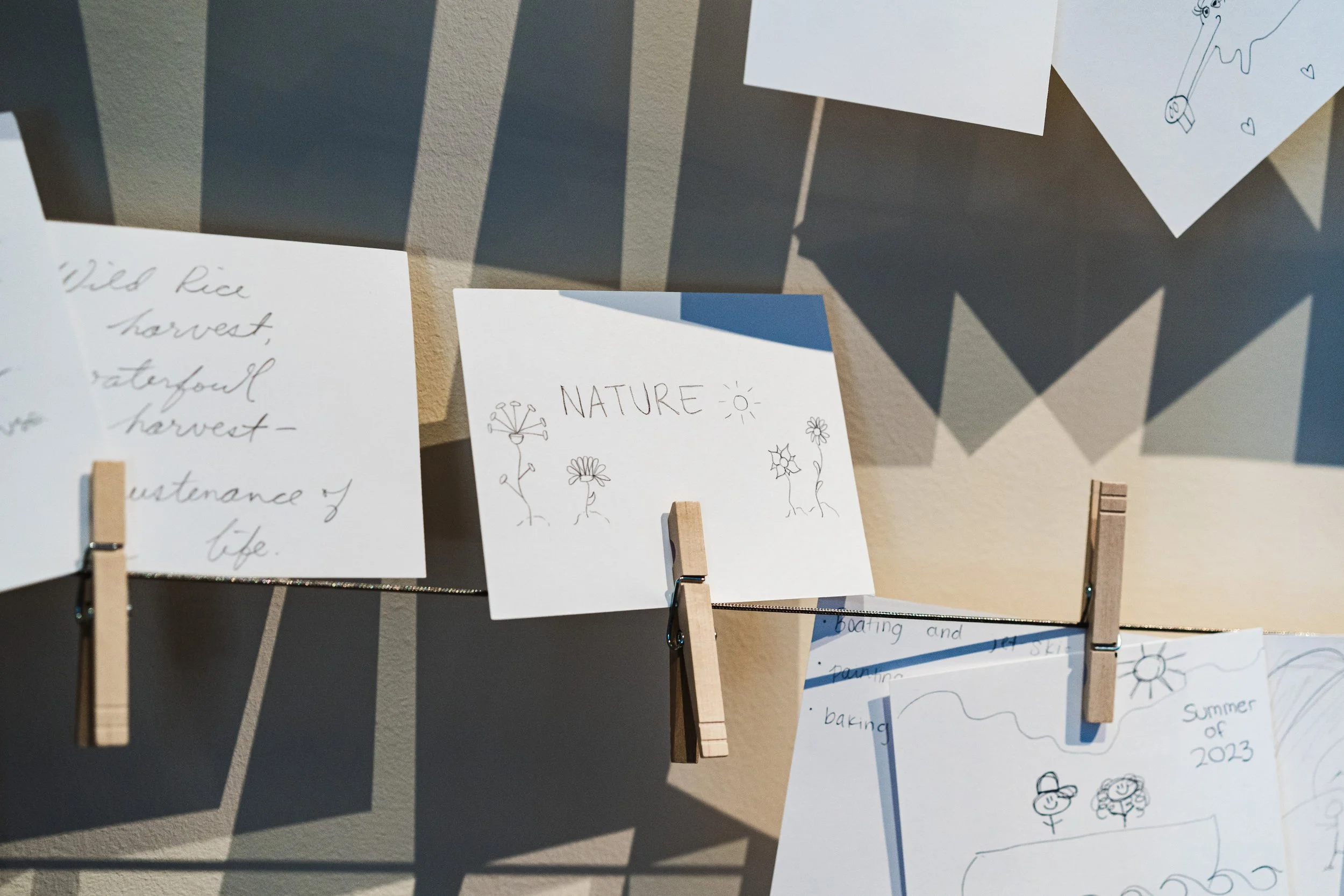
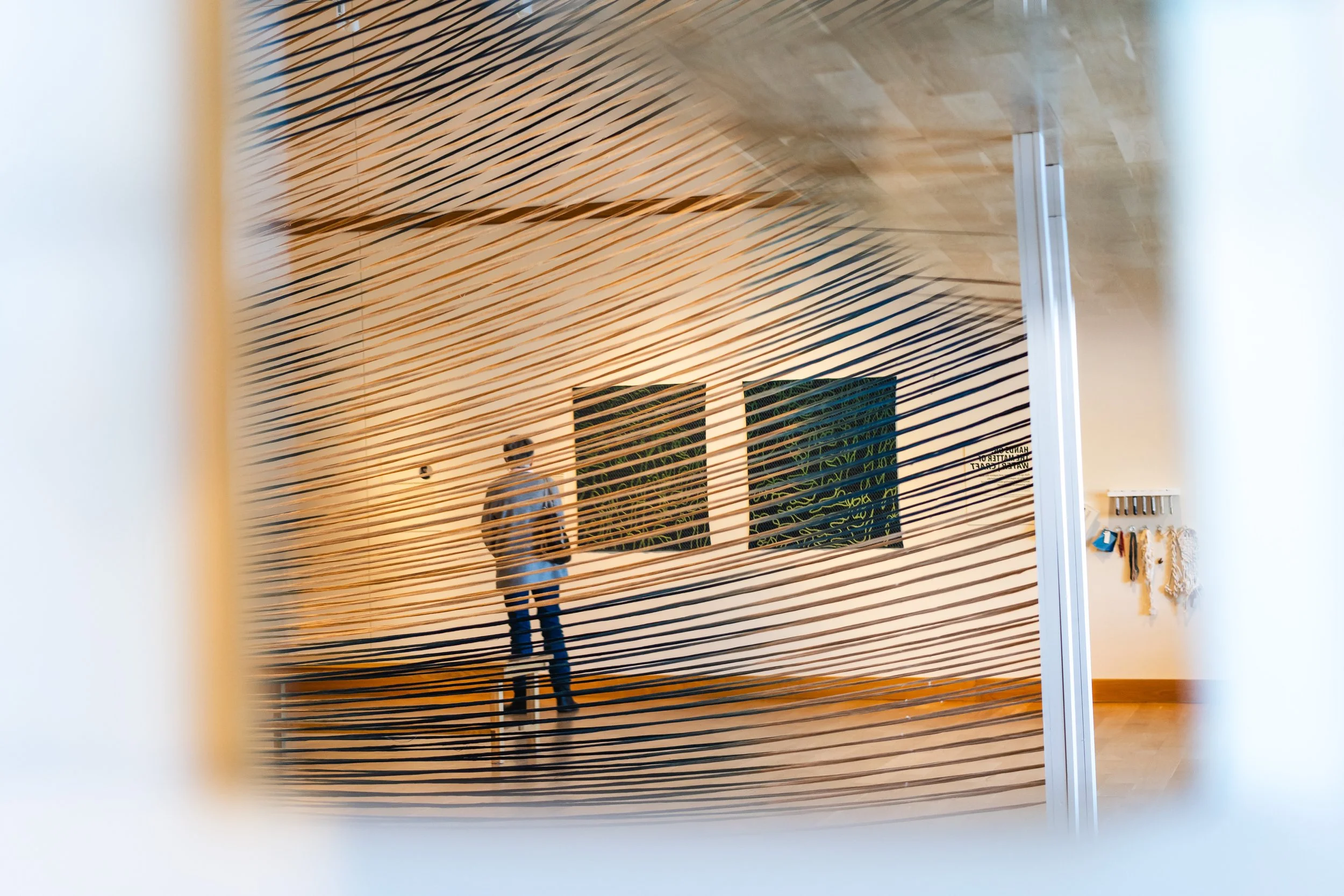
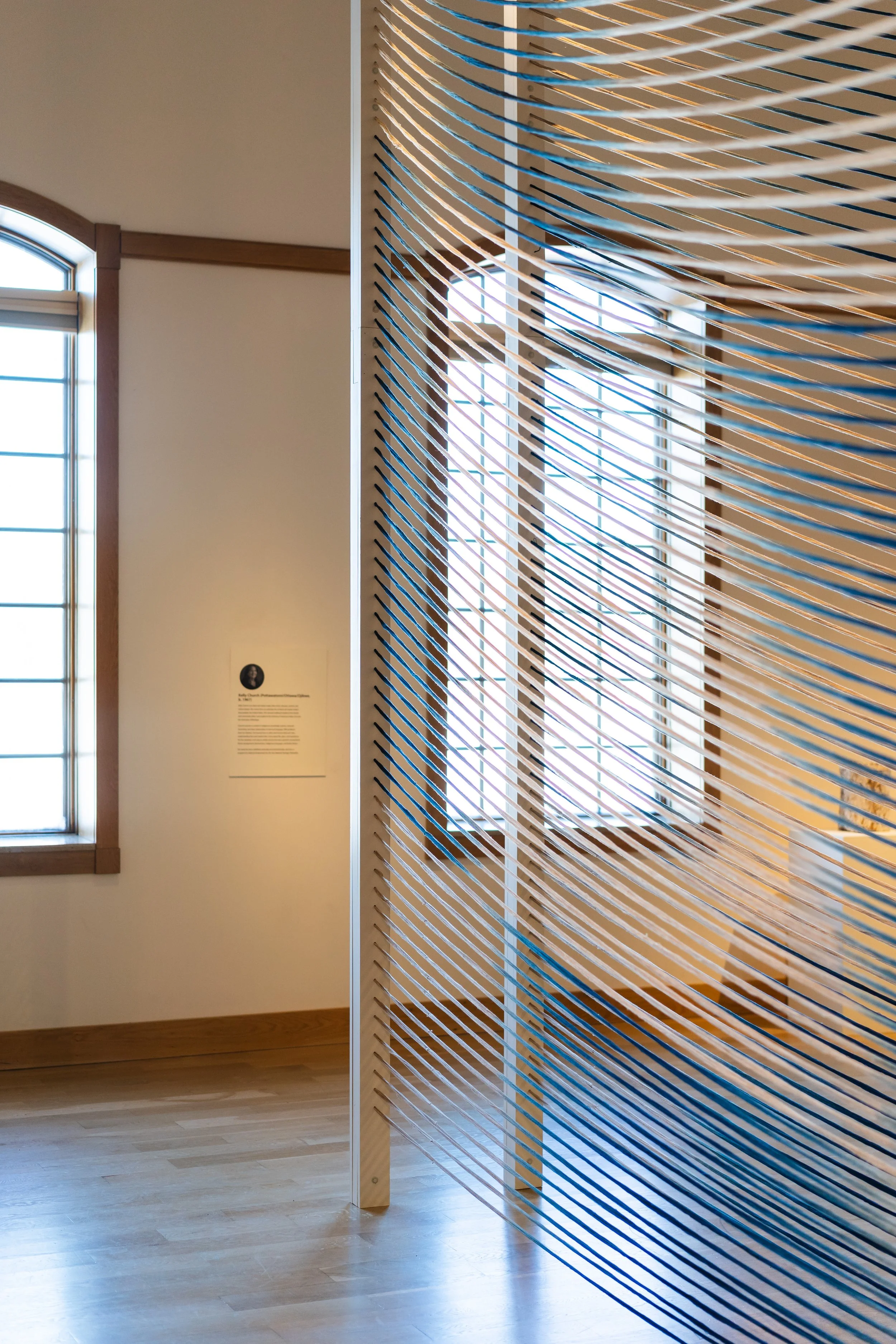
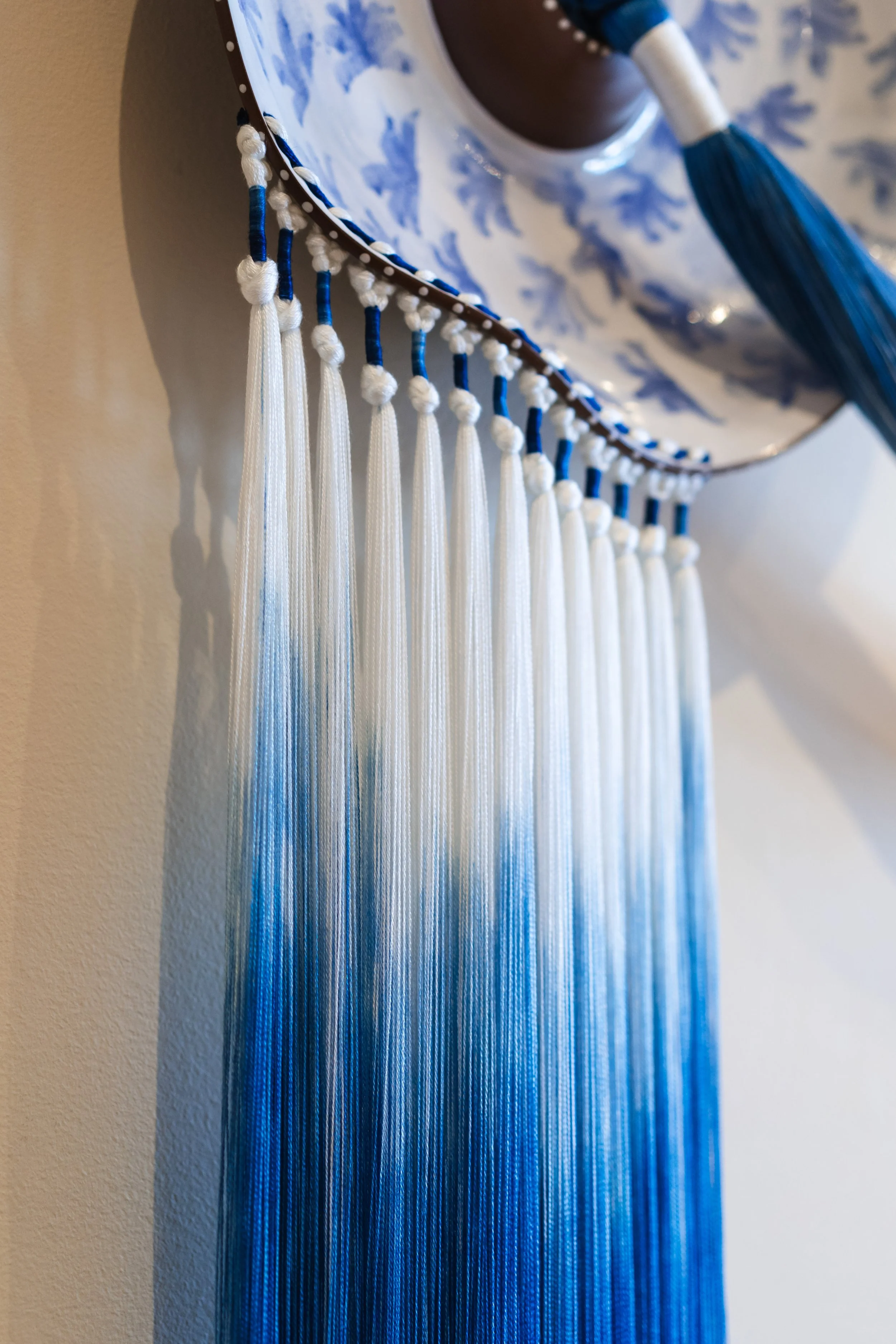
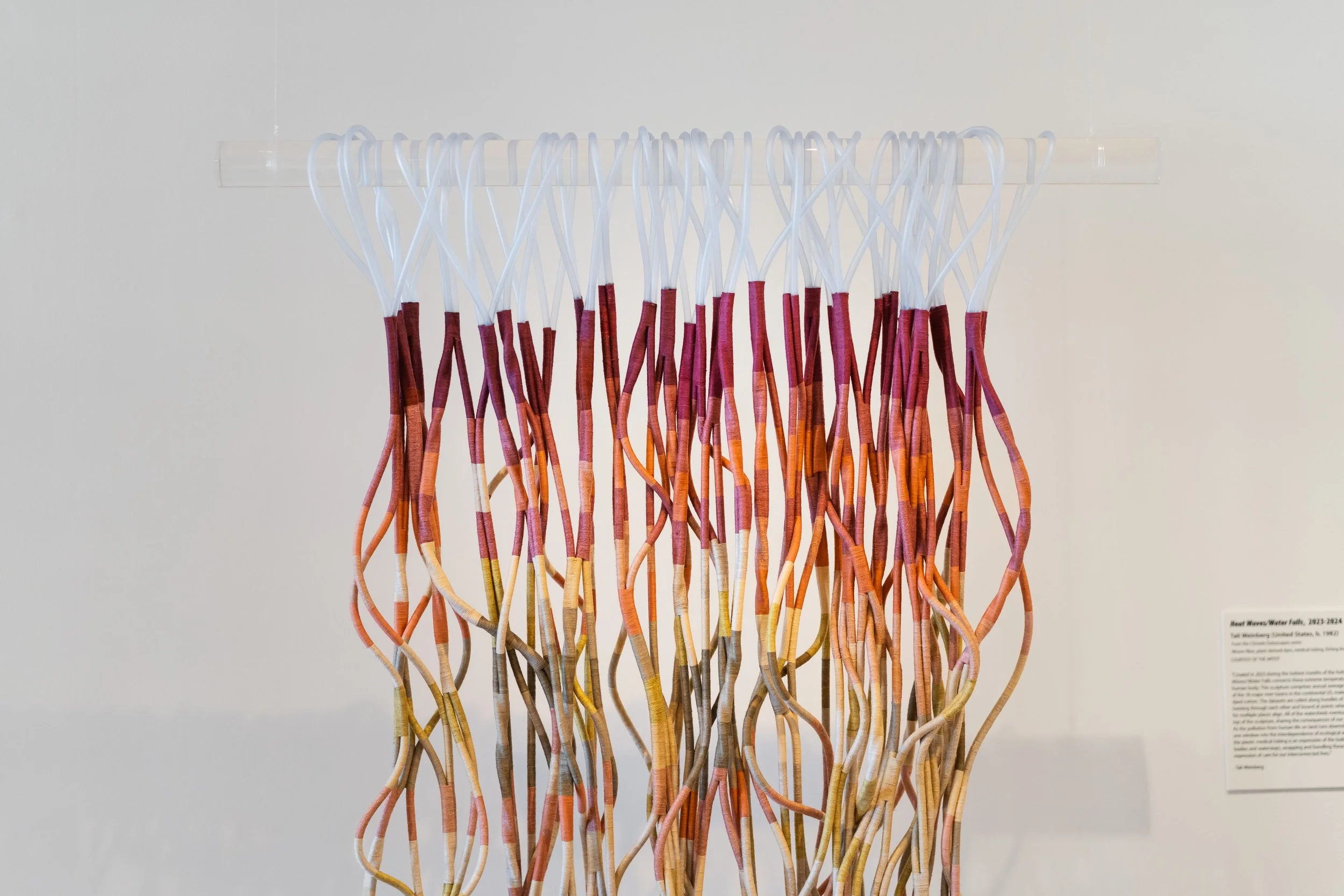
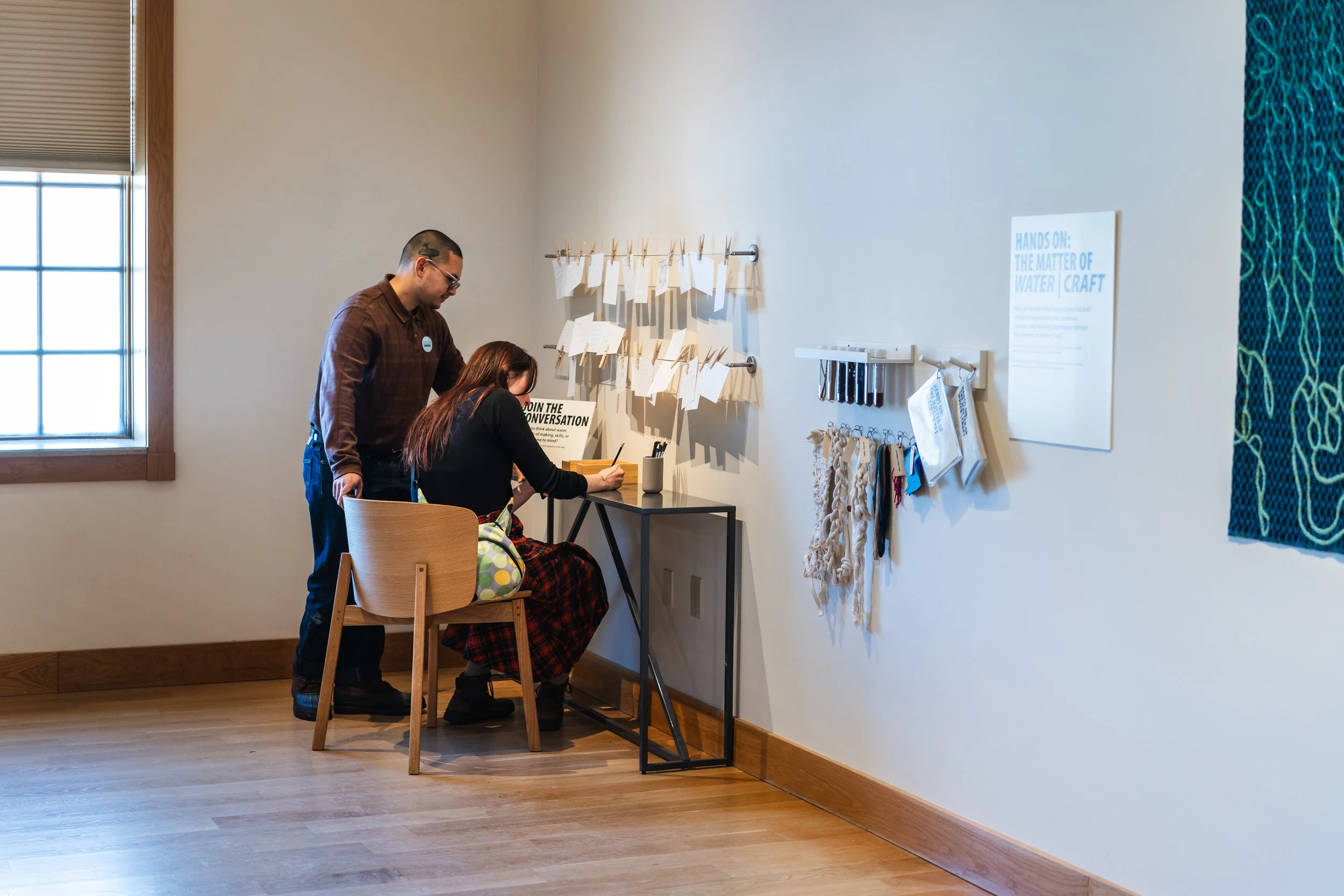
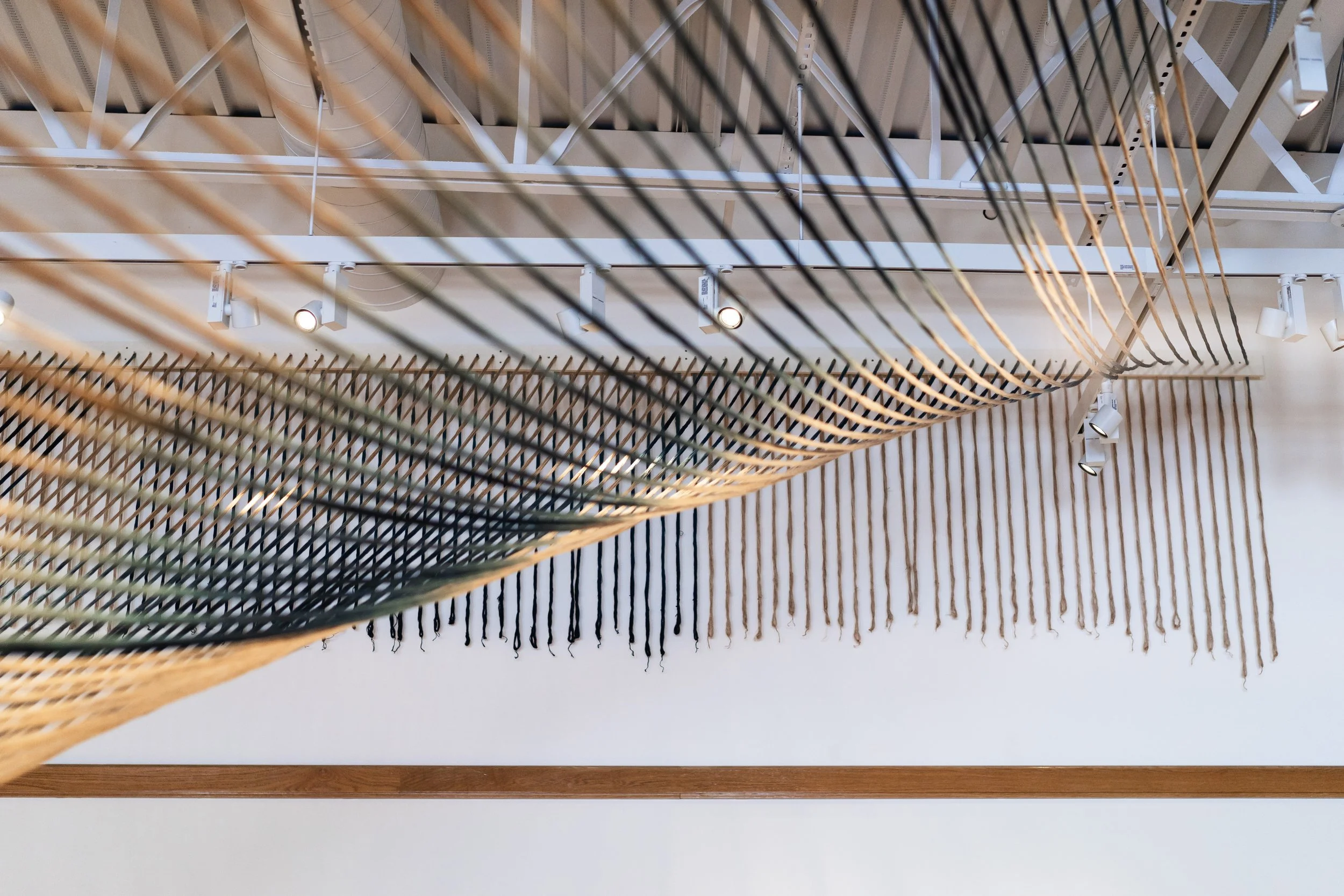
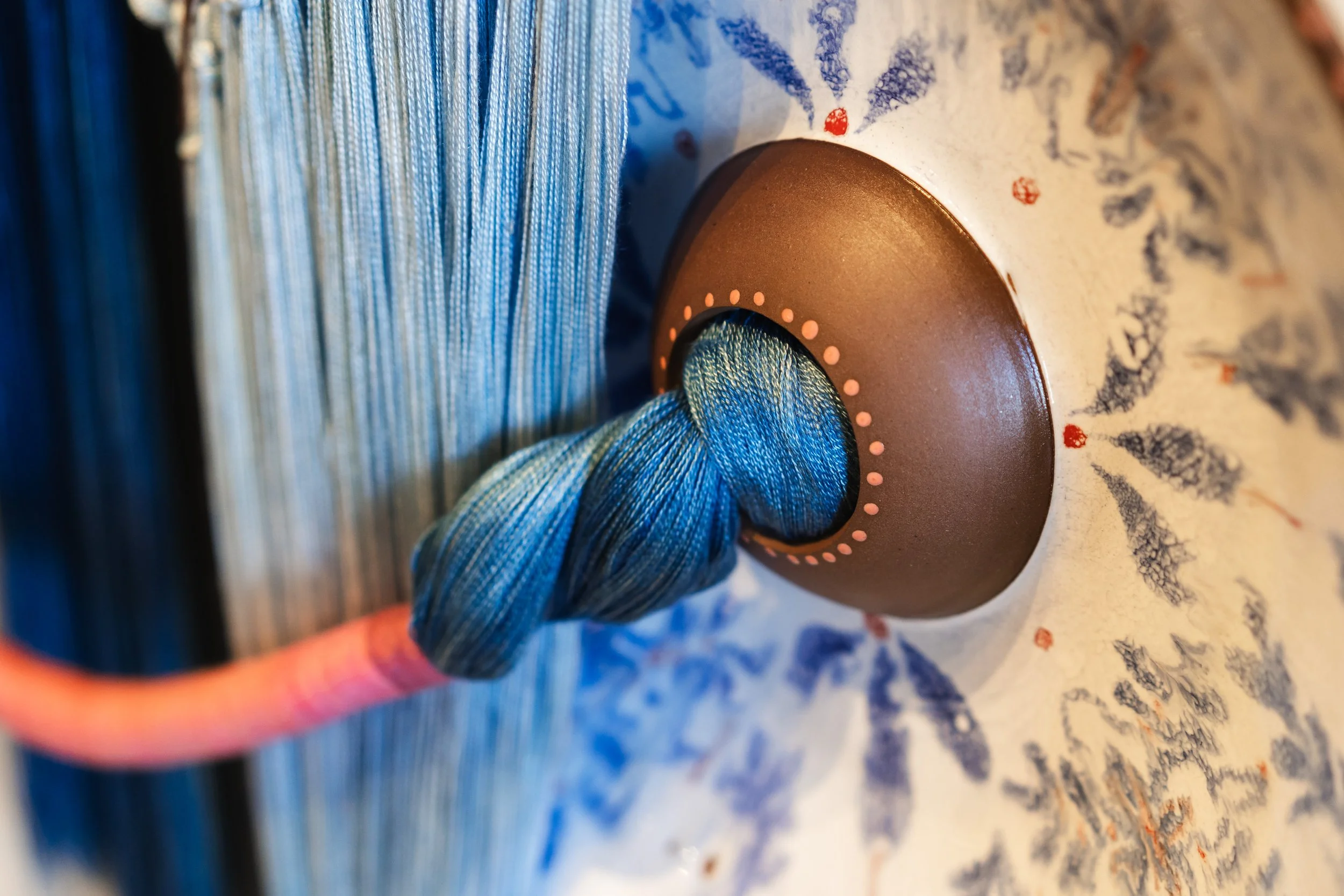
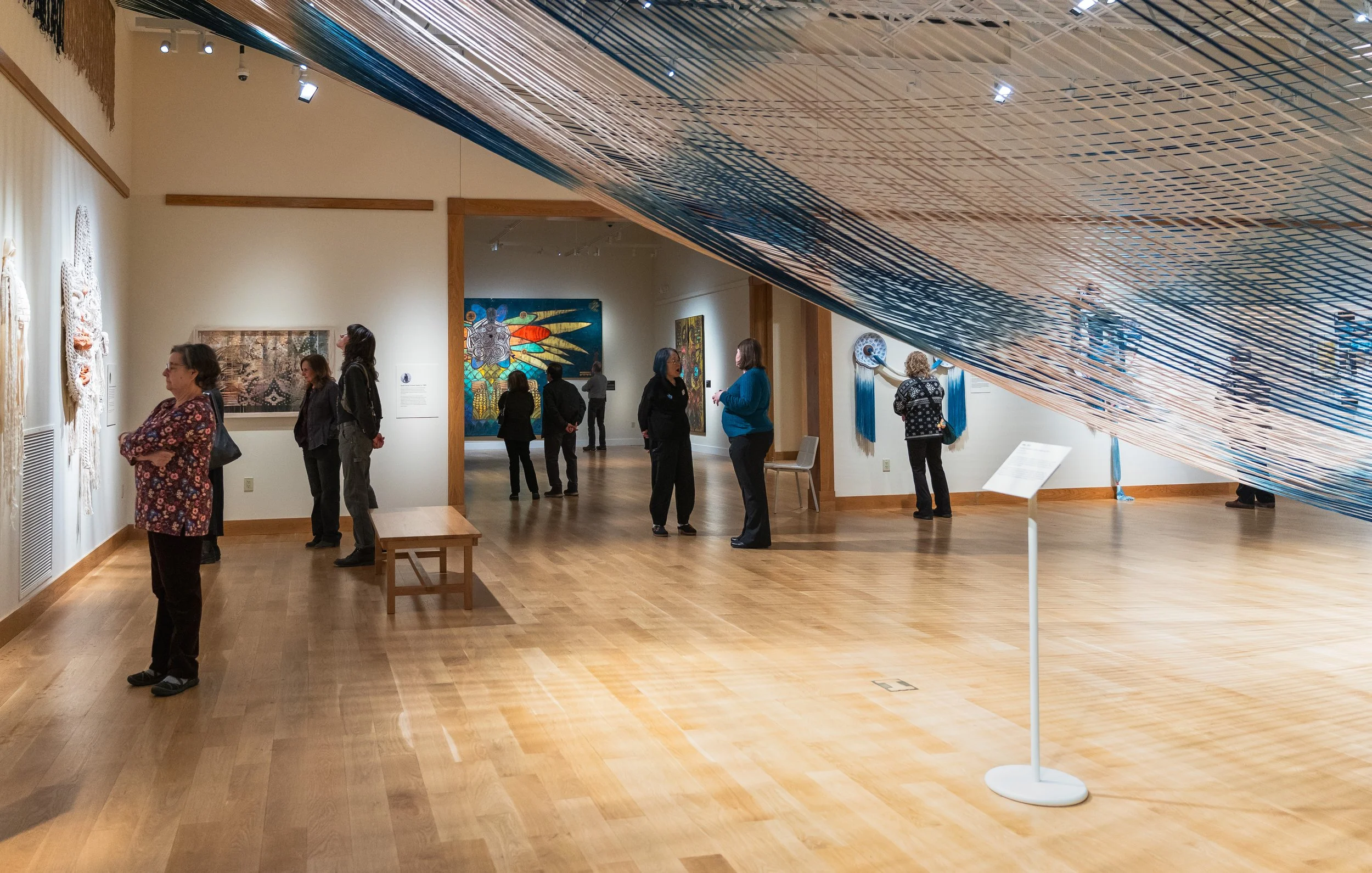
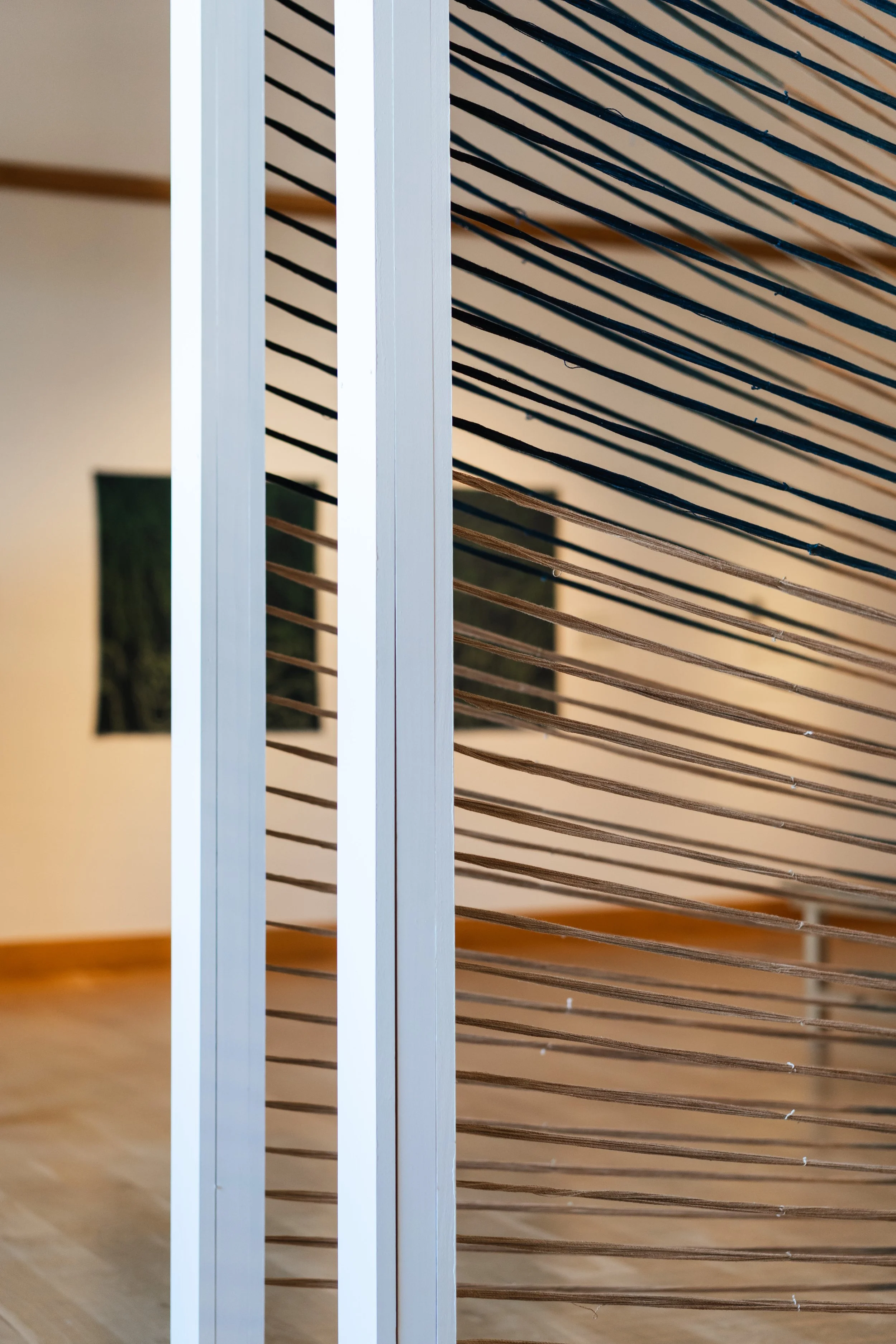
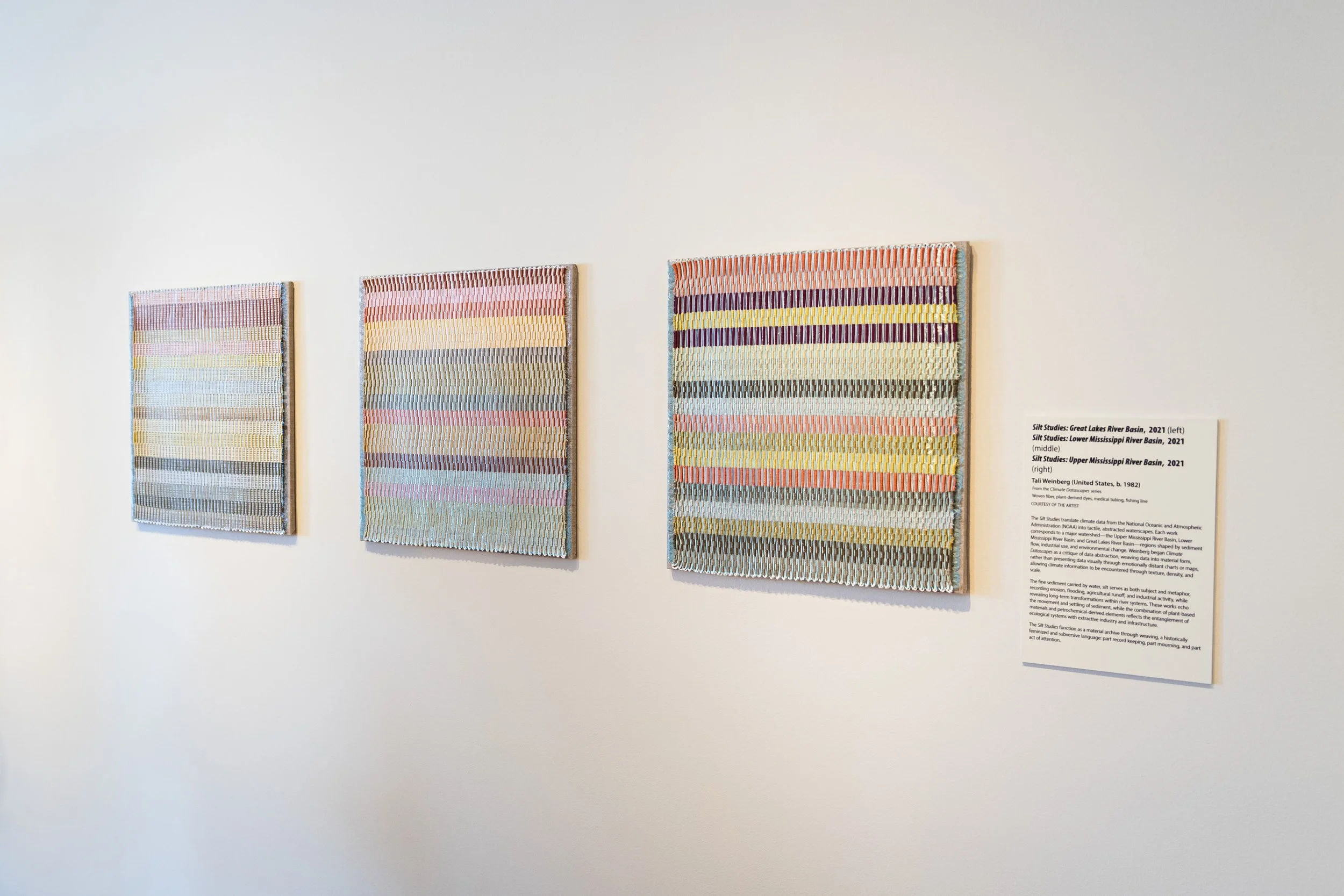
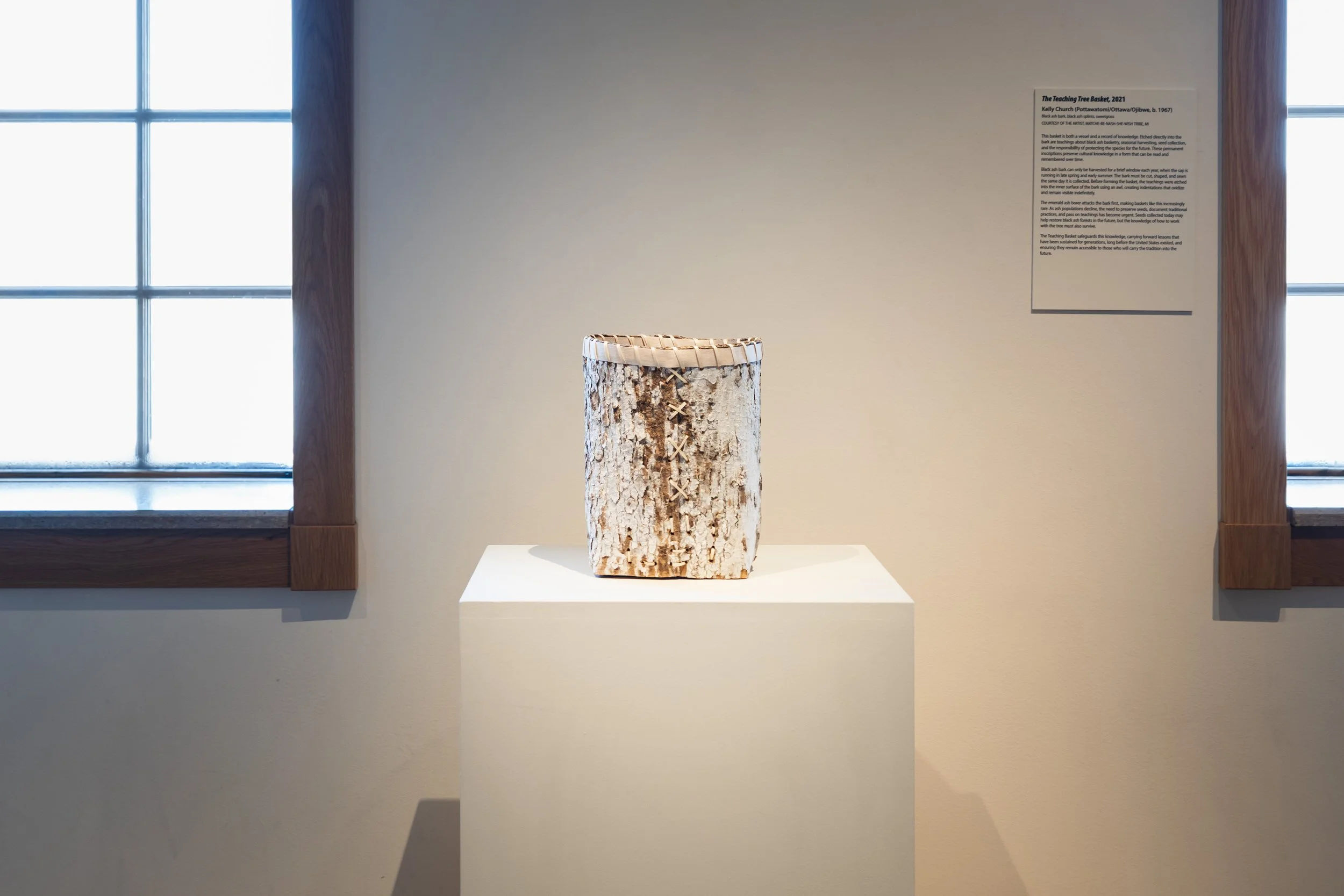
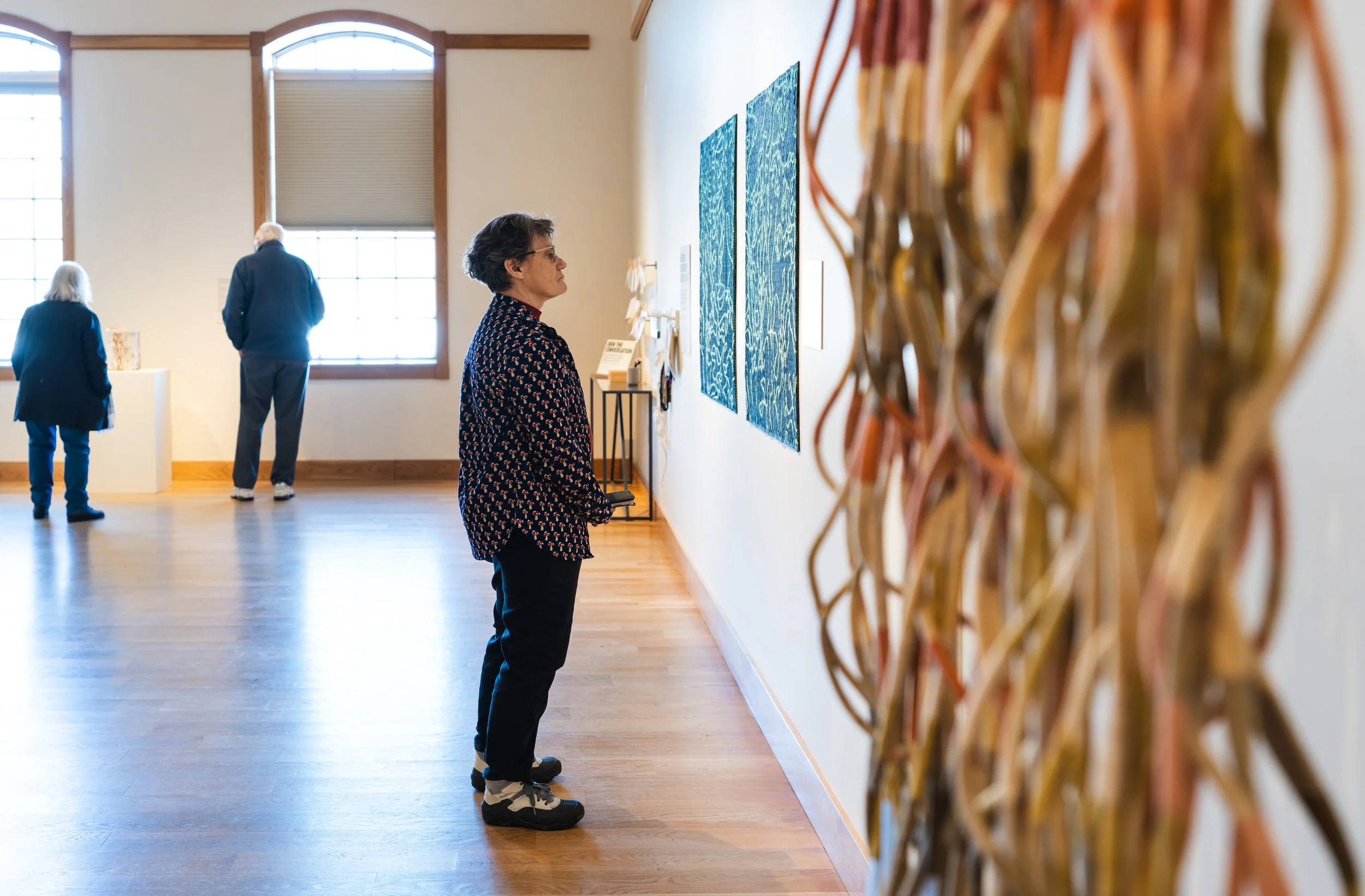
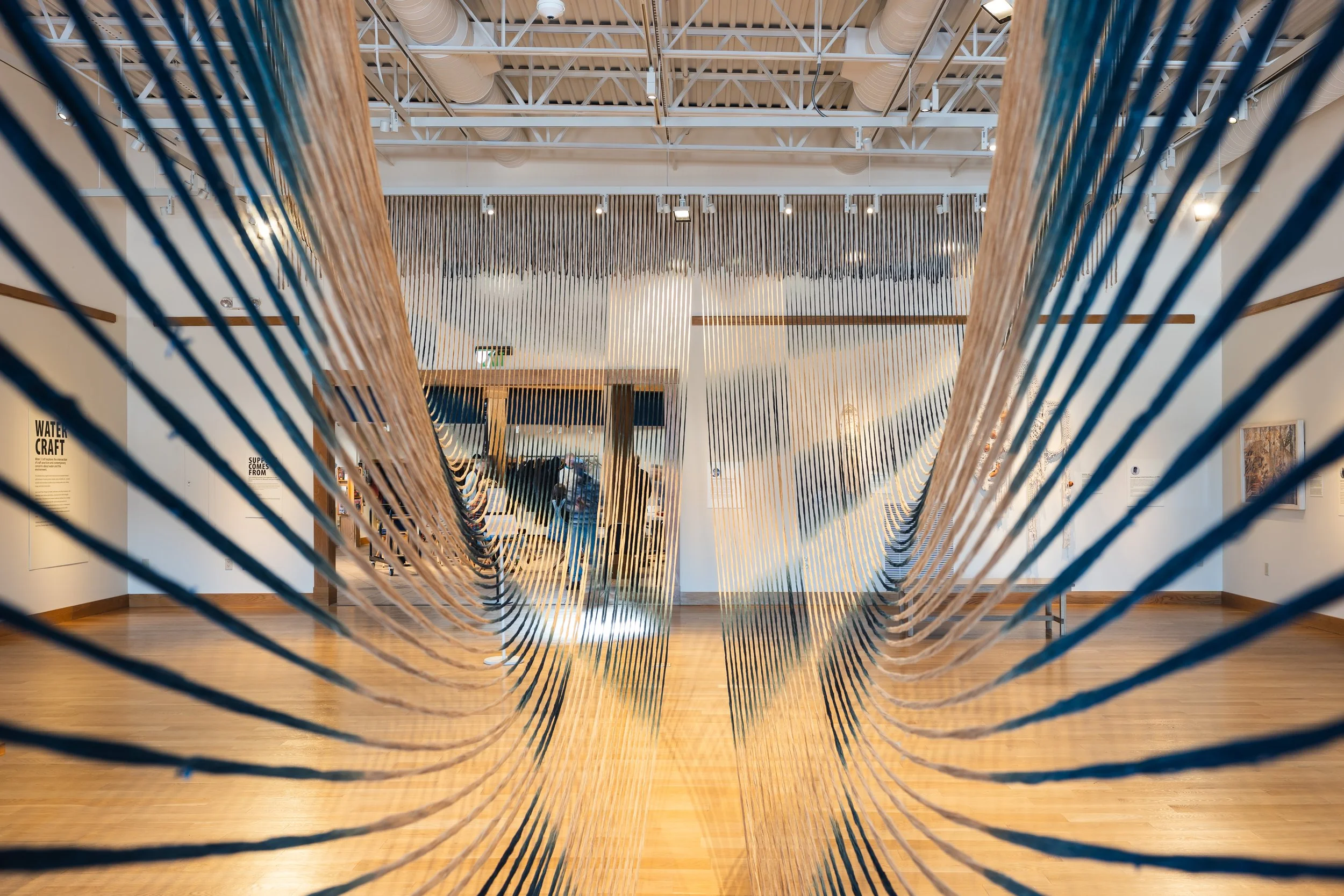
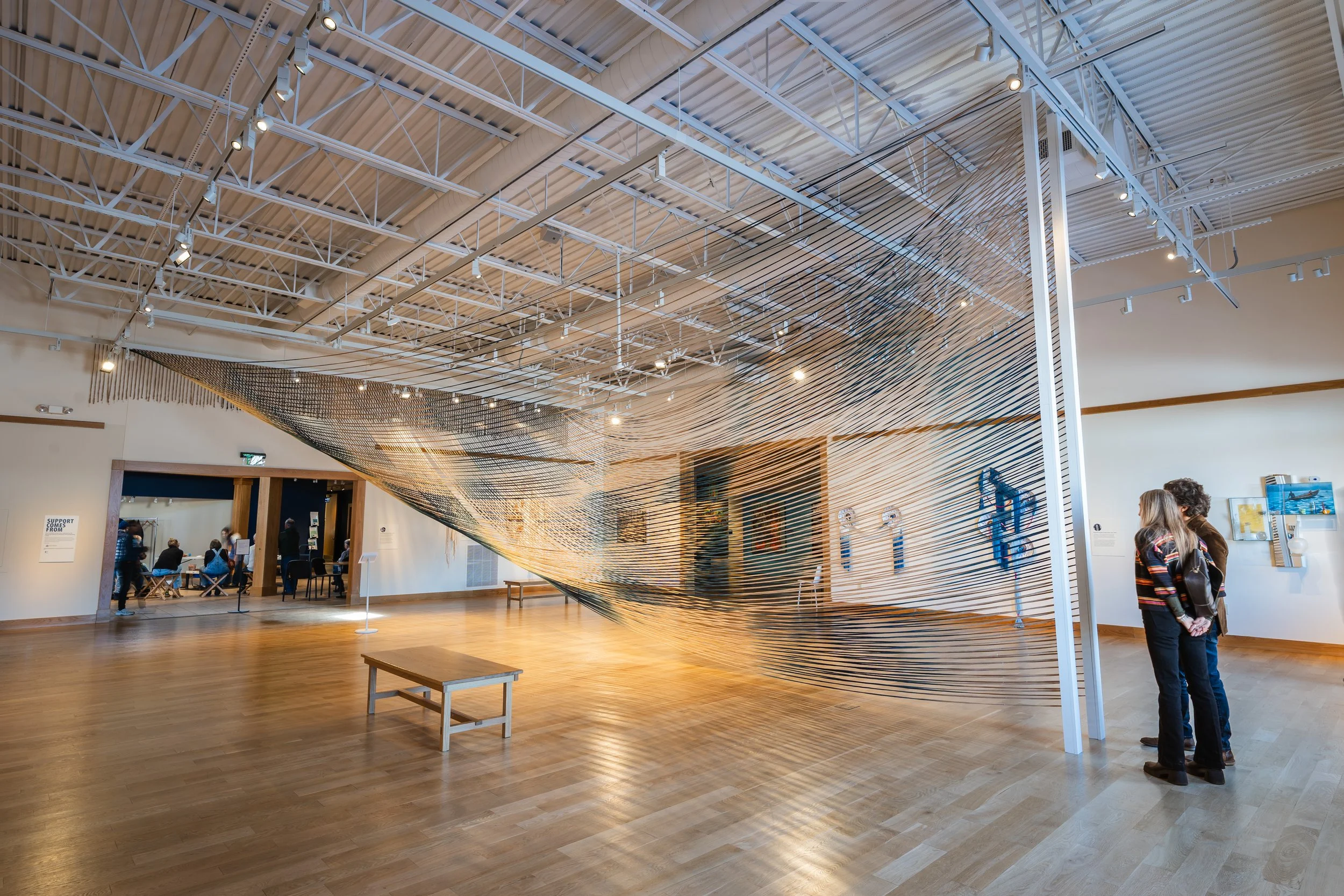
Installation photos by Bailey Bolton for the Minnesota Marine Art Museum.
About the Artists

Nicole McLaughlin
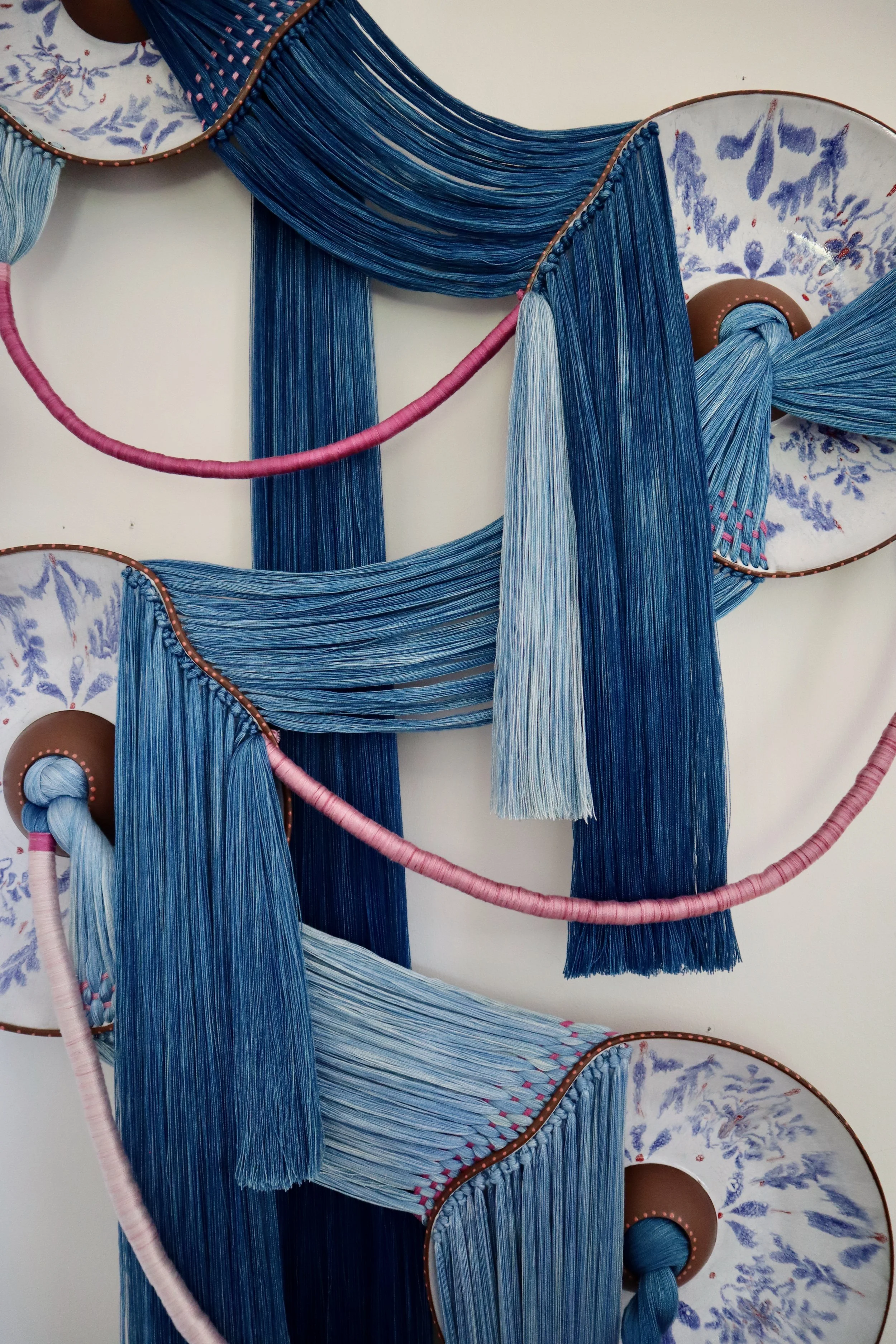
Nicole McLaughlin (United States, born 1997) is a ceramic and fiber artist whose work emerges from a life shaped by multiple cultures and traditions. Born and raised in Massachusetts with deep childhood ties to Mexico, McLaughlin navigates her first-generation Mexican-American identity through materials that speak to heritage, craft, and transformation.
McLaughlin’s practice engages the rich histories of ceramics, textiles, and natural dyes, honoring craft traditions while reimagining them in contemporary form. Her sculptural works blend clay with fiber in ways that challenge conventional notions of function: vessels become conduits for threads and textiles, bringing ritual, remembrance, and lived experience into dialogue. Her art offers visual narratives that connect the personal with the collective, weaving memory, lineage, and resilience into forms that seem to breathe with life and history.
Rowland Ricketts
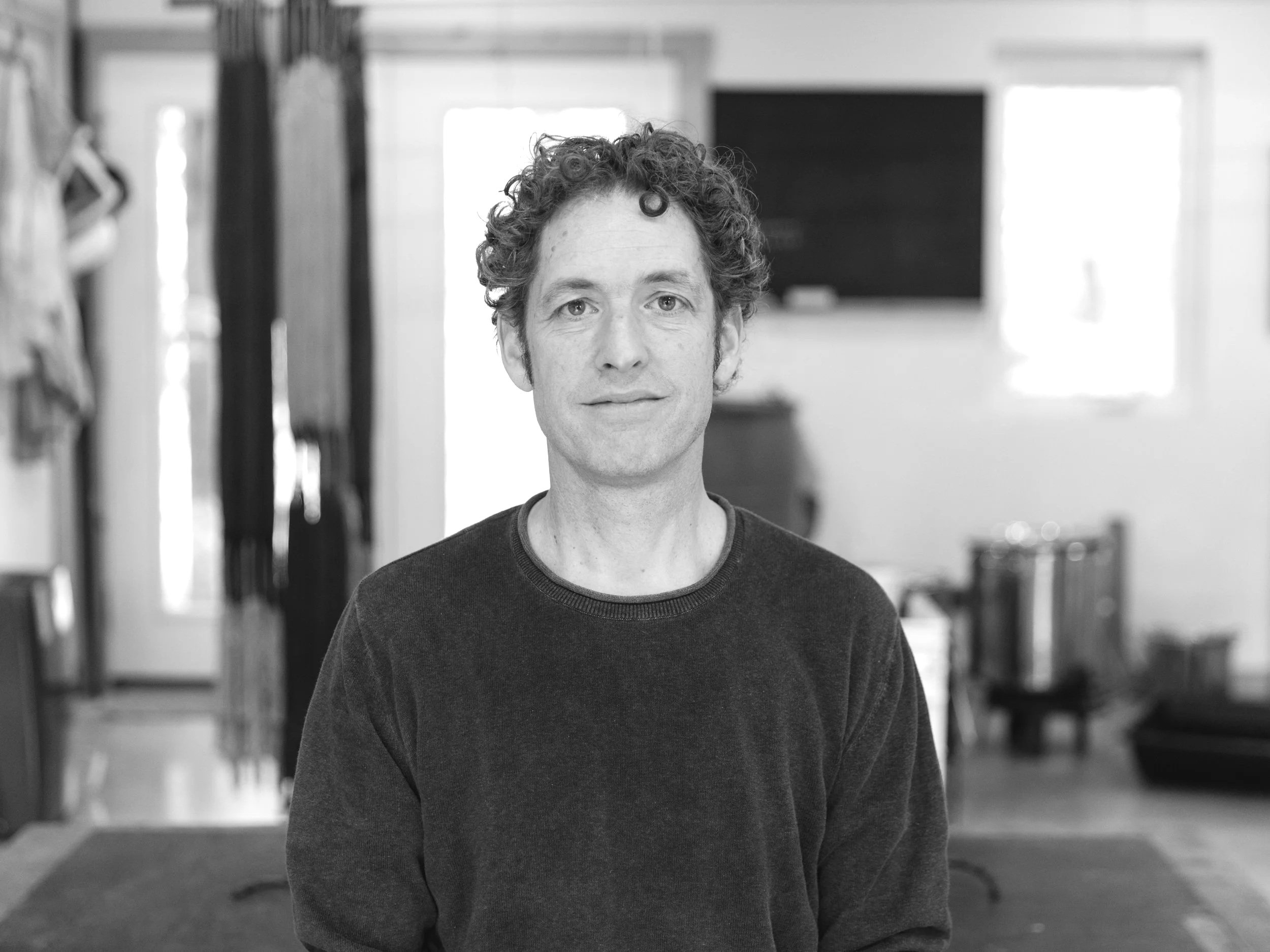
Rowland Ricketts (United States, b. 1971) utilizes natural dyes and historical processes to create contemporary textiles that span art and design. Trained in indigo farming and dyeing in Japan, Rowland received his MFA from Cranbrook Academy of Art in 2005 and is a Provost Professor in Indiana University’s Eskenazi School of Art, Architecture + Design. A recipient of United States Artists and Smithsonian Artist Research Fellowships, his work has been exhibited at the Museum of Fine Arts Boston, the Smithsonian American Art Museum’s Renwick Gallery, the Cleveland Museum of Art, and the Seattle Art Museum.
Sarah Sense
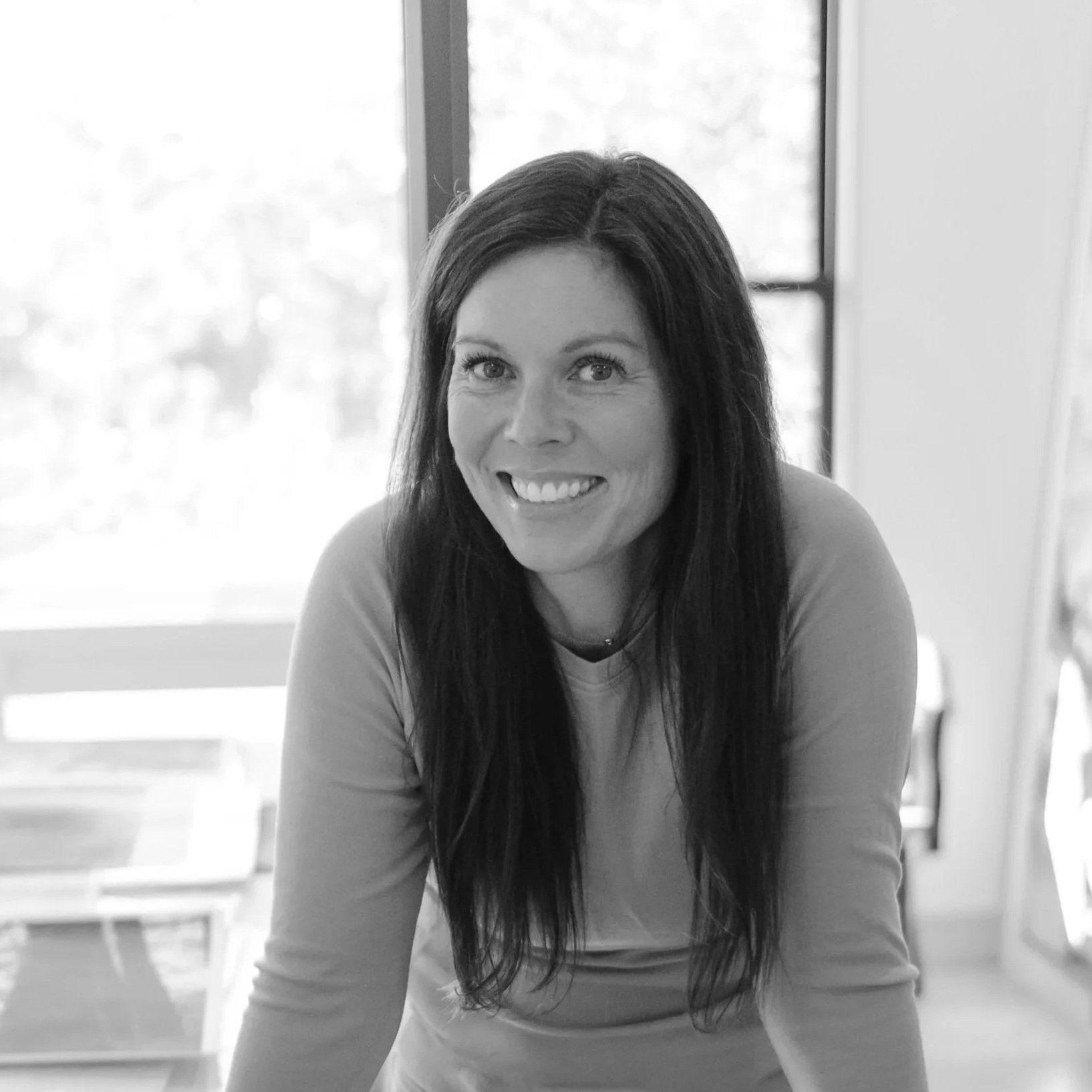
Sarah Sense (United States, b. 1980) has been practicing photo-weaving with traditional basket techniques from her Chitimacha and Choctaw family since 2004. Her storytelling reveals Indigenous histories. Early works are based on the Chitimacha landscape in Louisiana and Hollywood interpretations of Native North America.
New weavings focus on colonial impacts on climate, intending to conceptually reinstate Indigeneity with traditional weaving patterns while decolonizing colonial maps. Her research on basket patterns is both a collaboration with museum archives and conversations with community traditional weavers. Sense’s research-based process begins in the archives, grounding her practice in aesthetic and technical qualities within a history of Choctaw and Chitimacha history, revealing generational healing into the present and future.
Tali Weinberg
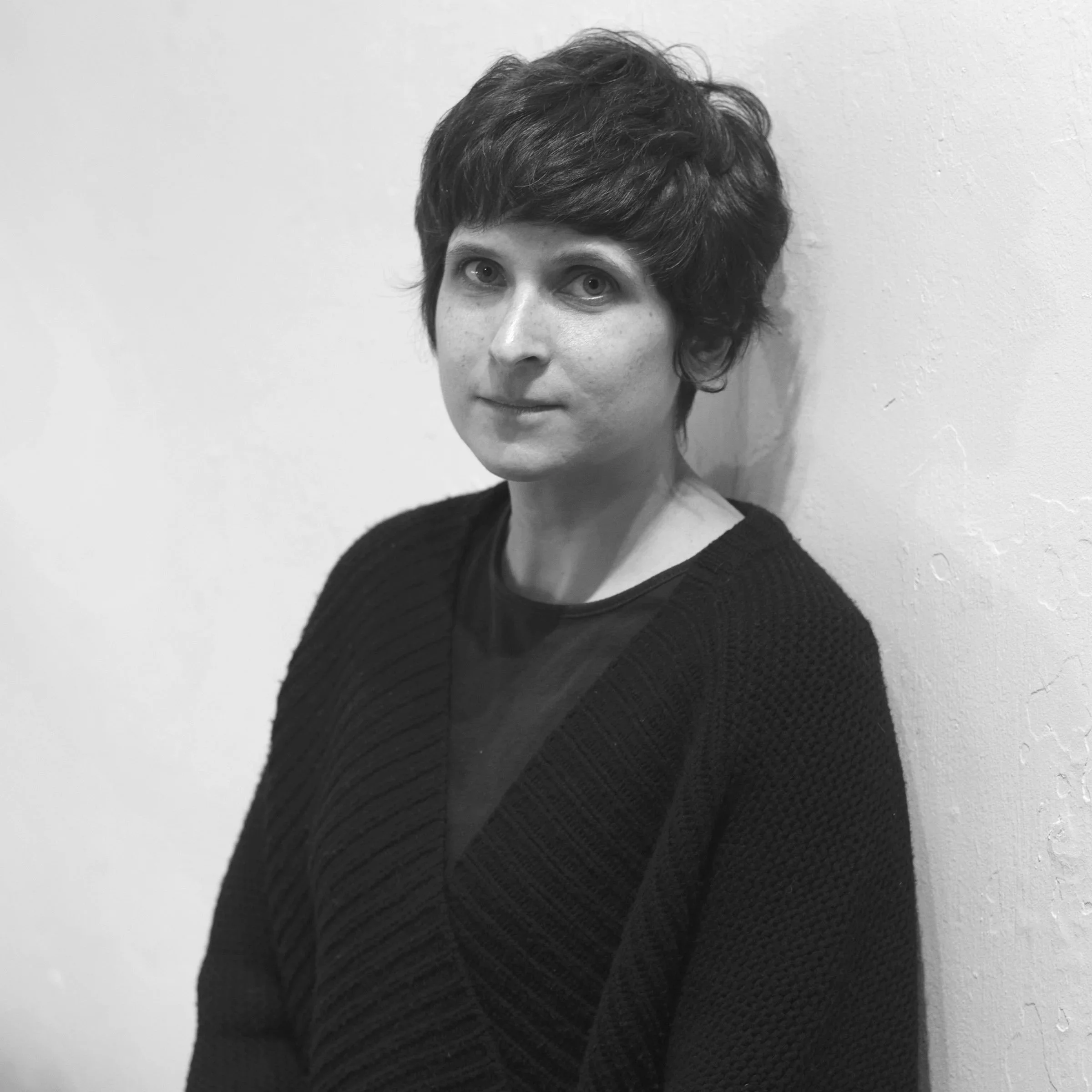
Weinberg’s art is in the collections of Berkeley Art Museum, Georgia Museum of Art, and Denver Botanic Gardens and is exhibited internationally, including at Griffith Art Museum (Australia), Zhejiang Art Museum (China), 21C Museum (Oklahoma City), Center for Craft (NC), and Dreamsong (MN). In 2024, her work was the subject of solo exhibitions at Denver Botanic Gardens, the University of Missouri, and New York University’s Gallatin Galleries. Her artwork has been featured in the Fifth National Climate Assessment, the New York Times, Colossal, National Resource Defense Council’s onEarth Magazine, American Craft, Ecotone, and Journal of the Data Visualization Society, among others. She is the recipient of an Illinois Artist Fellowship, Tulsa Artist Fellowship, Serenbe Fellowship, Windgate Fellowship to Vermont Studio Center, and grants from the Puffin Foundation and Illinois Arts Council. Her numerous residencies include New York’s Museum of Art and Design and a SciArt Bridge Residency for cross-disciplinary collaboration. She has been an invited visiting artist and researcher at the University of Missouri and Berea College. Weinberg received her MFA from California College of the Arts and an interdisciplinary MA (Textiles & Social Theory) and BA (Peace Studies) from New York University. She currently lives and works in Champaign-Urbana, IL.
Therman Statom
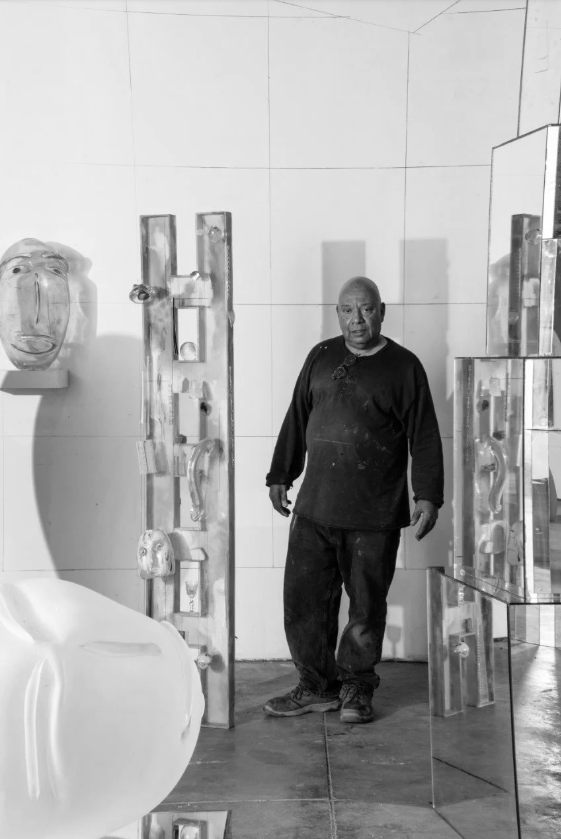
Therman Statom’s (United States, b. 1953) initial interest in the arts grew from a fondness of painting. He began to investigate ceramics as an undergrad; however, after an experimental glass-blowing session with Dale Chihuly, he was hooked on the spontaneity of glass-blowing and its limitless possibilities. Over the span of his career, he has completed over thirty large, site-specific public installations around the country
Much of the latter half of Therman’s career has been focused on the importance of educational programming and development within the arts. He has taken a deep interest in employing workshops as a catalyst for social change. Inhibitions and limitations are left by the wayside, and the practice or act of “doing” becomes a journey of self-discovery.
Statom was made a fellow of the American Craft Council, and was named a United States Artist fellow, and a recipient of a National Endowment for the Arts fellowship.
Tanya Aguiñiga

Tanya Aguiñiga (b. 1978, in San Diego, California, and raised in Tijuana, Mexico) is an artist, designer, and craftsperson whose work is rooted in the lived experience of the U.S.-Mexico border. Aguiñiga grew up crossing the border daily for school, a formative experience that continues to shape her practice. Working across sculpture, installation, performance, furniture, and community-based projects, she uses traditional craft materials such as natural fibers, textiles, and wood to address themes of migration, labor, identity, and belonging.
Drawing on Mesoamerican weaving traditions and domestic craft forms, Aguiñiga reclaims craft as both a cultural language and a site of resistance. Her projects often invite participation, emphasizing shared labor and collective memory.
Aguiñiga is a recipient of the Heinz Award for the Arts, was named a Latinx Artist Fellow, and was a finalist for the Loewe Craft Prize.
Kelly Church
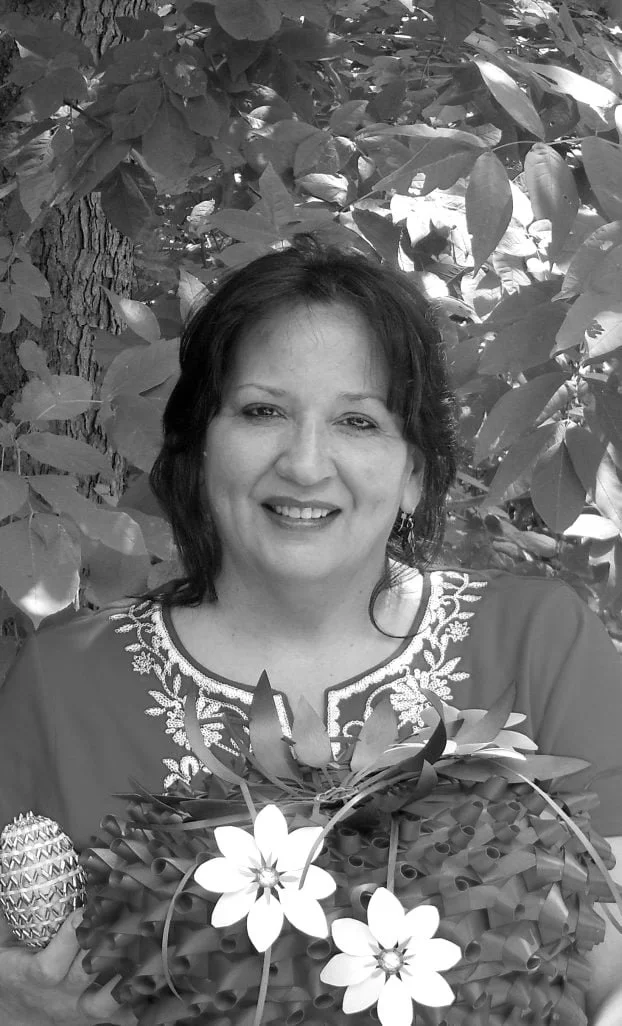
Kelly Church (Pottawatomi/Ottawa/Ojibwe, b. 1967) is an black ash basket maker, fiber artist, educator, activist, and culture keeper. She comes from an unbroken line of black ash basket makers that predates the United States. She learned traditional basketry from family and community elders and studied at the Institute of American Indian Arts and the University of Michigan.
Church’s practice is rooted in Indigenous knowledge systems, seasonal harvesting, and deep relationships to land and language. With guidance from her relatives, she learned how to select and harvest black ash trees, understanding that each basket tells a story about life, place, and experience. For her, weaving is not only an artistic process but also a practice connected to forest management, biochemistry, Indigenous language, and family history.
Her work has been exhibited nationally and internationally, and she is a recipient of a National Endowment for the Arts National Heritage Fellowship.
Water | Craft in the Press
Along the Mississippi River, ‘Water | Craft’ Is a Confluence of Art, Culture, and Ecology, Kate Mothes, Colossal, February 11, 2026.
A River Runs Through It: Water | Craft at the Minnesota Marine Arts Museum, Kasey Payette, American Craft Council. February 17, 2026.
Blog Posts
Upcoming Programming
Previous Programming
![Workshop: Weaving in Community with Tanya Aguiñiga [CANCELLED]](https://images.squarespace-cdn.com/content/v1/5b7b157831d4df3206e42eaf/1777406970017-9IQD2FVTA0MIKBIZIOE1/2026.workshop.tanya.square.jpg)
![Artist Demonstration: Nicole McLaughlin [Water | Craft]](https://images.squarespace-cdn.com/content/v1/5b7b157831d4df3206e42eaf/1764704290304-RML5SJWYGY8VBDSJWSF2/2026.01.New.Look.Weekend.Squares.final3.jpg)

Support Comes From
MMAM acknowledges sustaining support from generous contributions from foundations, corporations, individuals, members and volunteers, including ongoing support from our Board of Directors, the Elizabeth Callender King Foundation, and the Morgan Family Foundation. Special thanks to our media partner, Wisconsin Public Radio.
Media Partner:


This activity is made possible by the voters of Minnesota through a Minnesota State Arts Board Operating Support grant, thanks to a legislative appropriation from the arts & cultural heritage fund.